
Heavier panel track binding
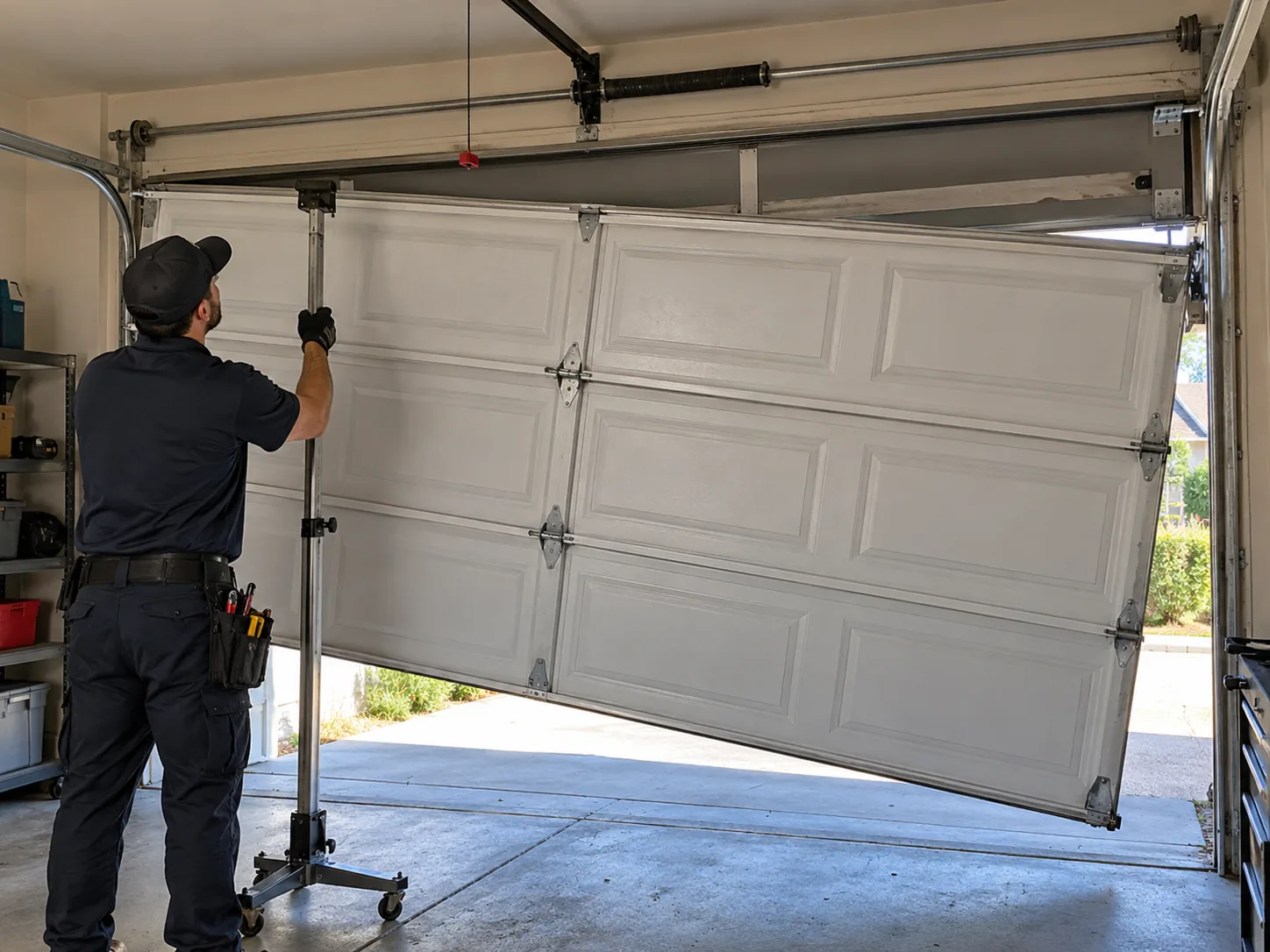
Track alignment that was fine for the original door binds against a heavier replacement panel. Extension springs original to the house lose tension unevenly, which shows up as a door that racks to one side on the way up.
Dunbar, Charleston
Dunbar's houses skew older than the rest of the Charleston service area. Here's what that means for spring, track, and opener maintenance on a 1956-median street.
Popular Services
Our process
Dunbar has about 3,595 households, which makes it one of the smaller stops on the route out of Charleston, six miles up the road. That size matters for maintenance work: a town this compact doesn't generate the call volume of the bigger suburbs, so when we're out this way we tend to be looking at doors that haven't seen a tech in years rather than a steady rotation of scheduled tune-ups.
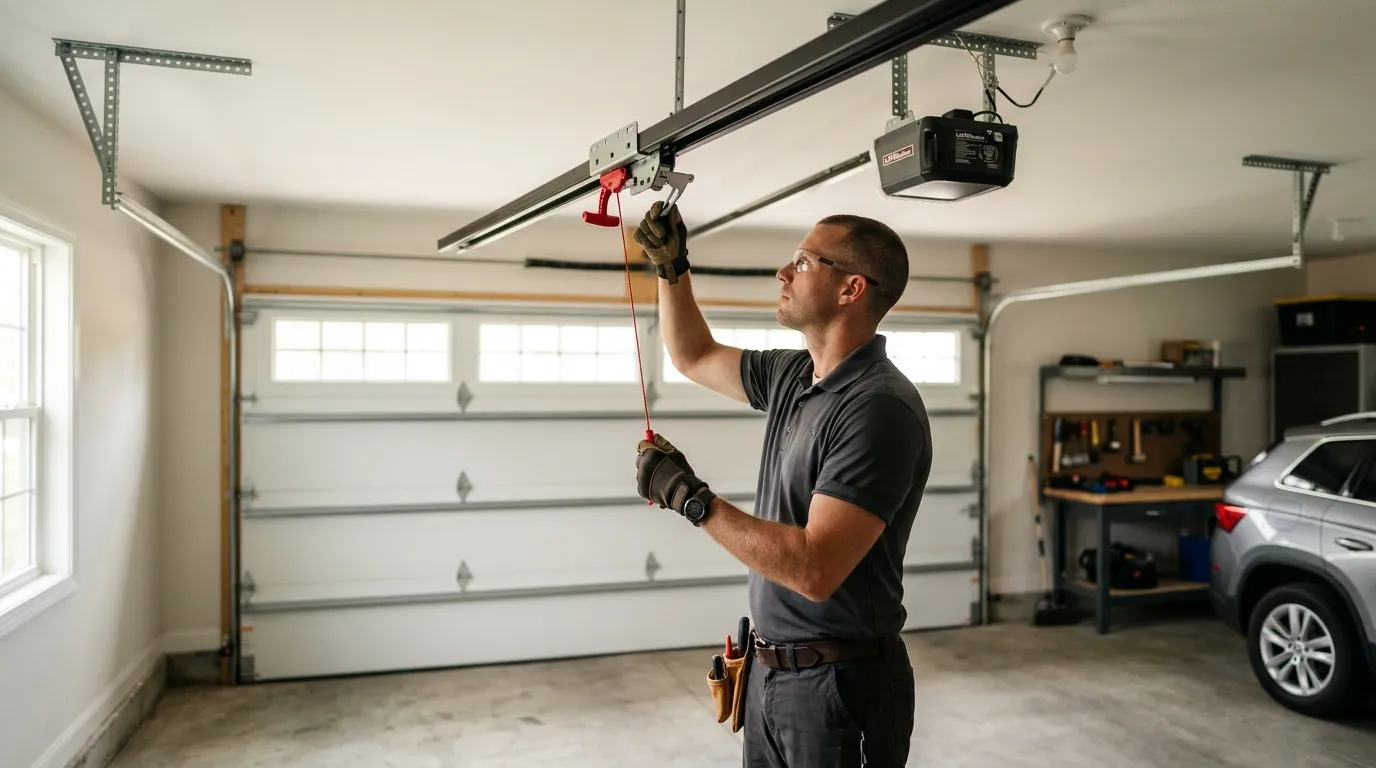
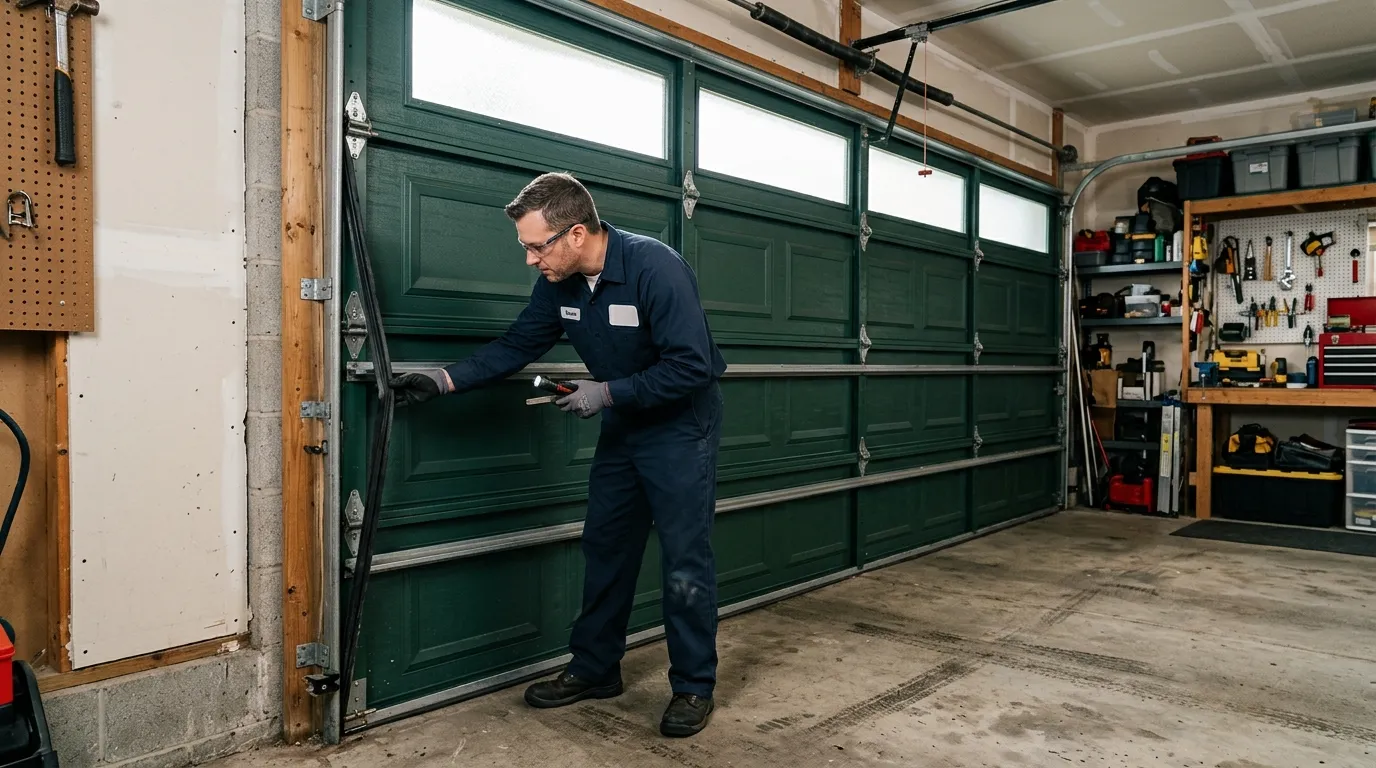
Our maintenance visit is the same regardless of address - we check spring tension, lubricate rollers and hinges, inspect cable wear, test the auto-reverse safety feature, and tighten the hardware that backs out over time. What changes here is what we usually find.
Dunbar's median build year sits at 1956, a decade older than the 1967 median across the wider service area covered from Charleston. That decade shows up in the garage: heavier one-piece doors, older extension spring setups, and openers that have been swapped out once or twice already on hardware that was never built for a modern opener's duty cycle.
We adjust the visit around what the door actually is, not around a script. A 1956 door with original track gets a different once-over than a 1990s sectional door with a chain-drive opener bolted on later.
Watch-outs
The complication in Dunbar isn't the door itself - it's the mismatch between old hardware and newer parts bolted onto it. A house built in 1956 that got a replacement opener in the 1990s and a new spring in the 2010s can have three different eras of hardware working against each other.
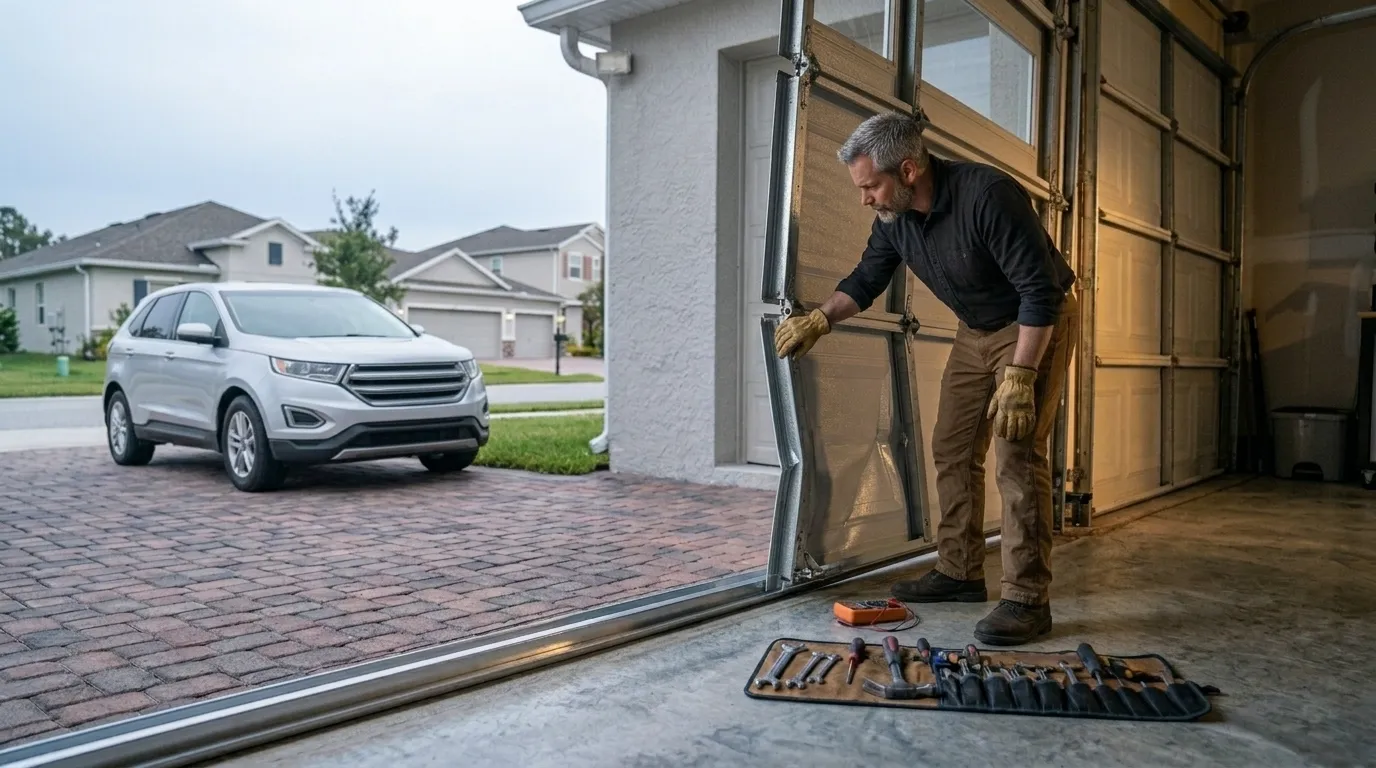
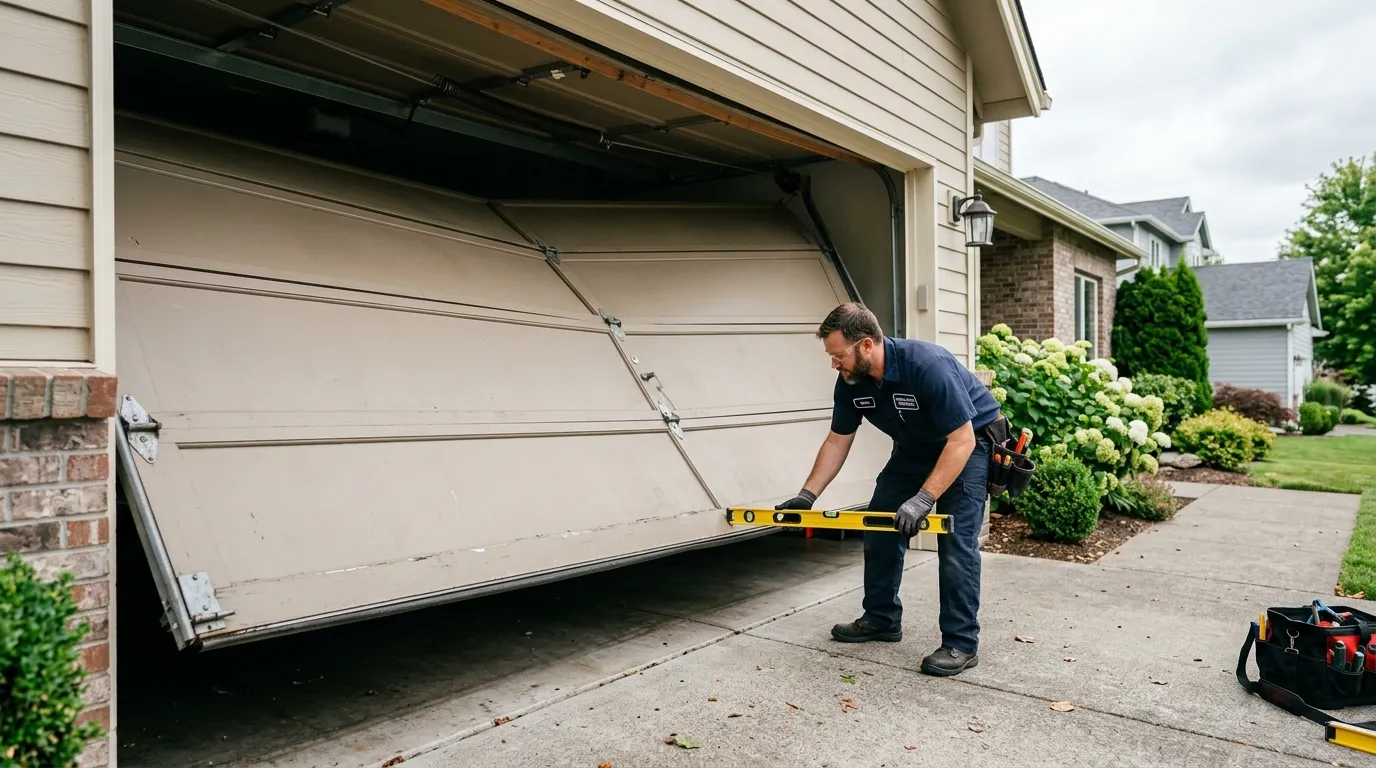
Track alignment that was fine for the original door binds against a heavier replacement panel. Extension springs original to the house lose tension unevenly, which shows up as a door that racks to one side on the way up.
At $54,647 median household income, below the $61,160 median across the broader area, we see more owners stretching a repair as far as it'll go before replacing anything, which is a reasonable call on a lot of doors and a bad one on a spring that's already stretched past safe tension.
Cold-climate swings add a second wrinkle: steel contracts in winter, and hardware that's already loose from age moves more than it would on a newer door. None of this is unique to any one house, but it's common enough here that we check for it first rather than last.
Timing
A standard maintenance visit runs the same length here as anywhere on the route - there's no Dunbar-specific timeline because the work itself doesn't change, only what we find once we're inspecting. Older doors with original track or extension springs sometimes turn a routine check into a longer conversation about what's worth adjusting versus what's worth replacing, but that's a decision made at the door, not before we get there.
We don't quote a same-day or next-day promise for Dunbar specifically. We work out of Charleston and the six-mile drive isn't the bottleneck - scheduling around the rest of the route is. If you need a firm arrival window, ask when you call rather than assuming one.
On the truck
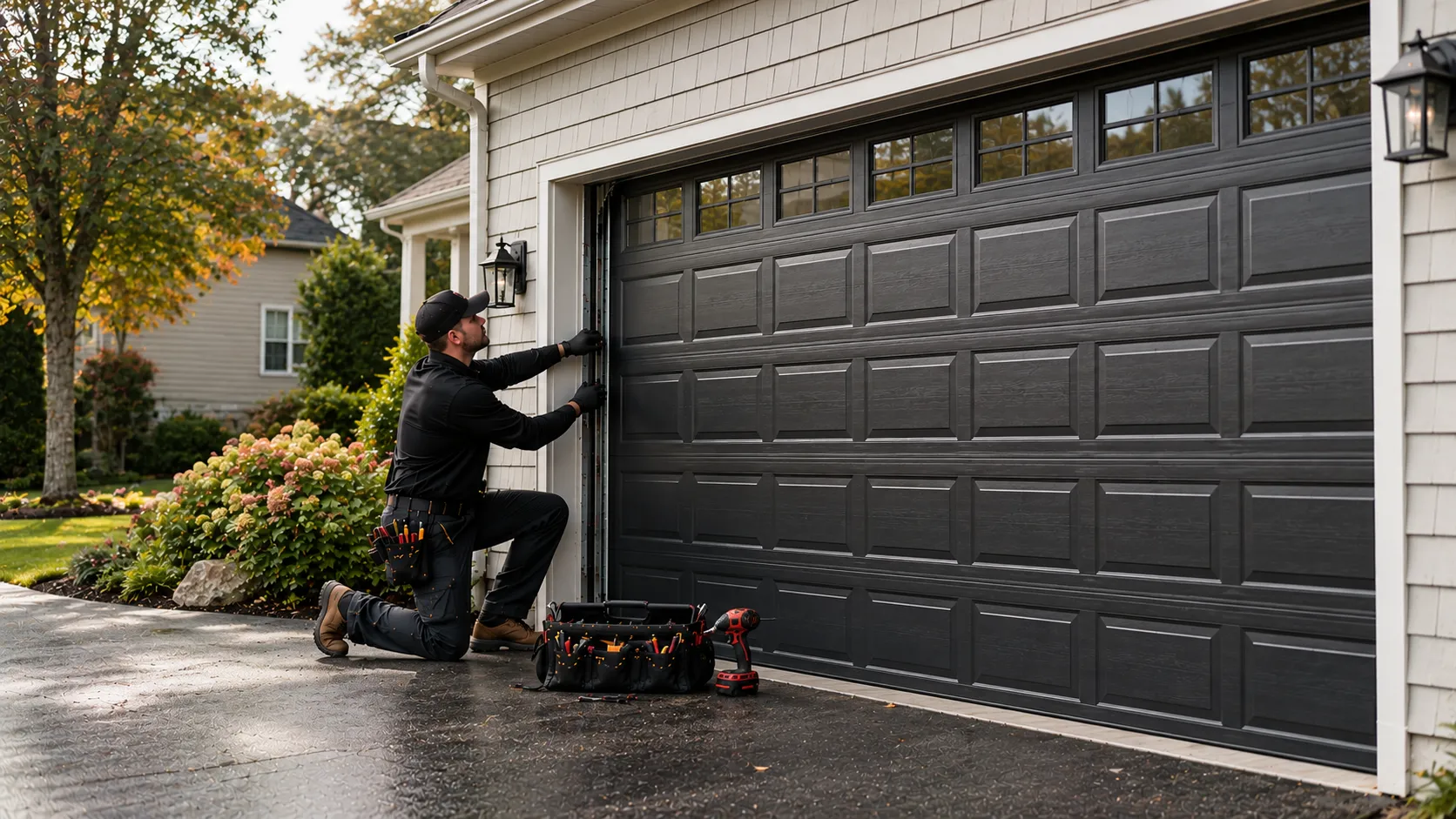
We carry the rollers, hinges, cables, and standard torsion springs that cover most doors built from the 1960s through today, which fits the bulk of what's out on this side of the service area.
Where Dunbar's older stock gets tricky is extension spring assemblies and original hardware from the 1950s - some of those parts aren't made anymore in the exact size, and we sometimes have to special-order or adapt a modern equivalent rather than swap in an exact match.
That's the honest limitation: on a door original to a 1956 house, we may need a return trip once a part comes in, rather than finishing everything in one visit. We'll tell you upfront if that's the situation rather than promising a same-visit fix we can't back up.
DIY or pro
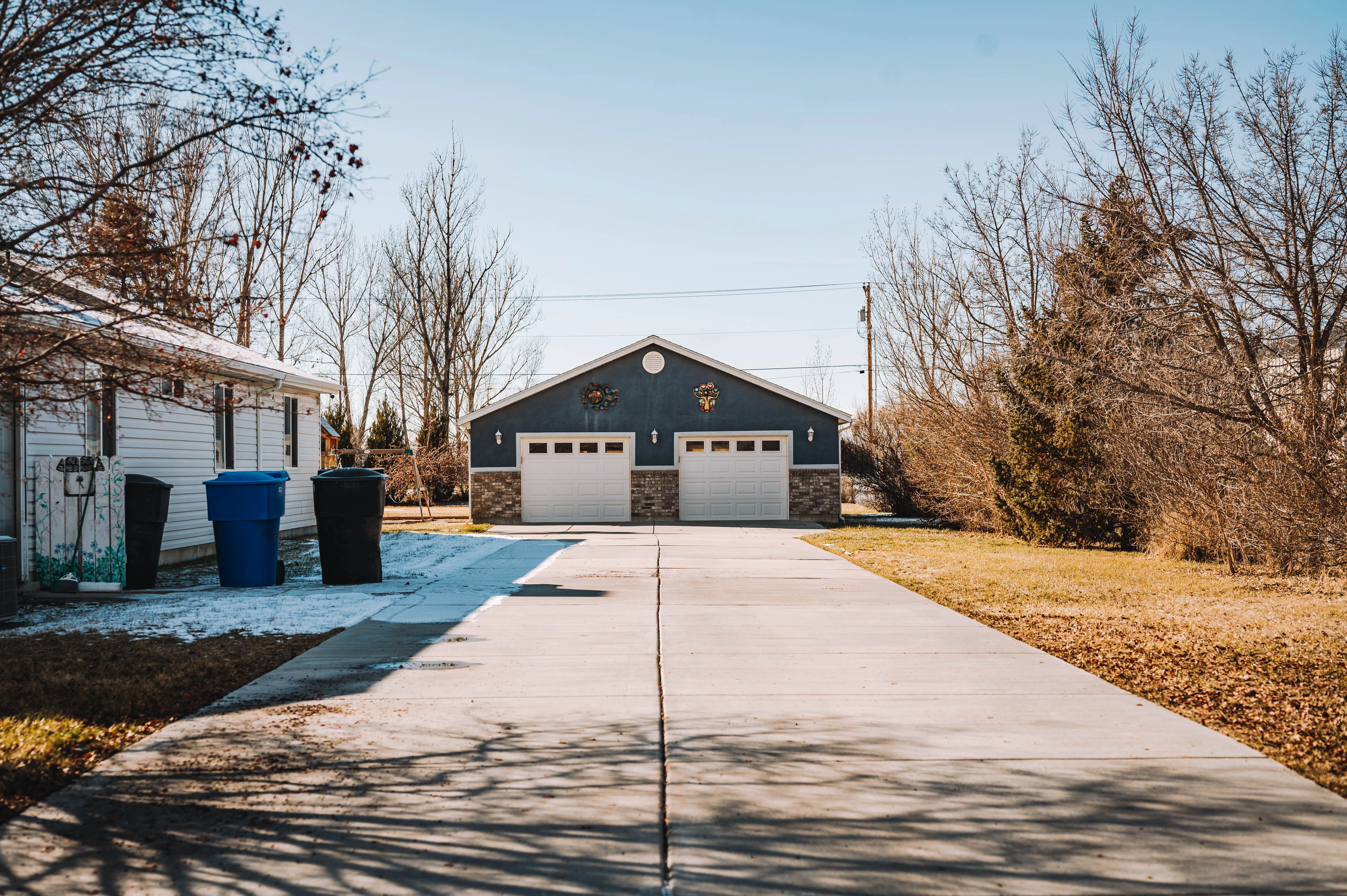
There's real maintenance an owner can do between visits: keep the tracks clear of debris, wipe down and lubricate rollers twice a year, and watch for fraying on the lift cables. None of that requires a tech.
What you shouldn't touch yourself is anything involving the torsion or extension springs - the ones original to a 1950s house especially. Those springs are under enough stored tension to cause real injury, and on an older door the spring size and winding cone aren't always standard, which makes a DIY spring swap riskier than on a newer sectional door. If the door is sagging on one side or the springs look stretched or rusted through, that's a call for someone with the right bars and clamps, not a Saturday project.
Questions
Dunbar's houses cluster around a 1956 median build year, about a decade older than the 1967 median across the wider service area. Older houses more often still have original one-piece doors or extension spring setups, which behave differently than the sectional doors and torsion springs common on newer construction.
No. We're based in Charleston and cover Dunbar as part of the service area, about six miles out. There's no local depot, so scheduling depends on the day's route, not a Dunbar-specific response time.
Sometimes we need to special-order a part or adapt a modern equivalent for hardware original to a 1950s house, since exact original spring sizes and some track hardware aren't manufactured anymore. We'll tell you at inspection if that means a return trip.
There's no fact-specific interval we can give beyond general practice, but a door with original 1950s-era hardware is worth a look sooner than a newer one - springs and cable that have been in service for decades wear unevenly, and that shows up as noise, racking, or slow response before it shows up as a full failure.
Explore more
Ready when you are
Charleston Garage Door Pros repairs and installs garage doors, springs and openers in Charleston, WV and the surrounding area.