Charleston, WV

Garage Door Opener Repair for Charleston Area Homes

Opener repair for Charleston, WV homes built mostly between 1949 and 1993 - diagnosing the circuit boards, chains, and sensors that fail in this climate and housing stock.

Garage Door Opener Repair for Charleston Area Homes in Charleston
Serving Charleston, WVBackground-checked techsHonest, upfront pricingFast local response
1949–1993
Typical build years of local homes
21K
Owner-occupied homes in the area
$61K
Median household income
1 visit
Most repairs finished same visit

Pricing

What It Costs

We don't quote a flat number over the phone, because opener repair splits into two very different jobs: swapping a part on a working unit, or replacing a logic board that's cheaper to junk than fix.

Gear versus sensor fast repair

A worn drive gear or a bad sensor eye is usually a small, fast repair. A fried circuit board on an opener from the 1980s or 90s often isn't - parts for units that old are getting hard to source, and at some point putting more money into a fifteen-year-old motor stops making sense.
Affordable parts diagnostic necessity

We look at the unit in person before we say a number, because guessing over the phone means either lowballing you or padding the estimate to cover our own risk. Neither helps you.

Original 1958-1980s hardware commonality

Across the Charleston service area, median household income sits around $61,160, and most of the 21,303 owner-occupied houses we could be called to are decades-old construction with openers that have been swapped at least once already. That mix means we see everything from a $40 sensor fix to a full unit swap in the same week, and we price each one on what's actually wrong, not a menu rate.

Warning signs

How It Shows Up

The most common call: the remote does nothing, but the wall button still runs the opener. That's almost always the remote's logic board or the antenna, not the motor.

Reversed midway safety sensor

Next most common - the opener hums but the door doesn't move, which usually means a stripped drive gear inside the housing, a common failure point once a chain-drive unit passes ten or fifteen years of use.

Hum without lift stripped gear

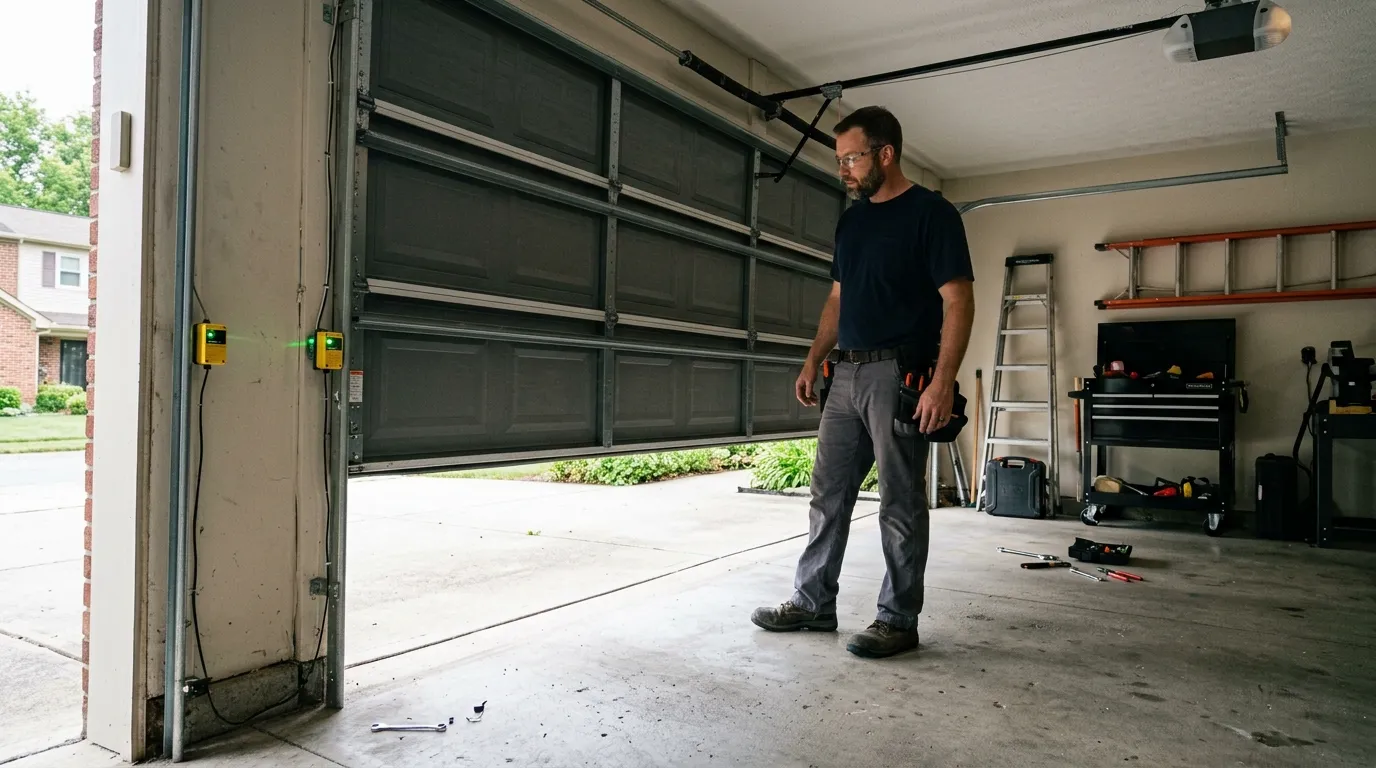
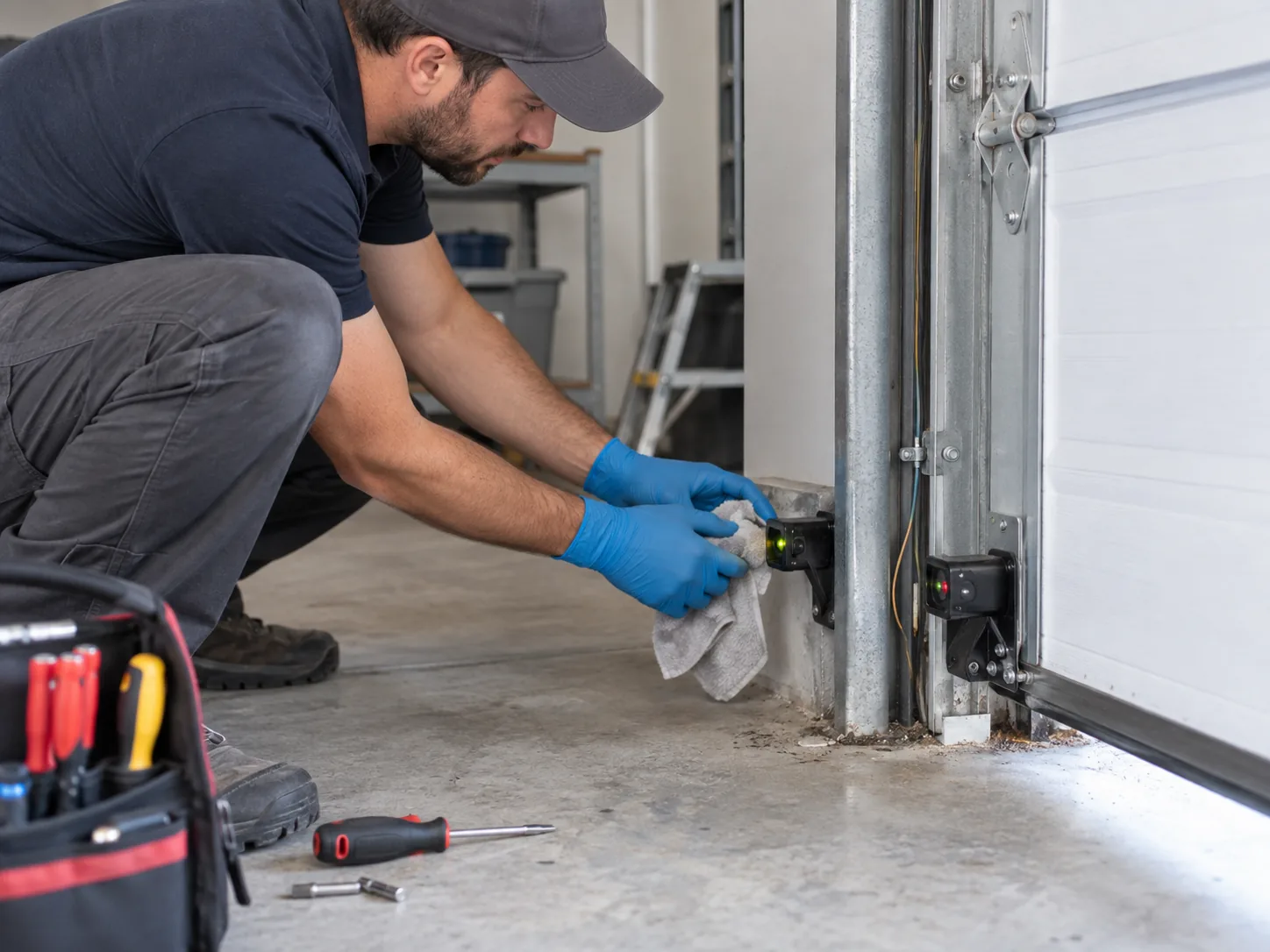
Some owners describe a door that reverses right after it starts closing. That's the safety sensors, usually knocked out of alignment or fogged with condensation, not a bad opener at all - an easy fix that gets misdiagnosed as "the whole unit is dying" more often than it should.

Blinking light error code

Less often, the opener runs the full cycle but the light keeps blinking afterward - a stored error code, usually pointing at the circuit board itself. On older units, that board is the expensive part to replace, and sometimes the honest answer is a new opener rather than chasing a board that's already partway to failing again.

Our process

How We Fix It

First step is always figuring out which of the three systems failed: the motor and gear assembly, the sensor and safety circuit, or the logic board and remote.

  1. Component diagnostics before replacement

    Each one has a different repair path, and jumping to "replace the opener" before ruling out a cheap sensor fix wastes your money. We test the wall button and remote separately from the motor to isolate a bad receiver from a bad drive.

  2. Gear replacement economics

    If the gear inside the housing is stripped - common on chain-drive units that have been running for years without lubrication - we replace that piece rather than the whole unit. If the sensors are misaligned, we re-set and re-align them, which takes minutes and needs no parts at all.

  3. Budget-appropriate diagnostics sequencing

    When the circuit board itself is the failure, we're honest about the math: on a unit already ten-plus years old, a new board often costs close to what a new opener costs installed, and the new opener comes with a warranty the old motor doesn't have left in it. We'll tell you which side of that line your unit falls on before we start any work, not after.

Local causes

Why It Happens Here

Housing across the Charleston service area was mostly built between 1949 and 1993, with the bulk of it going up in the 1960s and 70s across the eighteen named communities we cover. That means a large share of the openers we're called to aren't original - they're second or third replacements installed over the decades - but the wiring, the header clearance, and the mounting brackets they're bolted to often still are. An opener installed to fit 1960s framing doesn't always sit right on a modern retrofit bracket, and that mismatch shows up as extra strain on the gear and drive over time.

The climate here is cold-moderate, and that matters more for openers than most owners expect. Cold snaps thicken the grease in the drive assembly, which makes the motor work harder to start the cycle and speeds up wear on the gear. Sensor eyes fog or ice over on the coldest mornings, which reads to the opener as an obstruction and triggers a reversal that looks like a broken unit but isn't. None of this is dramatic weather - it's ordinary seasonal cold doing slow damage to units that are already past their expected service life in houses built decades before smart openers existed.

Why It Happens Here

Questions

Common questions

My remote stopped working but the wall button still opens the door - is that expensive to fix?

Usually not. That split almost always points to the remote's receiver or antenna, not the motor. It's one of the cheaper opener repairs we do, and in a lot of cases we can resolve it on the same visit without ordering a part.

Why does my garage door opener reverse right when it starts closing?

That's almost always the safety sensors near the floor, either knocked out of alignment or fogged with condensation on a cold morning. It reads to the opener like something's in the way, so it reverses to be safe. Re-aligning them is a quick fix, not a sign the whole unit is failing.

Is it worth repairing an opener from the 1990s, or should I just replace it?

Depends on what's broken. A gear or sensor fix is worth doing on almost any unit. A failed circuit board on something that old often costs close to what a new opener runs installed - and the new one comes with a warranty. We'll tell you straight which side of that line your unit is on.

Does cold weather actually affect garage door openers?

Yes. Cold thickens the grease in the drive assembly, which makes the motor strain harder to start each cycle, and it can fog or ice the safety sensors, which triggers false reversals. It's not dramatic, but it's steady wear that adds up over a winter.

Ready when you are

Need a garage door sorted in Charleston?

Charleston Garage Door Pros repairs and installs garage doors, springs and openers in Charleston, WV and the surrounding area.

Call Now(304) 202-7503