Service areas
Where We Work Around Charleston
We work from Charleston out to South Charleston, Dunbar, Nitro, St. Albans, Teays Valley and more. See which faults show up on houses built in your area's era.
Local detail
The Jobs That Come Up Most
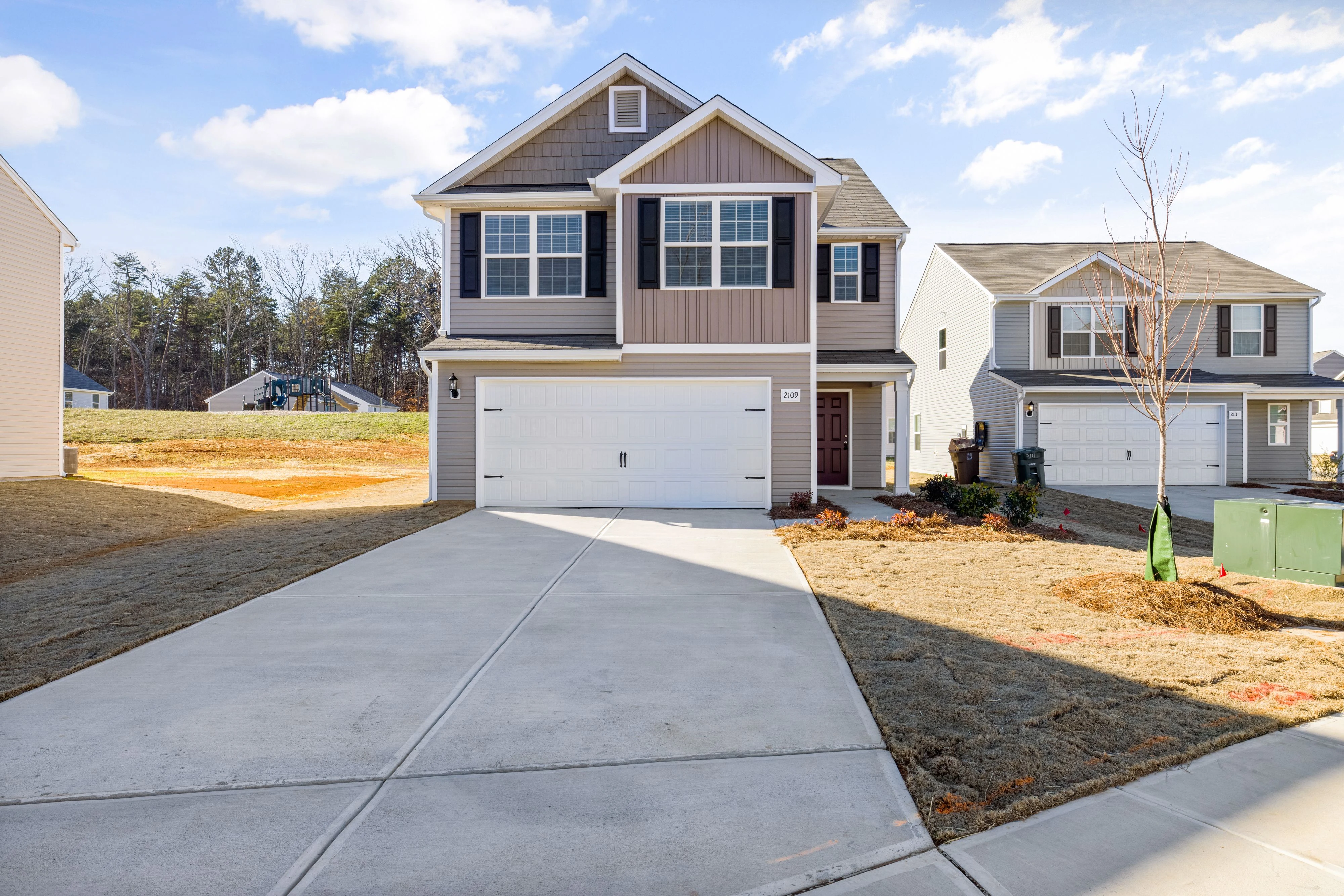
Most of the houses we get called to across this area went up between 1949 and 1993, with the bulk of that stock built in the 1960s and 70s. That one fact drives most of the repair calls. Doors from that era were built with lighter steel and simple torsion or extension spring setups that were never rated for 40-plus years of daily cycling, so the calls we run are predictable: a torsion spring that finally lets go on a cold morning, an extension spring cable that's frayed through, a center support bracket that's rusted at the weld, or an opener that's the second or third one installed on original 1960s track.
We travel out from Charleston to South Charleston (4 miles), Dunbar (6 miles), Coal Fork (6 miles), Institute (8 miles), Marmet (8 miles), Belle (9 miles), Cross Lanes (10 miles), Elkview (10 miles), St. Albans (10 miles), Nitro (10 miles), Sissonville (11 miles), Alum Creek (12 miles), Tornado (12 miles), Poca (13 miles), Cedar Grove (14 miles), and out to Teays Valley, Scott Depot, and Teays (17-18 miles), plus Clendenin and Winfield (18 miles). Closer in, where houses tend to sit on smaller, older lots, we see more of the original one-piece and early sectional doors still holding on.
Farther out, where building continued into the 80s and early 90s, we see more mid-life sectional doors with openers that are due for a second replacement. Either way, the fix usually starts with the spring, not the opener.
The area
The Housing Stock Here
Housing across this part of the Kanawha Valley clusters tightly around a median build year of 1967, with construction spanning 1949 to 1993 across the 18 named communities we work in. That means a garage door here is rarely original. It's usually the second door on the first set of tracks, or the first door on a replacement opener bolted to framing that was never squared to begin with.
We size parts against what's actually on the house, not against a catalog number, because torsion tube diameters and bracket spacing shifted more than once during those four decades. With 21,303 owner-occupied houses among roughly 34,040 households in the wider service area, and a median household income of $61,160, most of what we install and repair is mid-range: steel sectional doors, standard-lift torsion springs, and openers in the 1/2 to 3/4 HP range. We don't see much call for high-end custom carriage doors out here, and we're straightforward about that when someone asks for a quote on something we don't stock parts for regularly.
What we find
What Happens When You Call
You tell us the town and what the door is doing, and we tell you honestly whether it sounds like a spring, a cable, an opener board, or something structural with the track or header. We travel to you from Charleston, so we ask for the town up front to route the truck efficiently, whether that's a short run to South Charleston or Dunbar or a longer one out to Winfield or Teays Valley. On site, we check spring wind and cable wear first, since that's what fails most in a housing stock this age. If a part is common - a standard torsion spring, a cable, a roller - it's usually on the truck.
If it's an older extension spring size or a discontinued opener board, that can mean a short order delay, and we'll say so instead of guessing. We don't push full replacement when a repair holds up; we also don't pretend a cracked panel or a rusted-through track is a spring job. Cold-weather moderate climate conditions here mean steel fatigues and hardens over the winter months, which is worth knowing if your door has been sluggish since the temperature dropped.
20 areas coveredTowns we serve
Service Areas Around Charleston
Questions
Common questions
Do you have a shop in my town, not just Charleston?
No. We're based in Charleston and drive out to service the area, including towns like South Charleston, Dunbar, Nitro, and St. Albans. We don't claim a branch location in any of those towns - the truck comes from Charleston every time.
Why does the age of my house matter for a garage door repair?
Because most houses in this area were built between 1949 and 1993, with a median around 1967, the springs, tracks, and brackets on a lot of doors are old enough that stock sizes have changed since installation. We check what's actually on the house before quoting a fix.
How far out do you travel from Charleston?
We regularly cover towns from South Charleston at 4 miles out to Winfield and Teays at 18 miles. If your town isn't listed, ask when you call - routing depends on the day.
Will a repair delay happen if my door hardware is older?
Sometimes. Common parts like standard torsion springs, cables, and rollers are usually on the truck. Older extension-spring sizes or discontinued opener boards can mean a short order wait, and we'll tell you that up front rather than guess.
Ready when you are
Need a garage door sorted in Charleston?
Charleston Garage Door Pros repairs and installs garage doors, springs and openers in Charleston, WV and the surrounding area.