Charleston, WV

Garage Door Maintenance Across the Charleston Area

Garage door maintenance in Charleston, WV, built around houses from 1949-1993 and a cold winter-summer swing that hardens grease and snaps old cable early.

Garage Door Maintenance Across the Charleston Area in Charleston
Serving Charleston, WVBackground-checked techsHonest, upfront pricingFast local response
1949–1993
Typical build years of local homes
34K
Households in the area
$61K
Median household income

Pricing

What It Costs

We can't post a flat number for a tune-up here, because what a door needs depends on what's already on it. A door with the original 1960s-era hardware needs different attention than one with a ten-year-old opener and modern rollers - different lubricant, different spring check, sometimes different parts entirely.

Never-touched 1960s spring cost

A house built in the 1960s or 70s boom that never had the springs touched costs more time on the truck than one that's had a yearly look. What we can tell you: we don't quote a maintenance visit over the phone without knowing the door's age and what kind of spring system it runs.

Service type hardware variation

Torsion versus extension, single door versus double, original track versus replaced - all of it changes the visit. If you want a real number, we need to see the door, or at least a photo and the year the house was built.

Original spring replacement certainty

One honest limitation: if your springs are original to a house built before the 1970s, we're not going to tell you a light oiling fixes it. At that age, the fix is usually replacement, not maintenance, and we'll say so rather than charge you for a tune-up that buys you another month.

Warning signs

How It Shows Up

In a lot of the housing across this area - built between 1949 and 1993, with most of it going up in the 1960s and 70s - the first sign of trouble isn't a door that won't open.

Groaning door catch symptom

It's a door that groans on the way up, or one that seems to catch for a second at the same spot on the track every time. That catch is usually a roller that's worn oval instead of round, or a track bracket that's loosened over fifty-plus years of the same bolts. Cold moderate winters here do their own damage.

Cold thickness lubricant stiffening

Grease that was fine in July turns thick in January, and a spring under tension has to work harder to overcome that stiffness. That's when owners hear a bang on the first cold morning of the year - it's not the spring failing right then, it's months of dried lubricant finally catching up with it.

Cable drum fraying invisibility

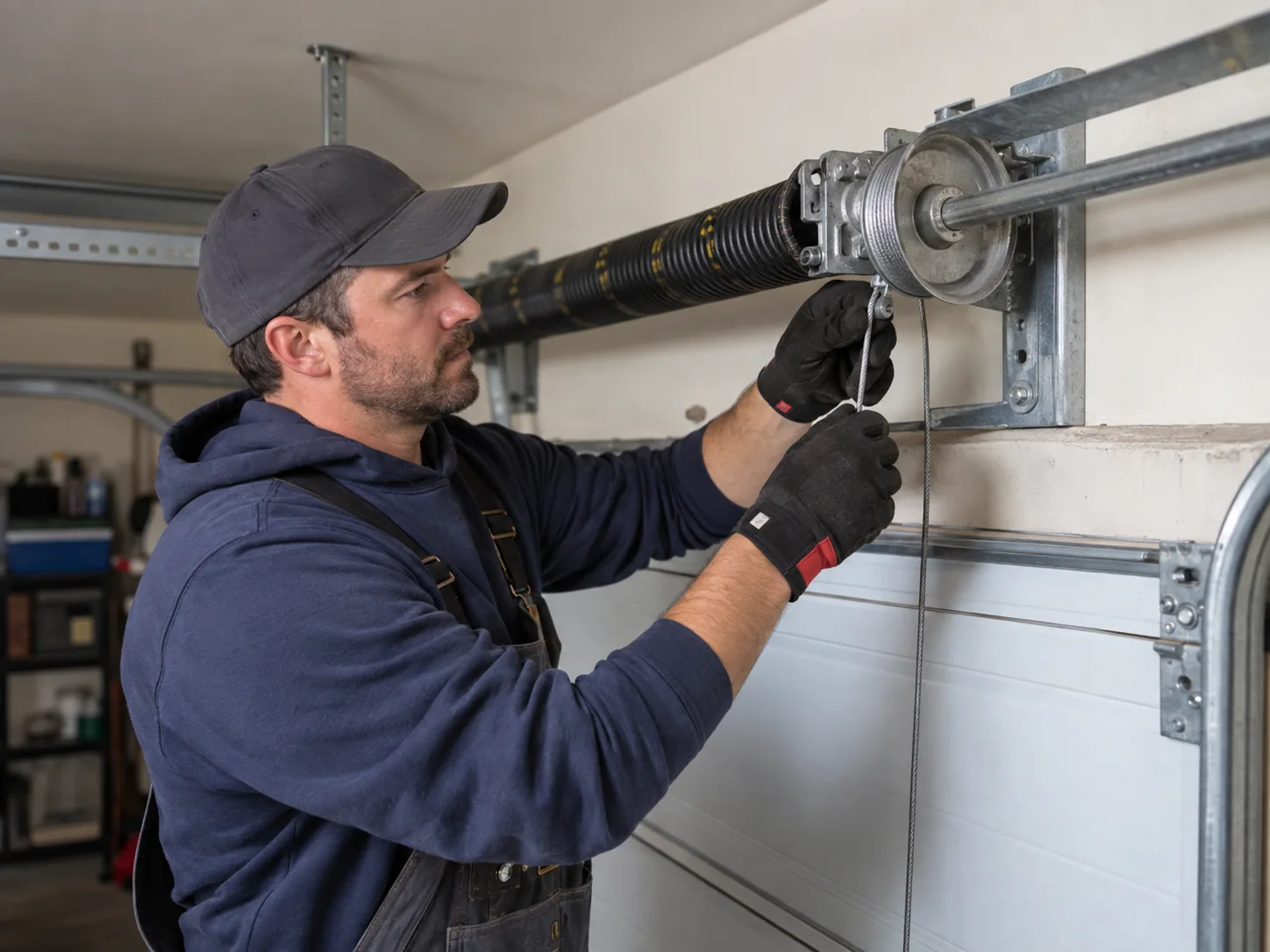
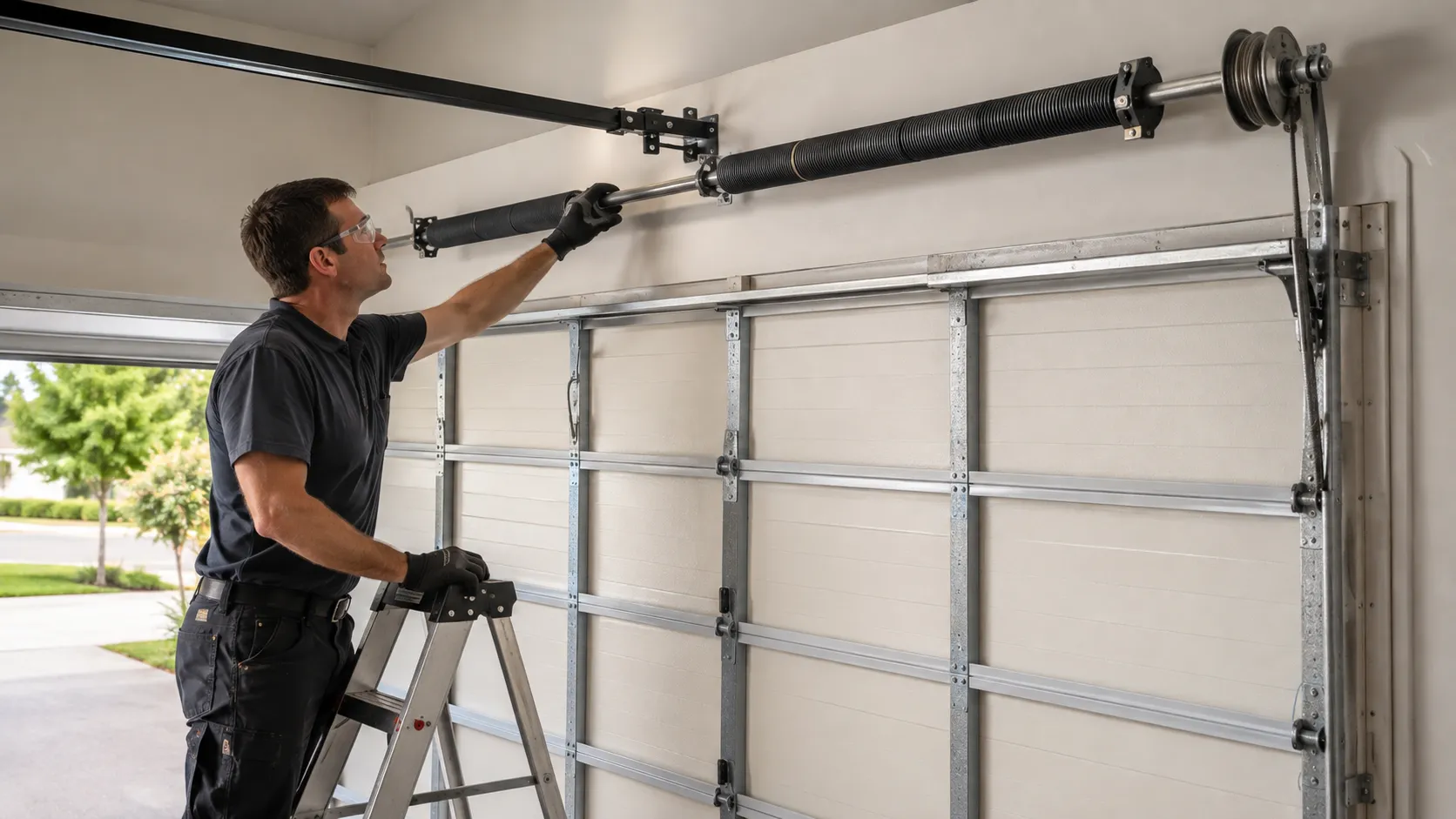
Cables fray at the drum end first, usually invisible unless you're looking straight up at it. On original hardware from this housing stock, we see fraying most on doors that have never had the cable relubricated or the drum checked for burrs.

Our process

How We Fix It

A real maintenance visit starts with the spring, not the opener. We check spring tension by hand, not by watching the opener strain against it, because a struggling opener is often masking a spring that's already lost part of its life.

  1. Cable roller alignment checking

    From there we look at cable condition at the drum, roller wear, and whether the track is still square to the frame - fifty years of house settling can pull a track out of true by more than you'd think.

  2. Winter-grade lubrication selection

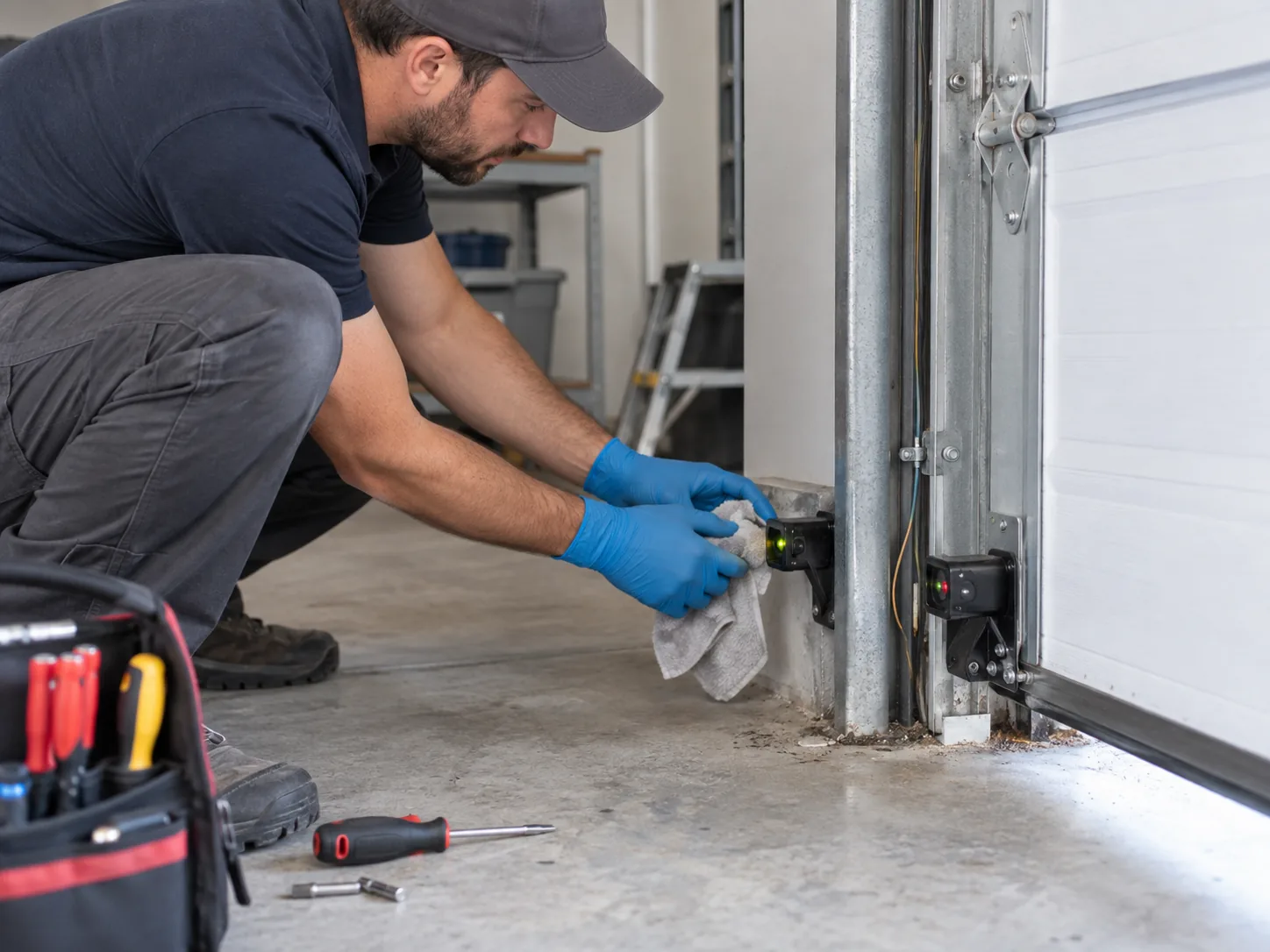
    We lubricate the parts that actually need it - hinges, rollers, the torsion bar - with the kind of lubricant that holds up through a cold winter without gumming, not household oil that thickens the first freeze it sees. We check the bottom seal too, since a gapped seal lets in the kind of damp cold air that speeds up rust on cable and hardware alike.

  3. Unnecessary replacement avoidance

    What we don't do on a maintenance visit: replace a spring that isn't at end of life just because it's old, or sell you a new opener when the old one just needs its limit switches reset. If a part's got life left, we leave it and tell you what to watch for next time.

Local causes

Why It Happens Here

The reason maintenance matters more here than it might somewhere with newer housing is simple: most of the doors we work on sit on houses built between 1949 and 1993, with the median right around 1967. That's original hardware on a lot of doors, or hardware that's one replacement removed from original - torsion springs and track brackets that have outlasted the roofs above them.

Add the climate band this area sits in - cold moderate, with real winter cold and real summer heat - and you get metal that expands and contracts twice a year, every year, for decades. That cycle is what loosens track bolts, dries out lubricant, and fatigues a spring faster than the same door would wear in a milder climate.

Across the wider service area, 21,303 of the 34,040 households own their house rather than rent, at a median household income of $61,160. That matters for maintenance because owner-occupied houses are the ones where a door gets fixed instead of ignored until the next tenant complains - which is part of why regular tune-ups actually get scheduled here instead of skipped.

Why It Happens Here

Questions

Common questions

How often should I get my garage door serviced in the Charleston area?

With housing stock mostly from the 1960s and 70s and a climate that swings from real winter cold to summer heat, we generally recommend a check once a year, ideally before winter. If your door is original hardware from that era, once a year is the minimum, not the ideal.

Can maintenance fix a spring that's already making noise?

Sometimes. If the noise is from dried lubricant, a proper service usually quiets it down. If the spring itself has lost tension or shows visible wear, maintenance won't fix that - it needs replacement, and we'll tell you which one you're looking at before we do anything.

Do you service the towns around Charleston too?

Yes. We cover the wider area including South Charleston, Dunbar, St. Albans, Cross Lanes, Nitro, and the other communities within roughly 18 miles of Charleston. Drive time and door age both factor into scheduling.

Why does my door act up more in January than in July?

Cold thickens grease and tightens metal tolerances, so a spring or roller that was fine in warm weather suddenly has more resistance to work against. It's usually not new damage - it's old wear finally showing itself once the temperature drops.

Ready when you are

Need a garage door sorted in Charleston?

Charleston Garage Door Pros repairs and installs garage doors, springs and openers in Charleston, WV and the surrounding area.

Call Now(304) 202-7503