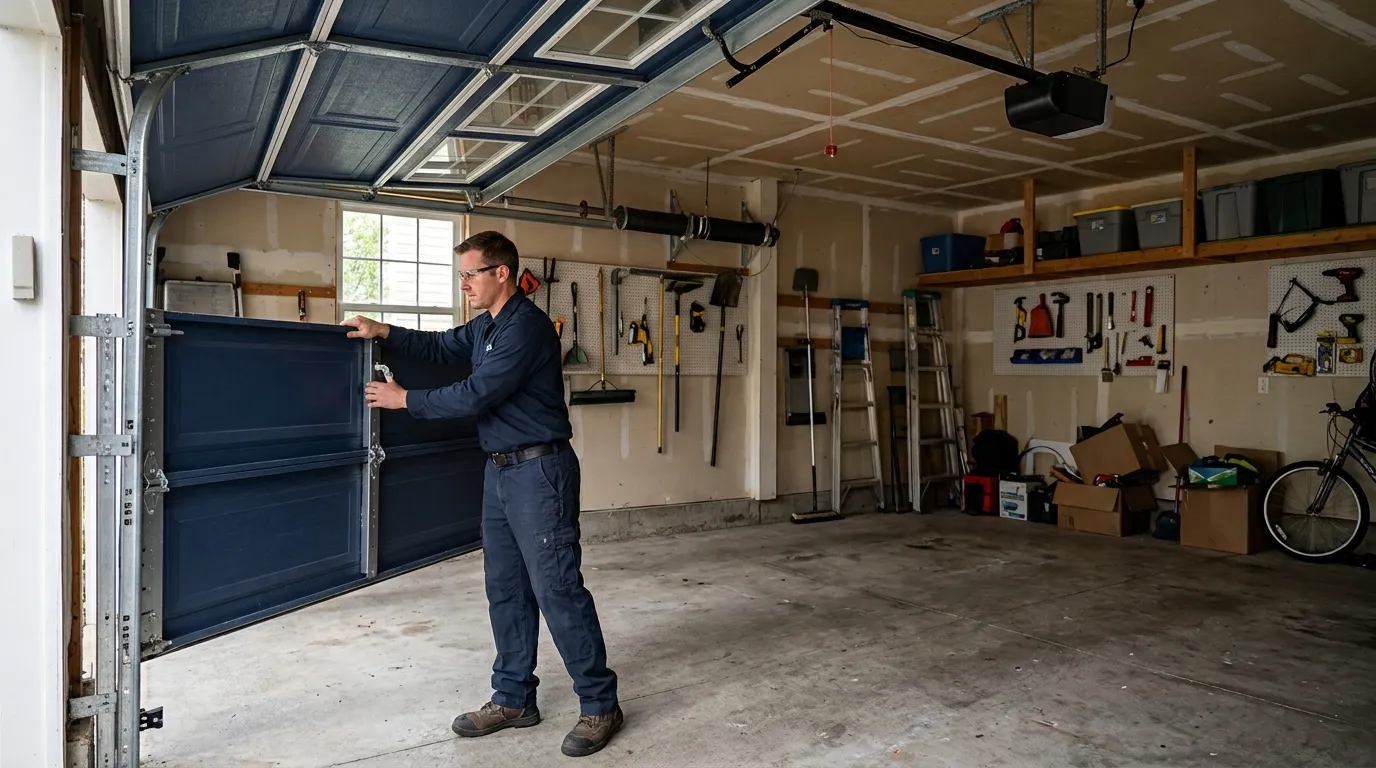
Nitro, Charleston

Garage Door Maintenance for Nitro's 1958-Era Housing Stock

Nitro's houses run older than the Charleston average, built mostly in 1958. That means different spring hardware and different failure points. Here's what we check and why.

Garage Door Maintenance for Nitro's 1958-Era Housing Stock in Charleston
Serving Charleston, WVBackground-checked techsHonest, upfront pricingFast local response

On the truck

Stocked Parts

Nitro sits about 10 miles from our Charleston shop, and the truck that comes out is loaded for what actually breaks on doors from this era.

1958 extension-spring inventory stocking

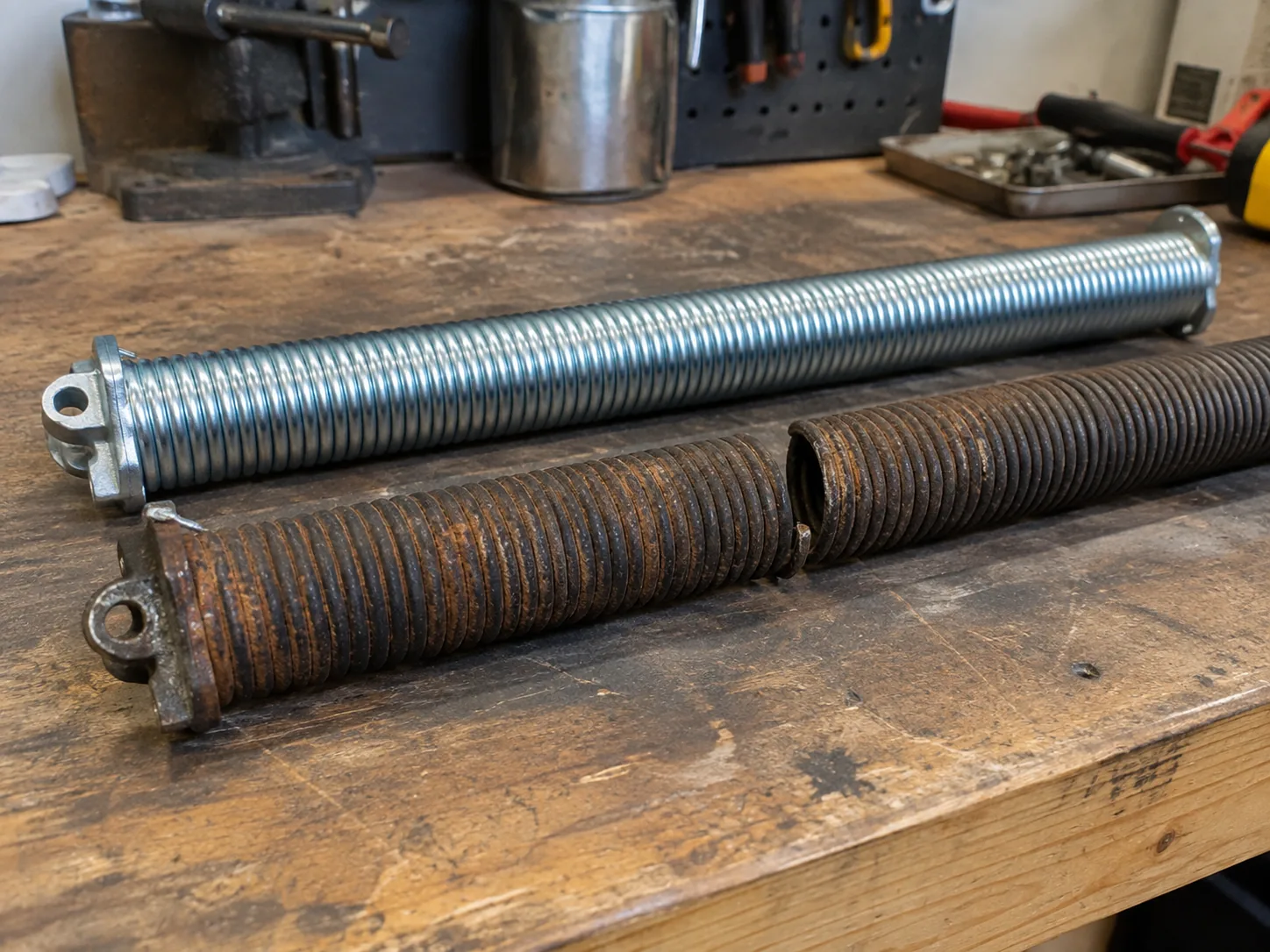
Across the wider service area, houses run newer on average - median year built lands around 1967 - but Nitro's stock is older, centered on 1958. That ten-year gap matters more than it sounds like it should. Doors and openers installed on houses built through the 1950s and early 1960s were often retrofitted later with extension-spring setups rather than the torsion systems that came standard once builders started installing garage doors at construction instead of adding them after.
1980s opener board obsolescence

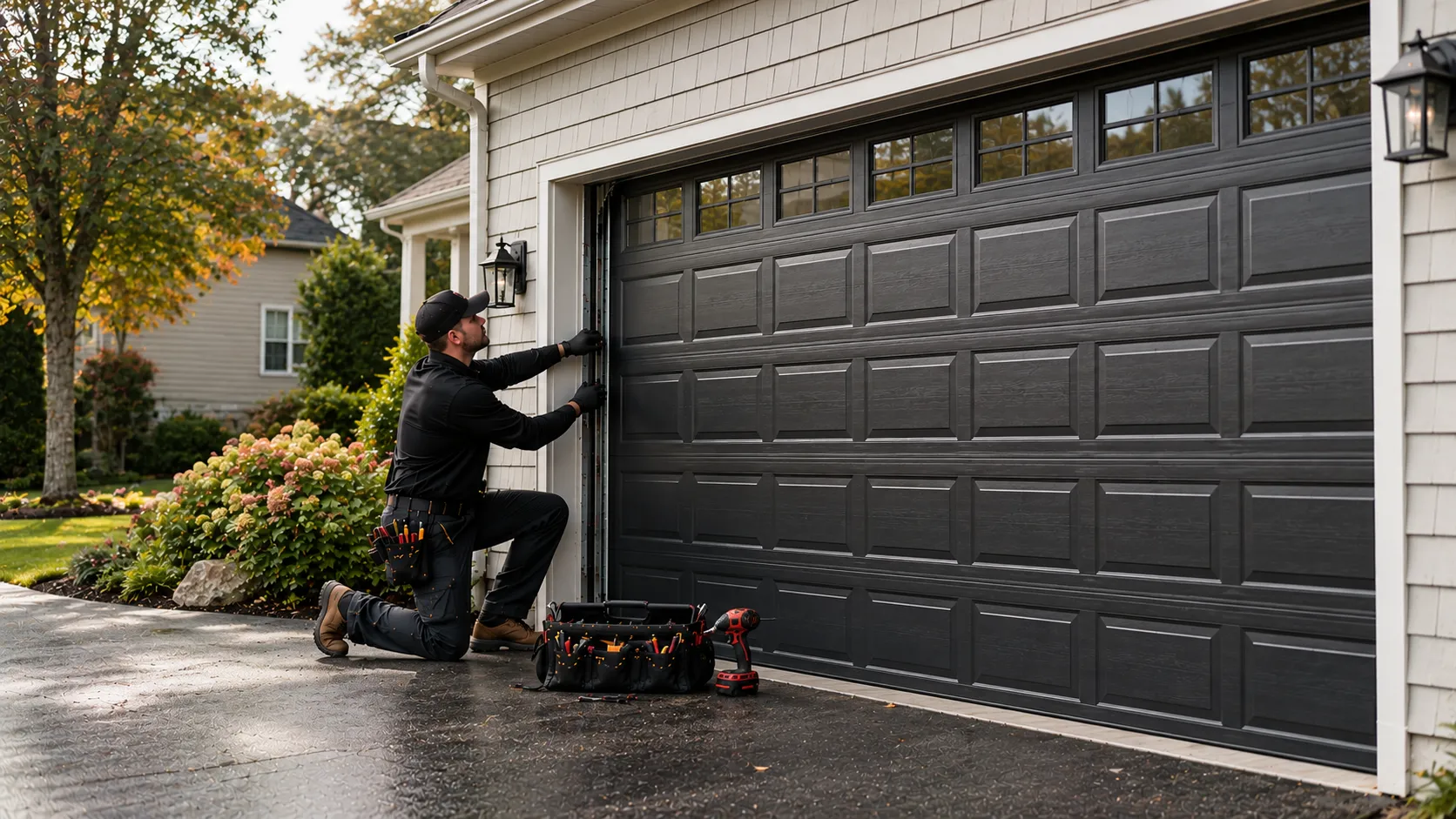
We carry extension springs in the common cable lengths, standard sectional rollers, and the hinges that fit older 8-foot and 9-foot panel widths, because those are the calls we get from this side of the service area more than from the newer subdivisions further out.

Odd-panel-track order sourcing

One honest limit: if a door still has its original 1958 hardware and the panel track is a size we don't stock, that part gets ordered, not carried on the truck. We'll tell you that on-site rather than guess.

Local causes

Why It Happens Here

A door installed in 1958 has had roughly 66 years to work through however many open-close cycles a household runs. Most of the springs, cables, and rollers from that original install are long gone, replaced piecemeal over decades by whoever was doing the work at the time - which is why we see mismatched hardware on older Nitro doors more than on houses built new in the 1970s. Add the climate: this region sits in a cold-moderate band, which means freeze-thaw cycling on any metal fastener or spring coil that isn't lubricated for winter. On a door that's already outlasted its original hardware once, a hard freeze finds whatever weak point that patchwork repair history left behind. Newer torsion setups tolerate that cycling better than the older extension-spring rigs common in this pocket of the service area, which is the practical reason age keeps showing up as the root cause on service calls out here.

Why It Happens Here

Watch-outs

The Complications

Nitro's median household income runs lower than the wider service area average - about $52,247 here against roughly $61,160 across the full territory.

Repair-replacement decisions

That doesn't change what a spring costs, but it does change the calculus homeowners run when a repair estimate comes in: replace one part now, or let a marginal issue ride until it fails outright. We see more calls out here for doors that got pushed a season or two past when the fix should have happened, which usually means a bent track or a stripped opener gear on top of the original spring problem, rather than just the spring.

Service call patterns

That's not a criticism - it's a pattern, and it's one we plan for by checking the whole travel path on a maintenance visit here, not just the spring tension. With roughly 2,820 households in Nitro proper, the volume of older extension-spring doors on this side of the service area keeps this pattern consistent call to call.

What It Costs

Pricing

What It Costs

We don't have a fixed price list to hand you here, and quoting one without seeing the door would be a guess dressed up as a fact. What we can tell you is what drives the number on an older Nitro door: whether the extension springs are original stock size or a mismatched replacement, whether the track needs full realignment or a spot adjustment, and whether the opener gear has stripped from years of compensating for a spring that's already lost tension. A straightforward maintenance visit - lubrication, hardware check, balance test - costs less than a repair that starts with a spring failure. On a door with 1958-era bones and decades of patch repairs behind it, catching the wear before the spring lets go is usually the cheaper visit.

Warning signs

How It Shows Up

On these older Nitro doors, the tell is usually noise before it's a full stop. A door that used to lift quiet starts grinding at the same spot on the track every time - that's a roller wearing unevenly, often from decades of slight misalignment nobody ever fully corrected.

Spring tension decline signs

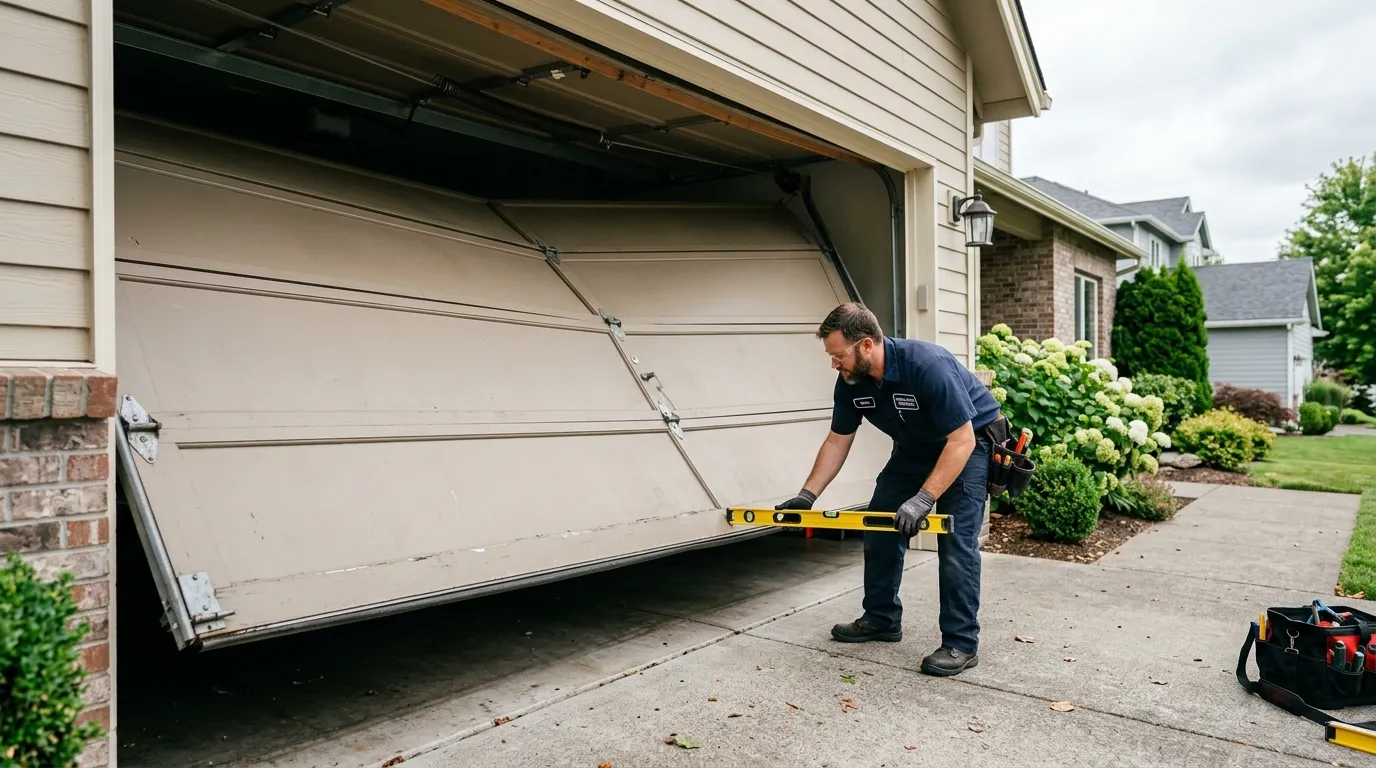
Extension springs that are losing tension show up as a door that reverses partway up, or one that feels heavier by hand than it used to.

Cold weather cable behavior

In the cold-moderate winters here, stiff cable and dry hinges make themselves known first thing in the morning, loosening up once the metal warms through the day - which homeowners sometimes read as the problem fixing itself. It hasn't. It's just temperature masking a wear pattern that's still there in July.

How We Fix It

Our process

How We Fix It

On a maintenance call in Nitro, we start by checking whether the spring hardware matches what the door needs now, not what got installed decades back - mismatched extension springs are common enough here that this is the first thing on the list, not an afterthought. From there it's track alignment, roller condition, cable wear, and opener gear check, in that order, because on a house this age the failure usually cascades from spring to track to opener if it's left alone. We adjust and lubricate what's serviceable and flag what isn't, with the honest number attached rather than a push toward replacement. If the door's hardware is original 1958 stock and a part we don't carry needs ordering, we say so before we start, not after the invoice.

Questions

Common questions

Why does my Nitro house have different garage door hardware than my cousin's place in a newer part of the service area?

Houses in Nitro run older on average, centered around 1958, while newer subdivisions further out were built with garage doors installed fresh alongside the house. Older Nitro doors were more often retrofitted later, which is why extension-spring setups and mismatched hardware show up here more than torsion systems installed at construction.

Do you have a branch or truck based in Nitro?

No. We run out of Charleston, about 10 miles away, and travel out for scheduled maintenance and repair calls. There's no local depot here, so we plan the truck's stock ahead of the visit rather than restocking on-site.

How do I know if my door needs maintenance or a full repair?

If the door still opens and closes on its own power but makes noise, feels heavier, or reverses partway, that's usually a maintenance-level fix - spring tension, roller wear, track alignment. If the opener gear has stripped or the spring has fully let go, that's a repair call, and we'll tell you which one it is before quoting anything.

Is winter a bad time for garage door maintenance in this area?

It's actually a good time to catch problems. This region sits in a cold-moderate climate band, and freeze-thaw cycling is hardest on aging cable and dry hinges. A pre-winter or mid-winter check catches stiffness before it turns into a stuck cable or a cracked roller.

Ready when you are

Need a garage door sorted in Charleston?

Charleston Garage Door Pros repairs and installs garage doors, springs and openers in Charleston, WV and the surrounding area.

Call Now(304) 202-7503