
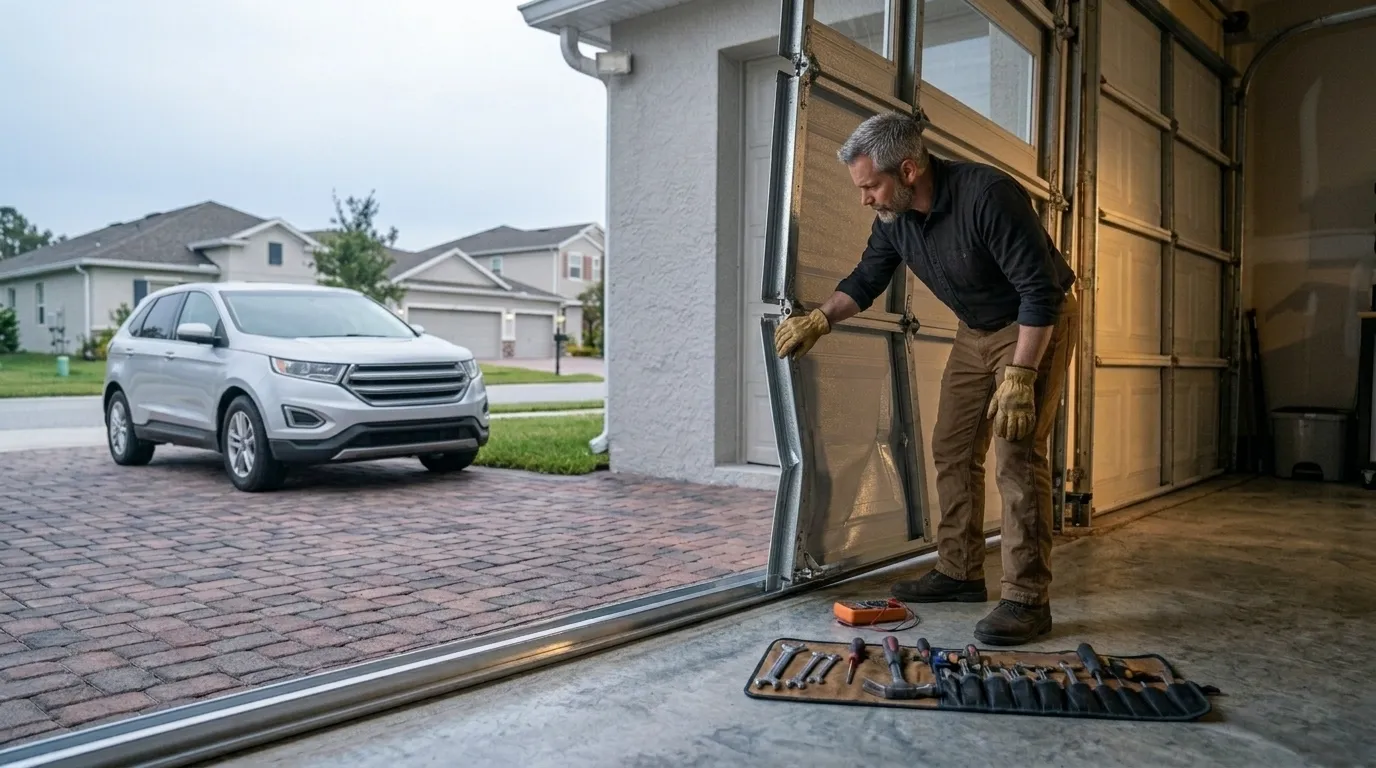
Weatherseal cracking bottom check
Look at the bottom weatherseal for cracking; it's cheap and it's the first line against drafts in a house built in the late '70s, when insulation standards were lighter than they are now.
Sissonville, Charleston
Garage door maintenance for Sissonville, WV's roughly 1,171 households, most built after 1978, with cold-climate spring and track checks from a Charleston-based crew.
Popular Services
Warning signs
Sissonville is a small place - about 1,171 households, not a dense grid of streets but scattered homes on bigger lots. That size matters for maintenance because it means fewer identical doors going bad in a cluster and more one-off calls: a spring that's been fine for fifteen years suddenly isn't, an opener that's chirped for months and finally quits. Most of the housing here went up around 1978, a bit newer than the 1949-1993 range you'll see across the wider Charleston area, so you're less likely to find the original one-piece doors from the '50s and more likely to find early sectional steel doors with extension springs or first-generation torsion setups. Those systems are simpler than newer ones but they've had four decades to wear. The usual signs: a door that shudders partway up, cables that look frayed at the drum, rollers that have gone from round to oval. None of that is dramatic. It's just metal doing what metal does after 40-plus years of lifting a couple hundred pounds twice a day.
Booking
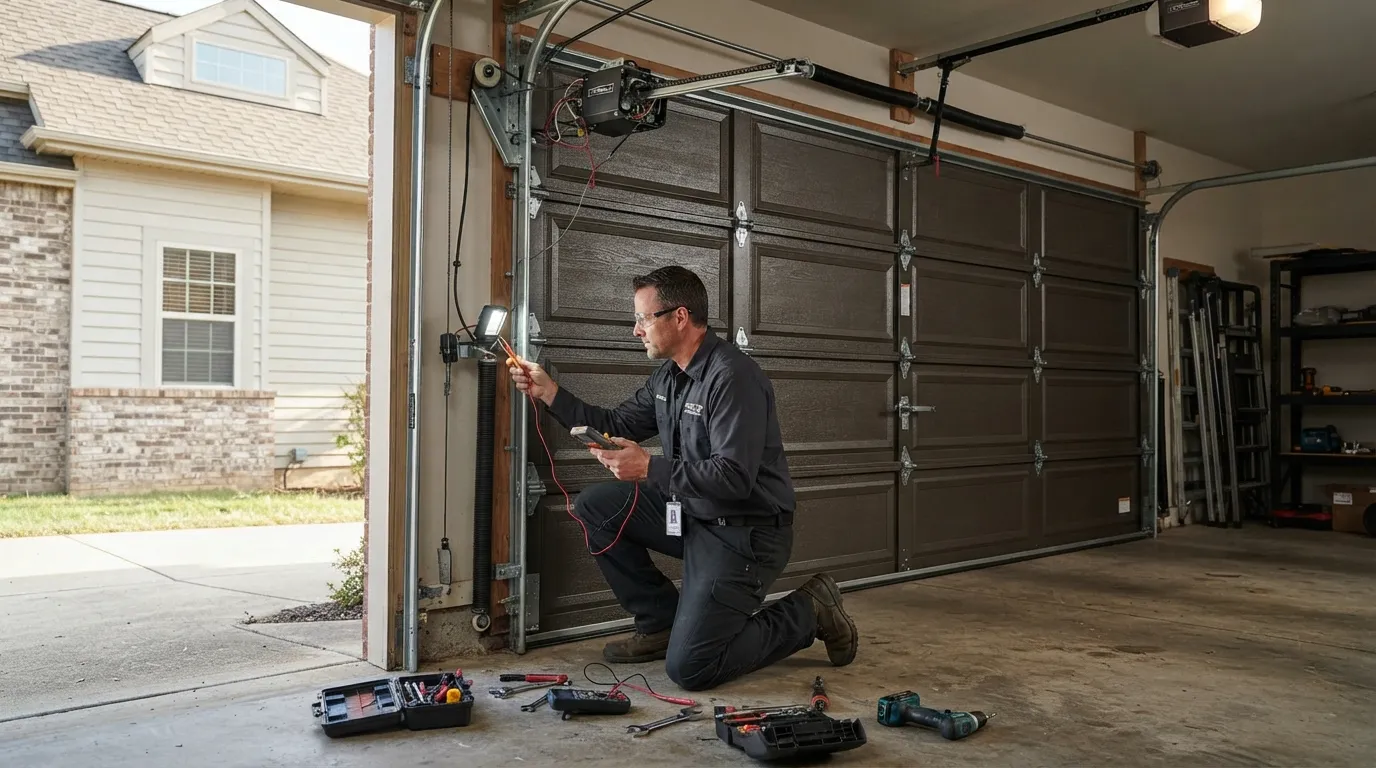
We work out of Charleston, and Sissonville sits about 11 miles out, so a maintenance visit here gets scheduled as a run, not a drop-in. That's not a knock on the town - it's just the geography. When you call, tell us roughly what year the house went up if you know it; for Sissonville that's often around 1978, and it helps us guess whether we're dealing with extension springs or an early torsion bar before the truck even leaves. We don't keep a branch or a depot in Sissonville, so we can't promise a same-hour callback the way a shop physically down the street could. What we can do is bundle the visit with a real inspection - hardware, cables, opener sensors, weatherseal - instead of just a quick oil-and-go.
DIY or pro
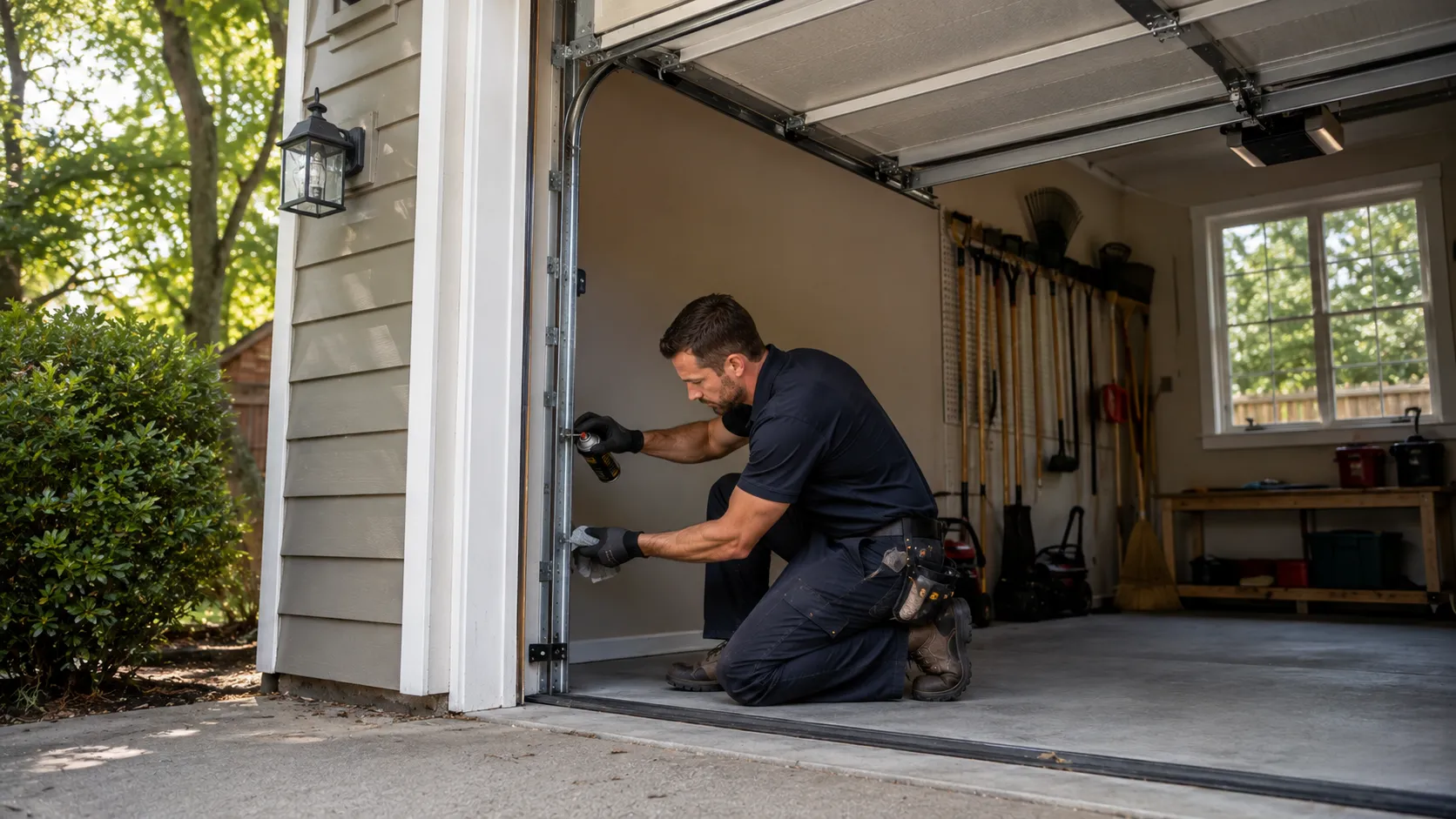
There's a fair amount an owner can handle between visits. Wipe down the tracks and check for debris, especially after the wetter stretches this cold-moderate climate brings - dirt and grit in the track wears rollers faster than age alone.
Look at the bottom weatherseal for cracking; it's cheap and it's the first line against drafts in a house built in the late '70s, when insulation standards were lighter than they are now.
Test the auto-reverse safety feature by laying a 2x4 flat under the door and closing it - it should reverse on contact. What you shouldn't touch: the torsion spring itself.
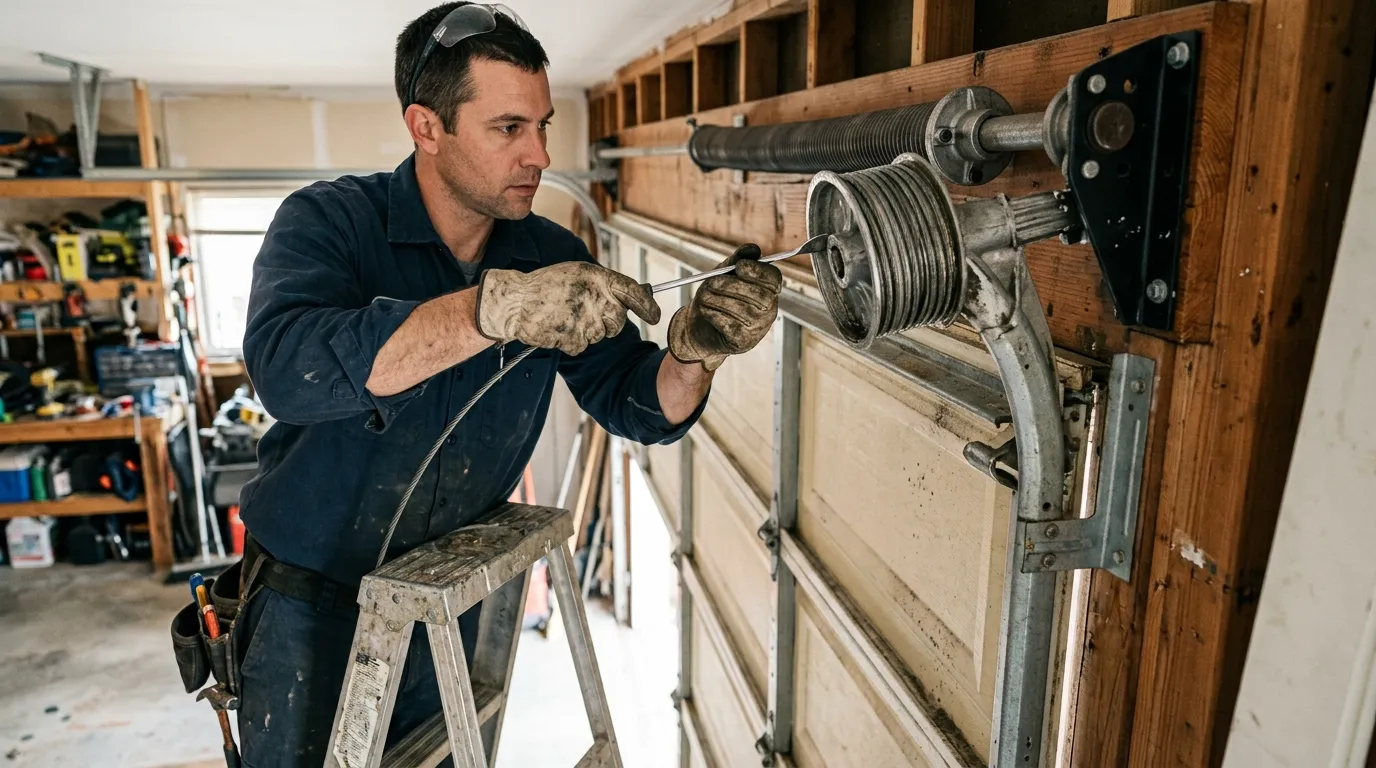
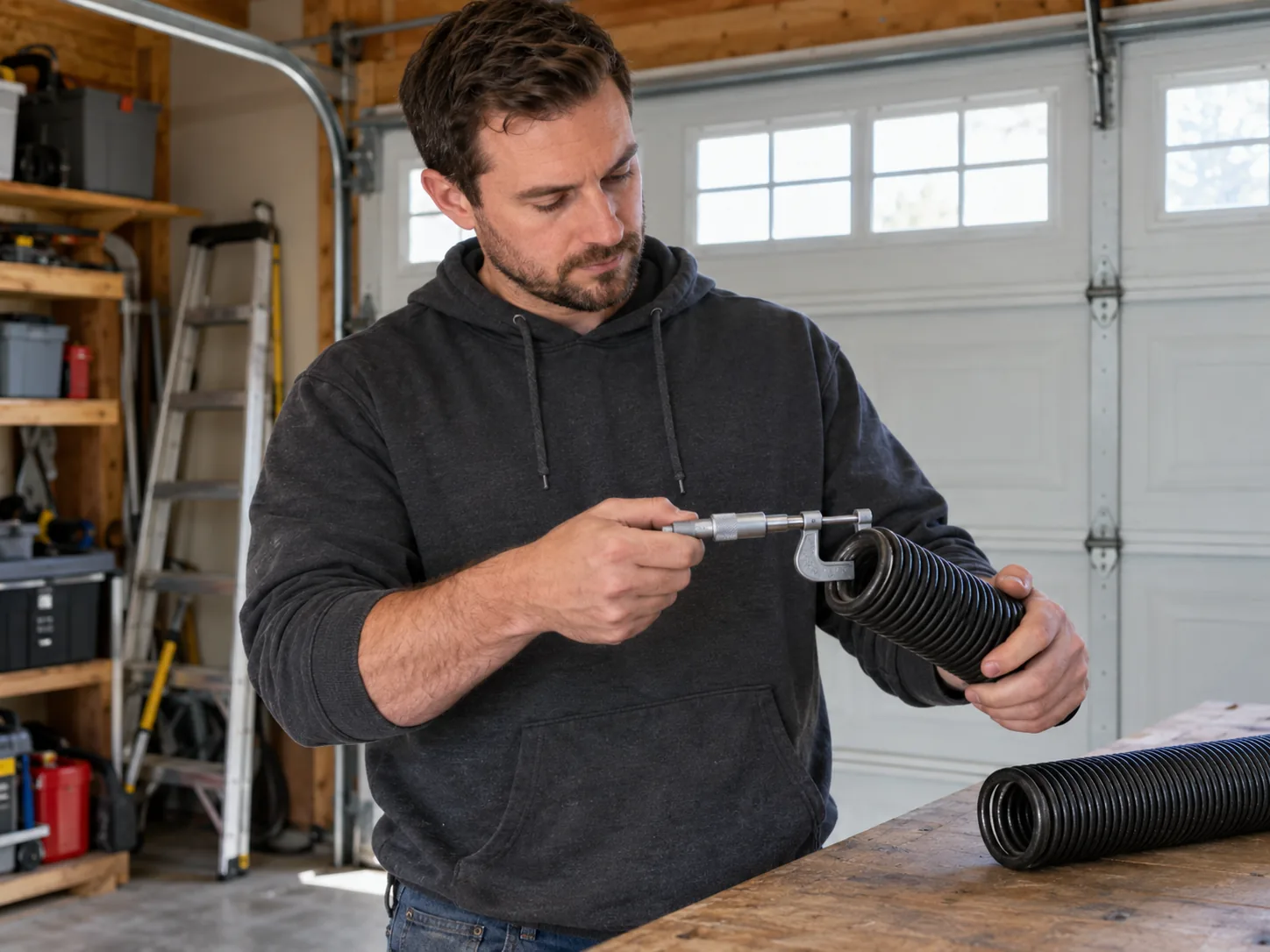
On a door this age the spring is under real tension and the winding cones are original hardware, often rusted at the set screws. That's not a do-it-yourself job, and if a shop tells you otherwise, get a second opinion.
Timing
A straightforward maintenance visit - lubrication, hardware check, balance test, opener inspection - usually runs under an hour once the truck's on site.
Add time if the door needs a spring adjustment or if rollers and cables are due for replacement on a 1978-era system that's never had one.
The travel itself, given the 11 miles from Charleston, is built into how the day gets routed rather than into the invoice, but it's part of why we ask you to be flexible on the exact appointment window rather than an exact time.
On the truck
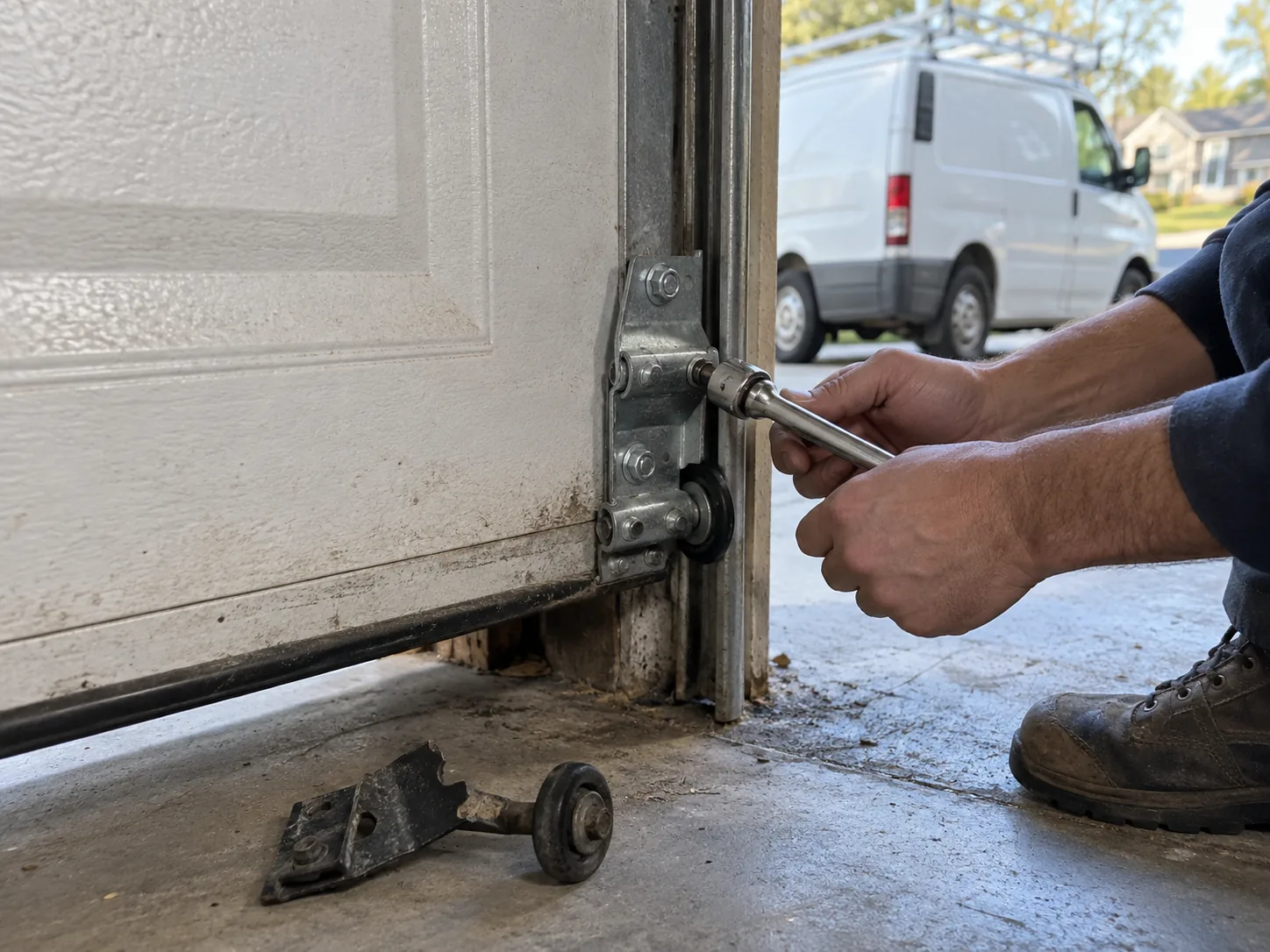
The truck carries the parts that fail most often on the housing stock common through this area - standard torsion springs, rollers, cables, hinges, and typical opener sensor kits. Extension spring sets specific to some of the older 1970s sectional doors aren't always on the truck; if your door still runs on the original extension springs, we may need to order the exact size rather than swap it same-visit. That's the honest limitation: we'd rather tell you that up front than pretend every part fits every door.
Local causes
Put the numbers together and the pattern makes sense. A median household income of $58,322 in Sissonville means most owners are maintaining a door they bought with the house, not upgrading it every decade. A median build year of 1978 means the hardware on a lot of these doors is now well past the point where springs and cables are rated to last without service. And the cold-moderate climate band this region sits in means metal hardware sees enough temperature swing across the year to fatigue faster than it would somewhere milder - springs lose tension, cables stretch, seals crack. None of those three things is unique to Sissonville by itself, but the combination - older stock, a household base that tends to keep a door running rather than replace it early, and a climate that works on the metal year-round - is what shows up in the service calls out this way.

Questions
Sissonville is about 11 miles from our Charleston base. It doesn't change what we can fix, but it does mean visits get routed as part of the day's schedule rather than an immediate drop-in, so plan on a window rather than an exact hour.
Often, yes. A lot of Sissonville homes date to around 1978, old enough that original springs, cables, and rollers are due or overdue for inspection, but usually with early sectional steel doors rather than the older one-piece doors found in older parts of the region.
Standard torsion springs, cables, rollers, and hinges are on the truck. Some older extension spring sizes from 1970s-era doors aren't always stocked and may need to be ordered, which we'll tell you before starting the job.
Wipe down the tracks, check the bottom weatherseal for cracking, and test auto-reverse with a 2x4 under the door. Leave the torsion spring and winding cones alone - they're under real tension and not a safe do-it-yourself task.
Explore more
Ready when you are
Charleston Garage Door Pros repairs and installs garage doors, springs and openers in Charleston, WV and the surrounding area.