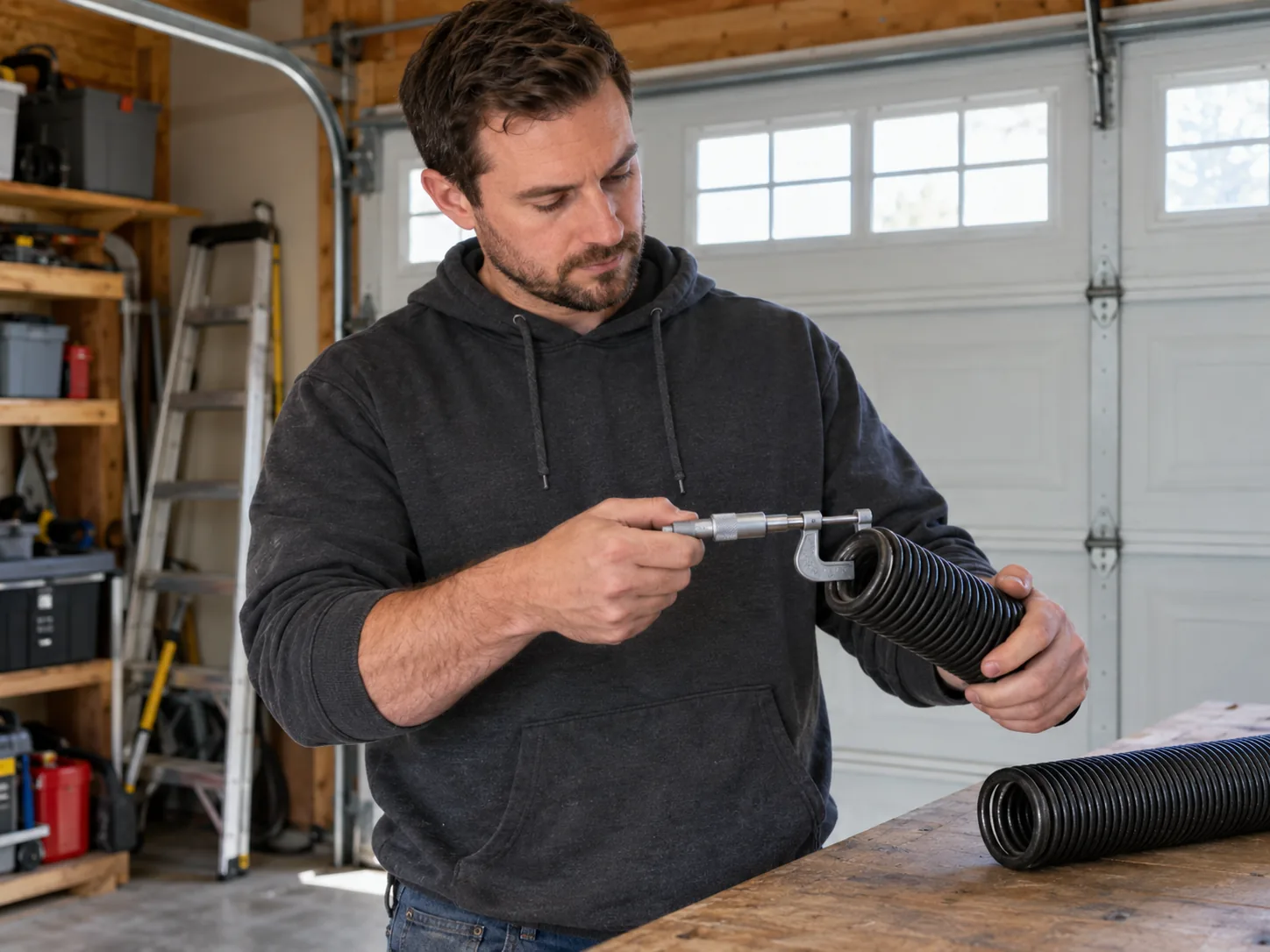
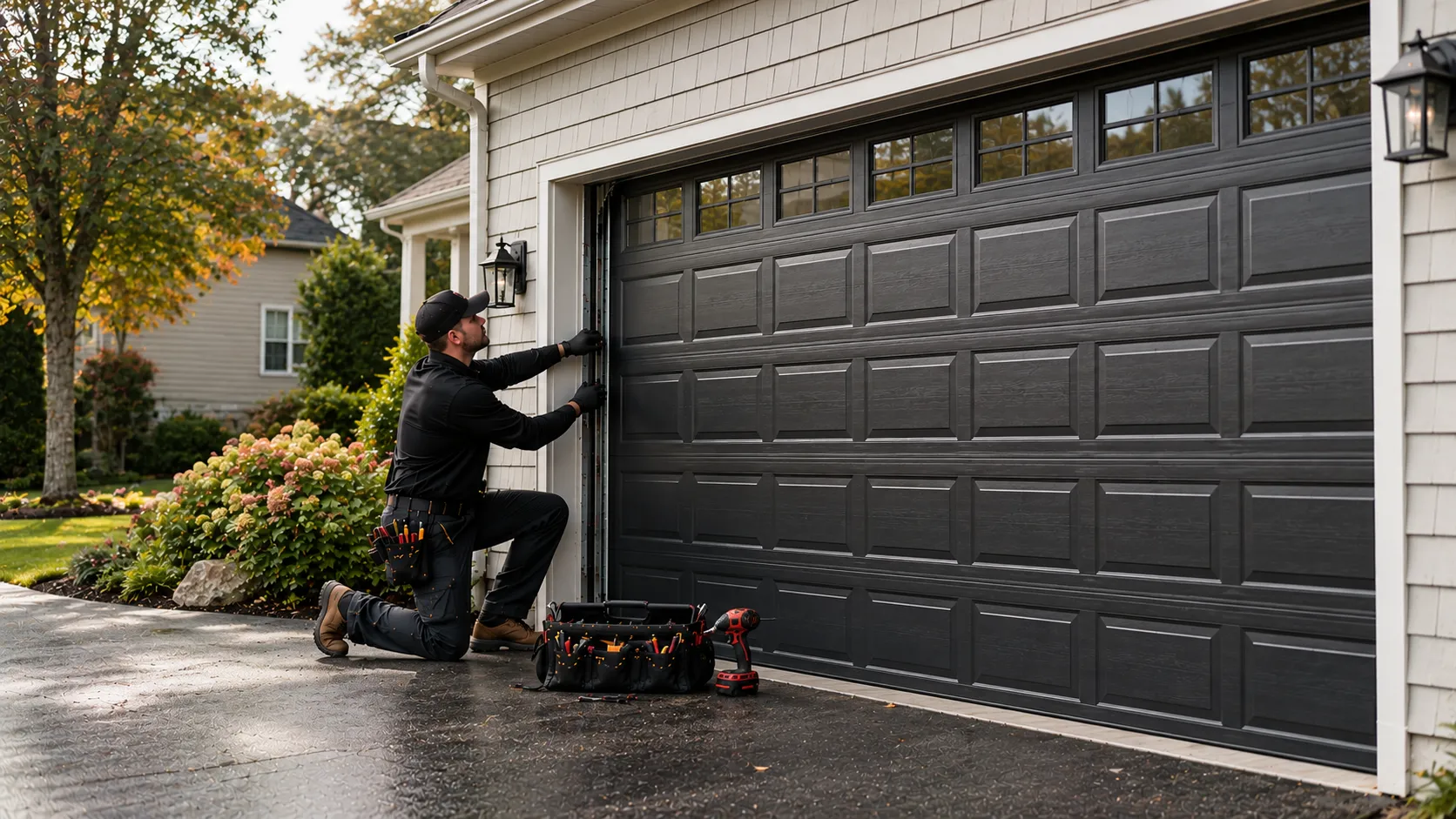
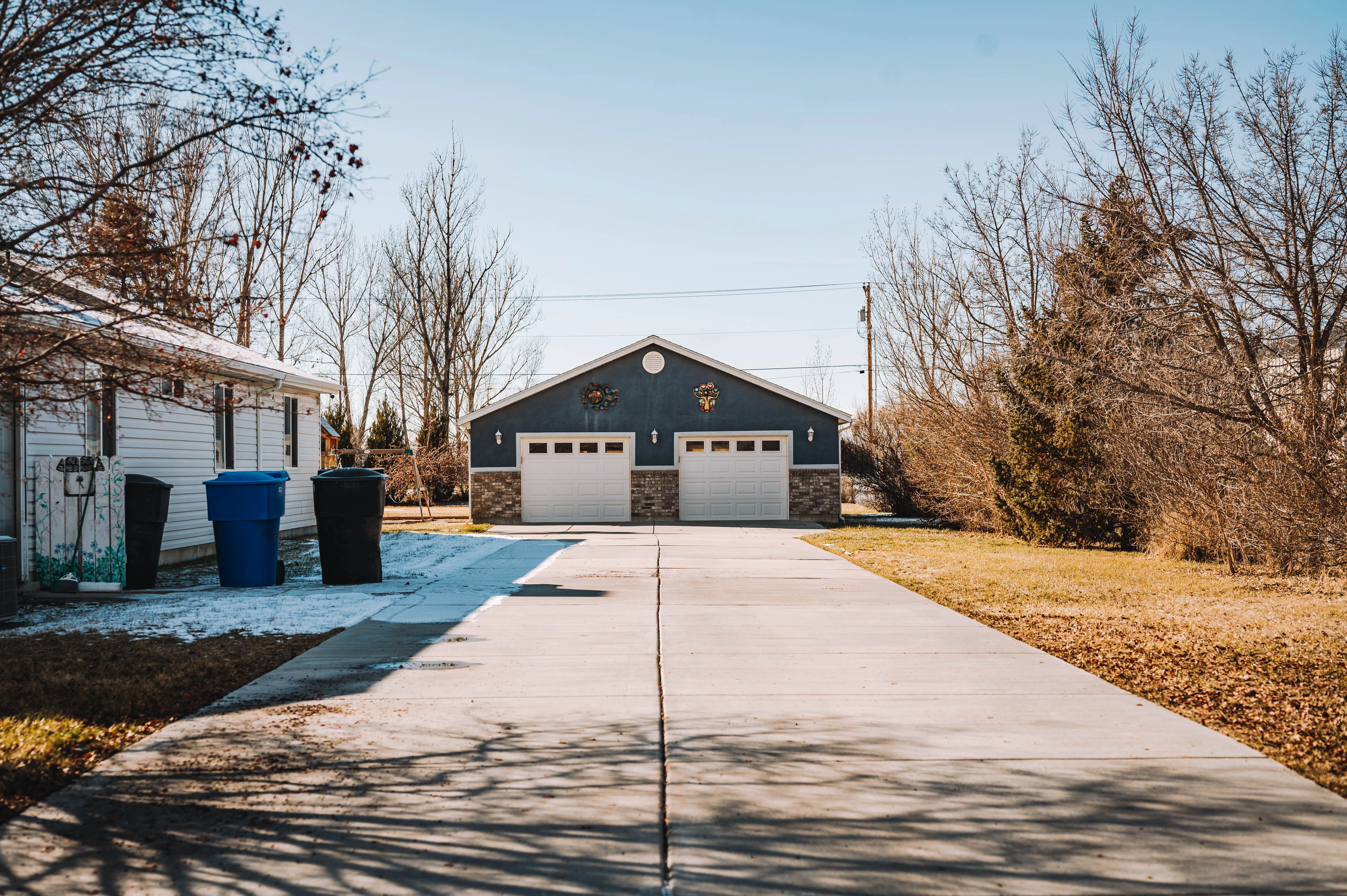
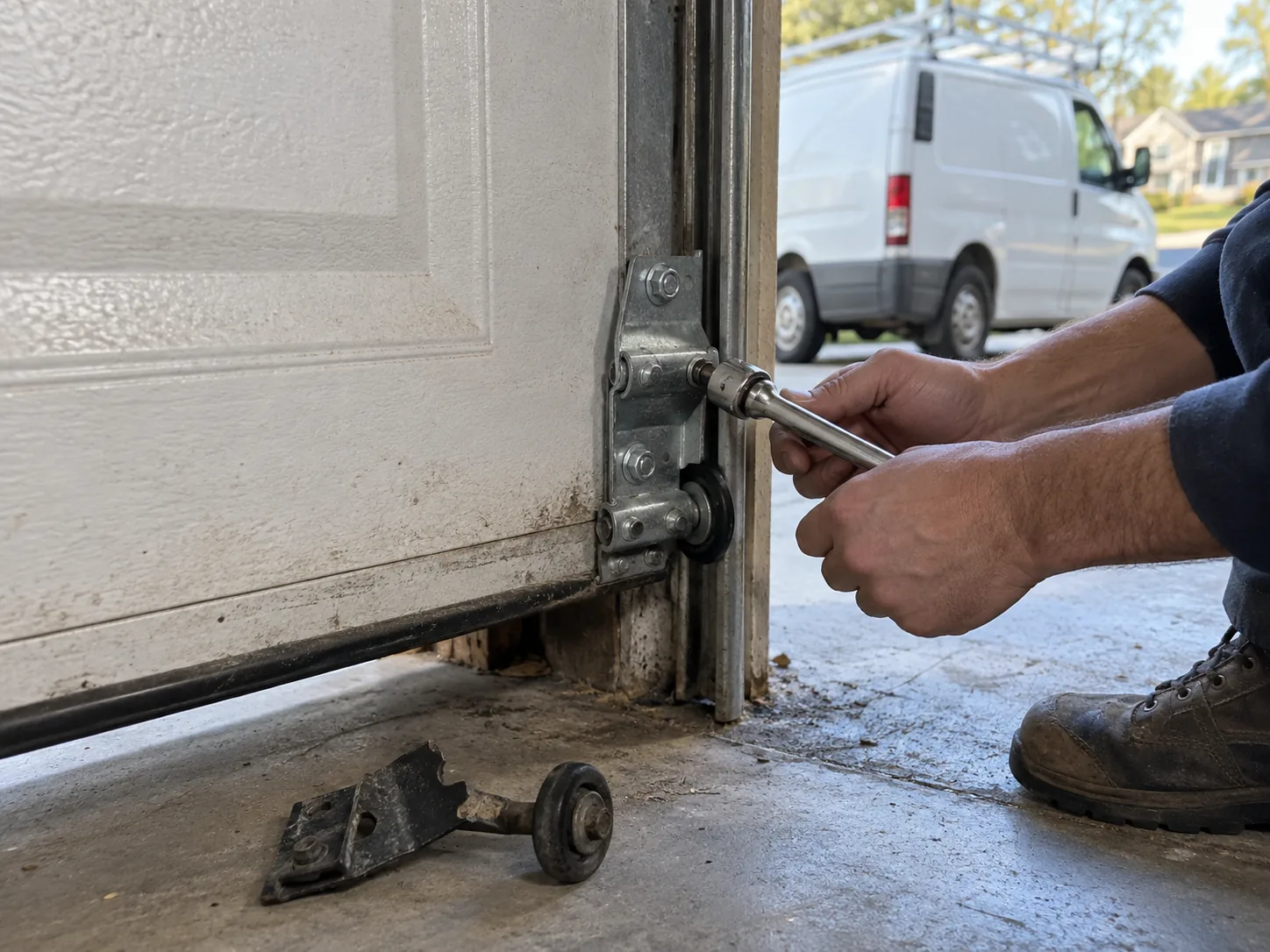
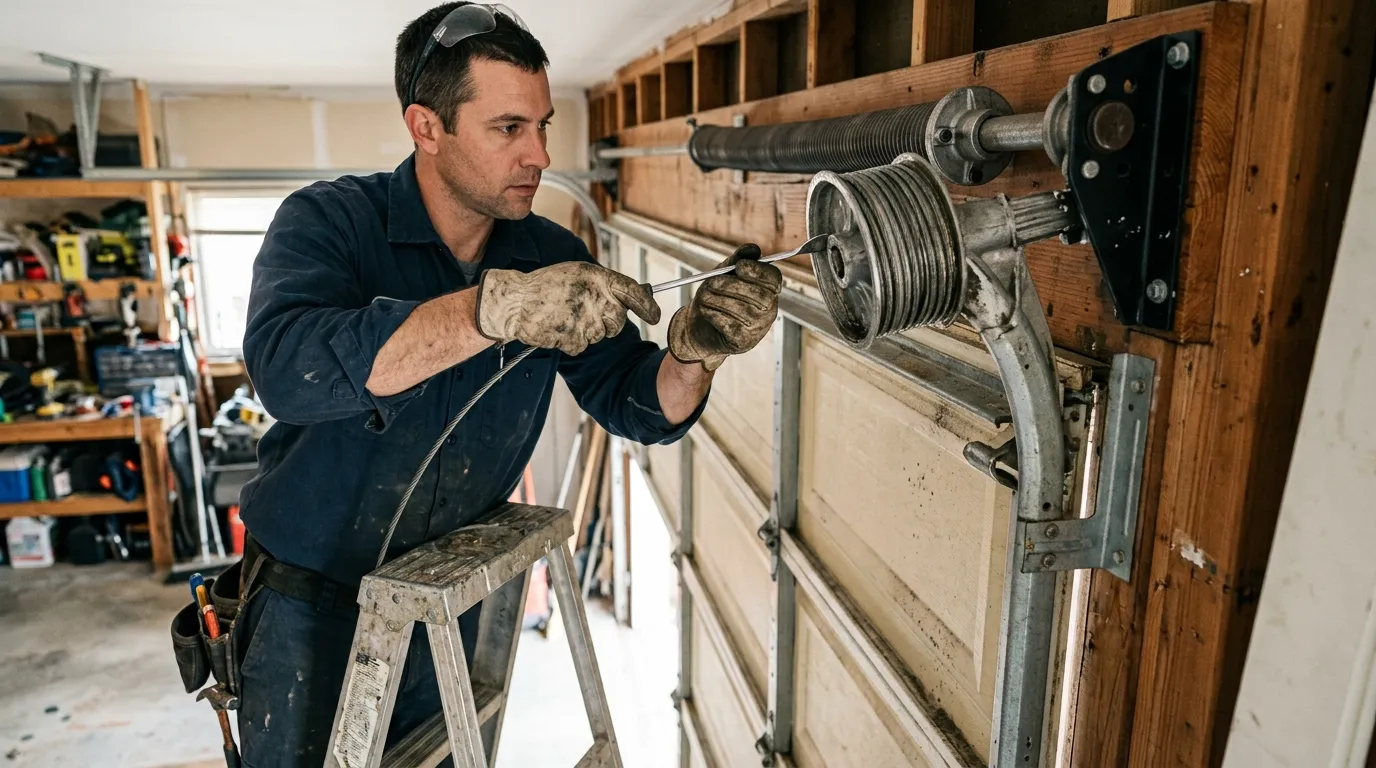
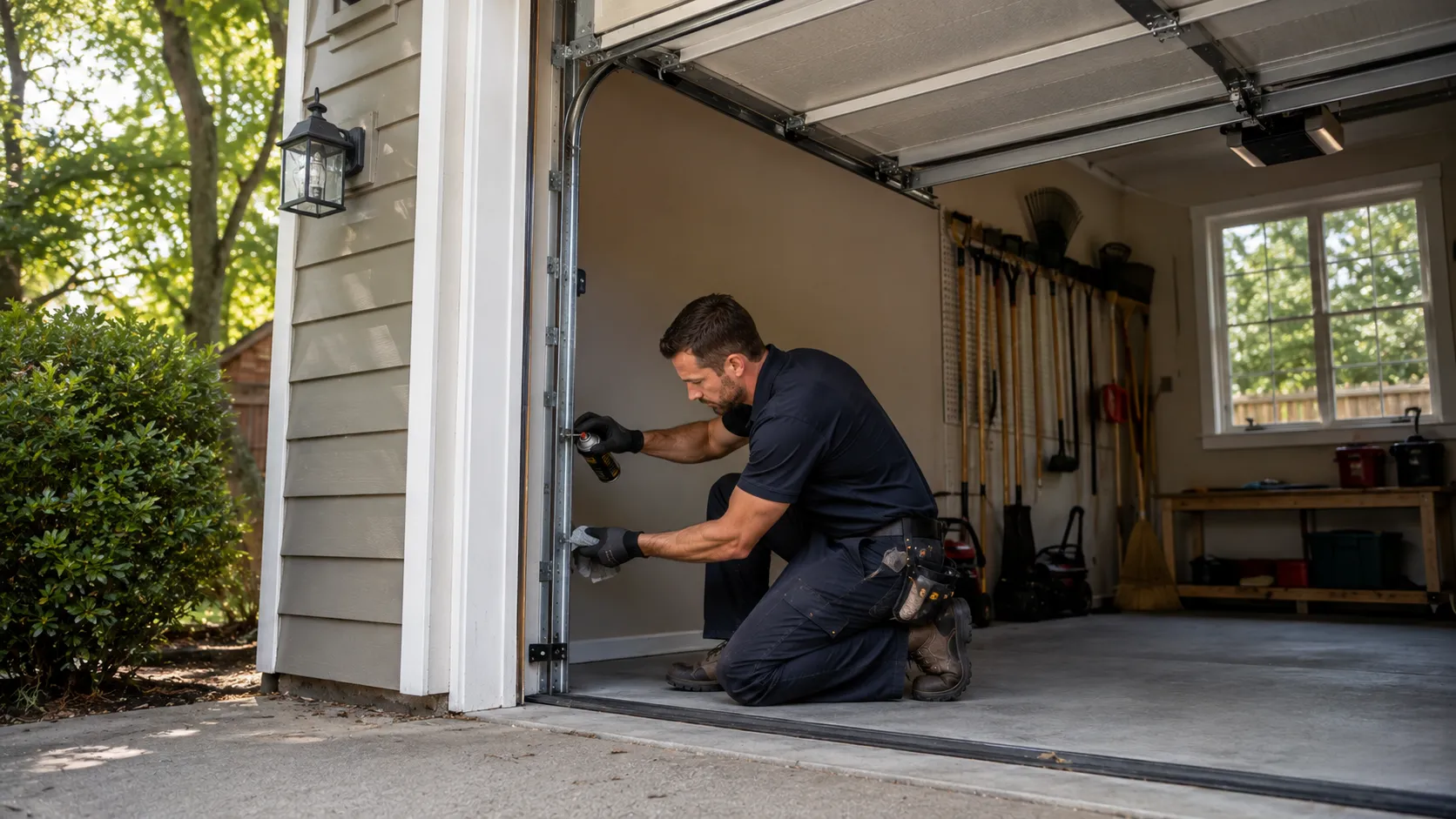
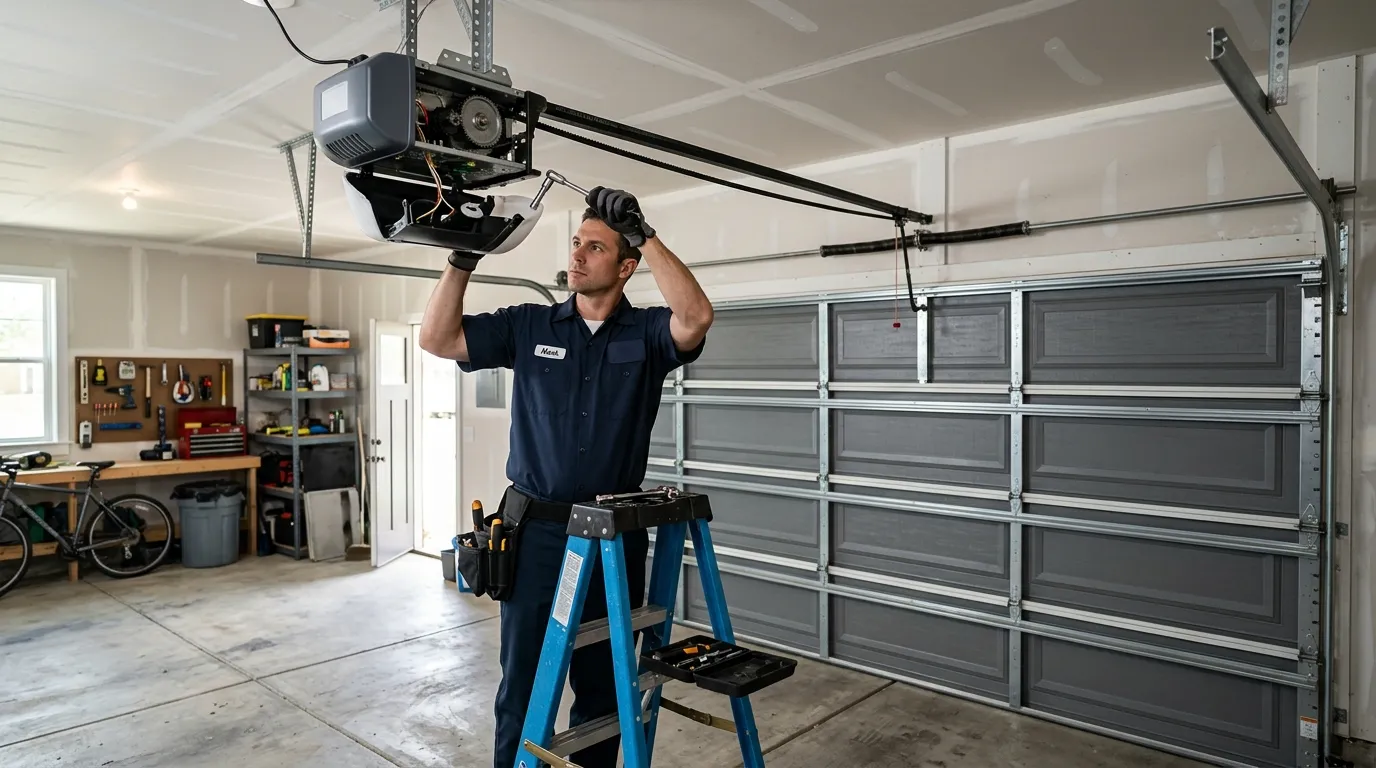
This area sits in a cold-moderate climate band, and that matters for steel more than most people think. Metal contracts in cold weather, and a torsion spring that's already fatigued from decades of use is more likely to give out on a hard freeze morning than in July. Combine that with a housing stock built mostly between the late 1960s and early 90s - median household income here runs $58,322, a bit under the wider area's $61,160 - and you get a pattern: original hardware, aging steel, and owners who reasonably weigh a spring repair against the cost of replacing the whole door. Most of the time the math favors the spring. It's a fraction of the cost and gets the door moving again without touching the track, the opener, or the panels, which are usually still fine even when the spring isn't.