1975 median newer housing
What we can tell you is that Cross Lanes skews toward newer stock than a lot of the area we cover: the median home here was built around 1975, later than the service-area median of 1967.
Cross Lanes, Charleston
Cross Lanes homes run newer than most of the Charleston area, built mostly after 1970 - that changes which spring, cable, and opener repairs we make here.
Popular Services
Pricing
We don't post a flat price here, and we won't invent one. What a job costs depends on what actually broke - a snapped extension spring runs different money than a bent track or a burned-out opener motor, and we don't know which one you've got until a tech looks at the door.
What we can tell you is that Cross Lanes skews toward newer stock than a lot of the area we cover: the median home here was built around 1975, later than the service-area median of 1967.
That later build year usually means extension-spring setups and lighter steel sections rather than the heavier one-piece doors and older torsion hardware you find on houses from right after the war. Parts for that generation are easier to source, which can keep a repair bill lower than it would be on an older house nearby.
Income here runs $62,704, a touch above the $61,160 median across the whole service area, which doesn't change what we charge but does mean we're not quoting a stripped-down job by default. Ask for the number in writing before the tech starts, and if a repair is going to cost more than half a new door, we'll say so.
Our process
The truck comes from Charleston, about ten miles out - Cross Lanes is on the longer end of the drives we make, closer to St.
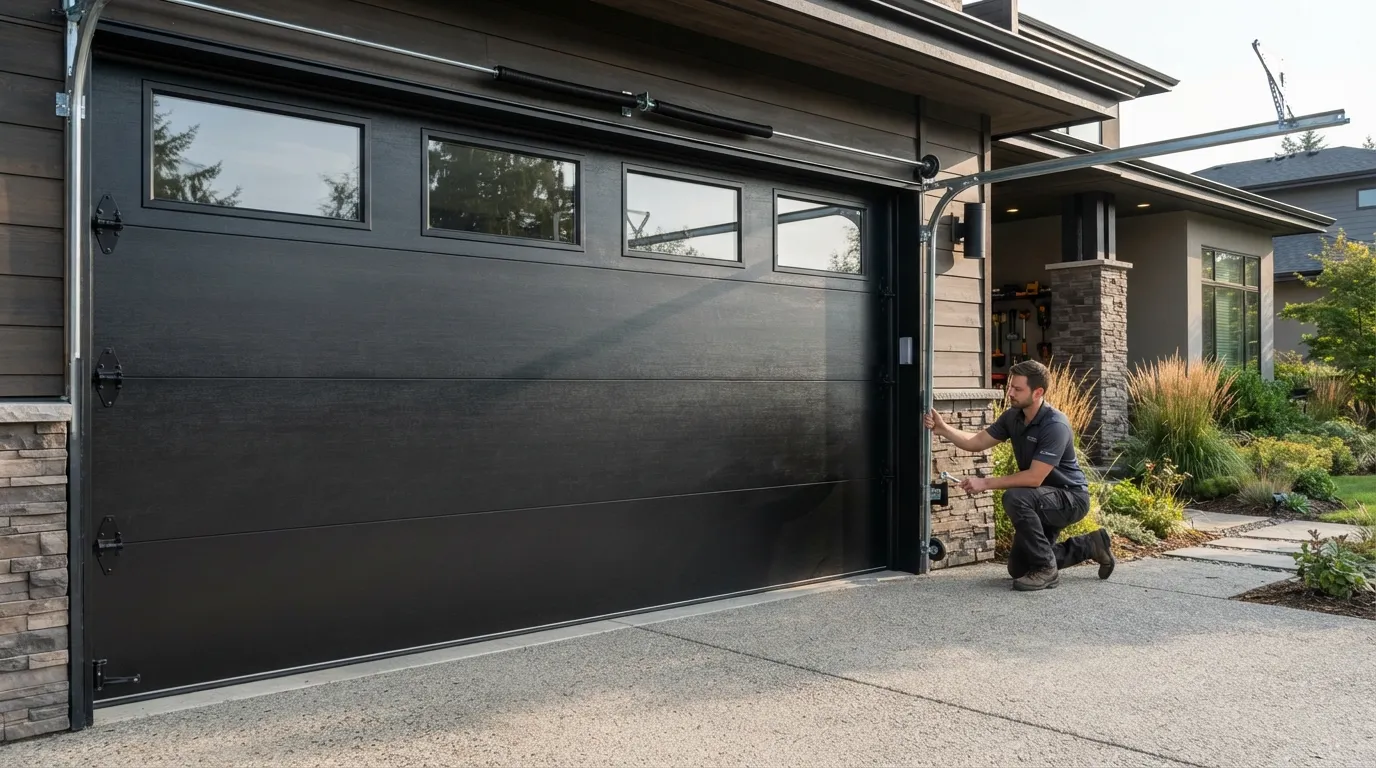
Albans and Elkview than it is to South Charleston. Once the tech is on site, the first move is always diagnosis: which spring, which cable, whether the track is bent or just out of alignment, whether the opener is the problem or just a symptom of a door that's binding.
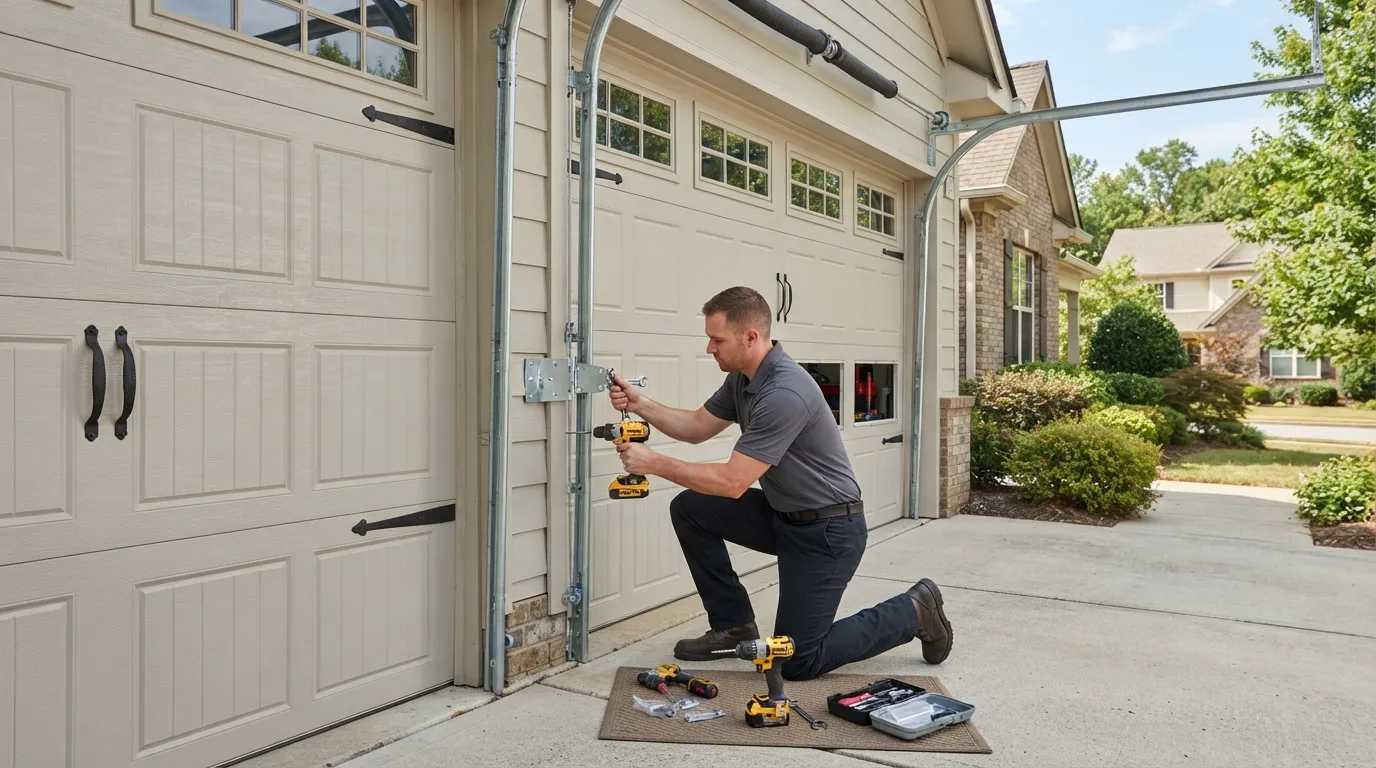
On a house from the 1970s wave, that usually means checking extension springs on both sides of the header rather than a single torsion bar, and checking the roller brackets, since that's where lighter steel sections tend to show wear first.
We carry stock for common spring sizes and standard opener parts; anything unusual gets ordered and that adds a day or two. We replace what's broken, test the door through a full cycle under load, and balance it before we leave - a door that closes but isn't balanced will just come back to break something else in a few months.
Local causes
This area sits in a cold, moderate climate band, which means real freeze-thaw swings every winter and a decent humidity load in summer. That cycle is hard on any garage door, but it hits different parts depending on the hardware, and Cross Lanes' hardware runs newer than the neighborhoods built in the 1950s. Extension springs, common on houses from the 1970s wave, lose tension gradually as the metal fatigues through repeated cold contraction and summer heat - they don't always snap suddenly the way a torsion spring does, they just get weaker year over year until the opener is straining to lift a door it used to handle fine. Steel track brackets from that same era are lighter gauge than the older stock, and cold makes them more likely to work loose rather than crack outright. None of this is unique to any one street - it's a function of when the neighborhood went up, and most of Cross Lanes went up close together, in the same fifteen-year window. That's why the failures we see out here cluster: spring fatigue and opener strain, not the broken cable and warped panel issues that show up more on the oldest houses in the wider area.
Warning signs
The most common call from this area is an opener running but the door not moving, or moving slower than it used to - that's usually a spring losing tension, not the motor failing.
Next most common is a door that reverses partway up on its own, which is the opener's safety sensor reacting to a door that's out of balance, again pointing back to the springs.
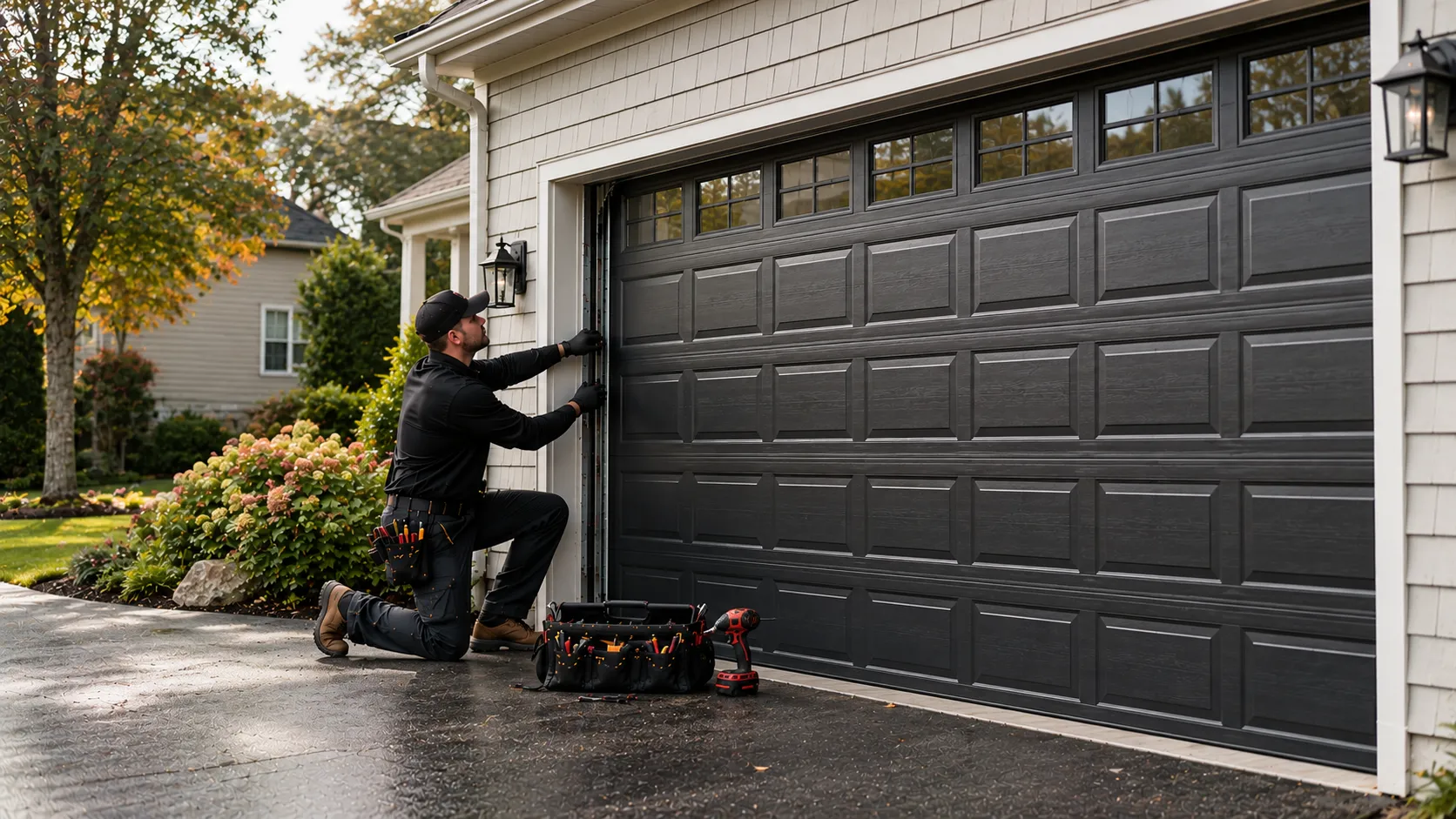
A door that's stuck halfway, tilted to one side, or dropped and won't budge is a spring or cable failure and shouldn't be forced by hand or by the opener - that's how a cable snaps the rest of the way or a section gets bent.
Grinding or squealing that gets louder over weeks, not days, is usually rollers wearing in their brackets, which fits the lighter-gauge hardware common on the newer builds out here. If the door won't respond to the remote at all, check the wall switch first - sometimes it's a dead sensor eye, not the opener itself.
DIY or pro
Some of this is safe to check yourself before you call anyone. Swap the remote batteries and check the wall switch - a dead sensor eye at the bottom of the track, knocked out of alignment by a bike or a trash can, is a five-minute fix and it's the single most common false alarm we hear about.
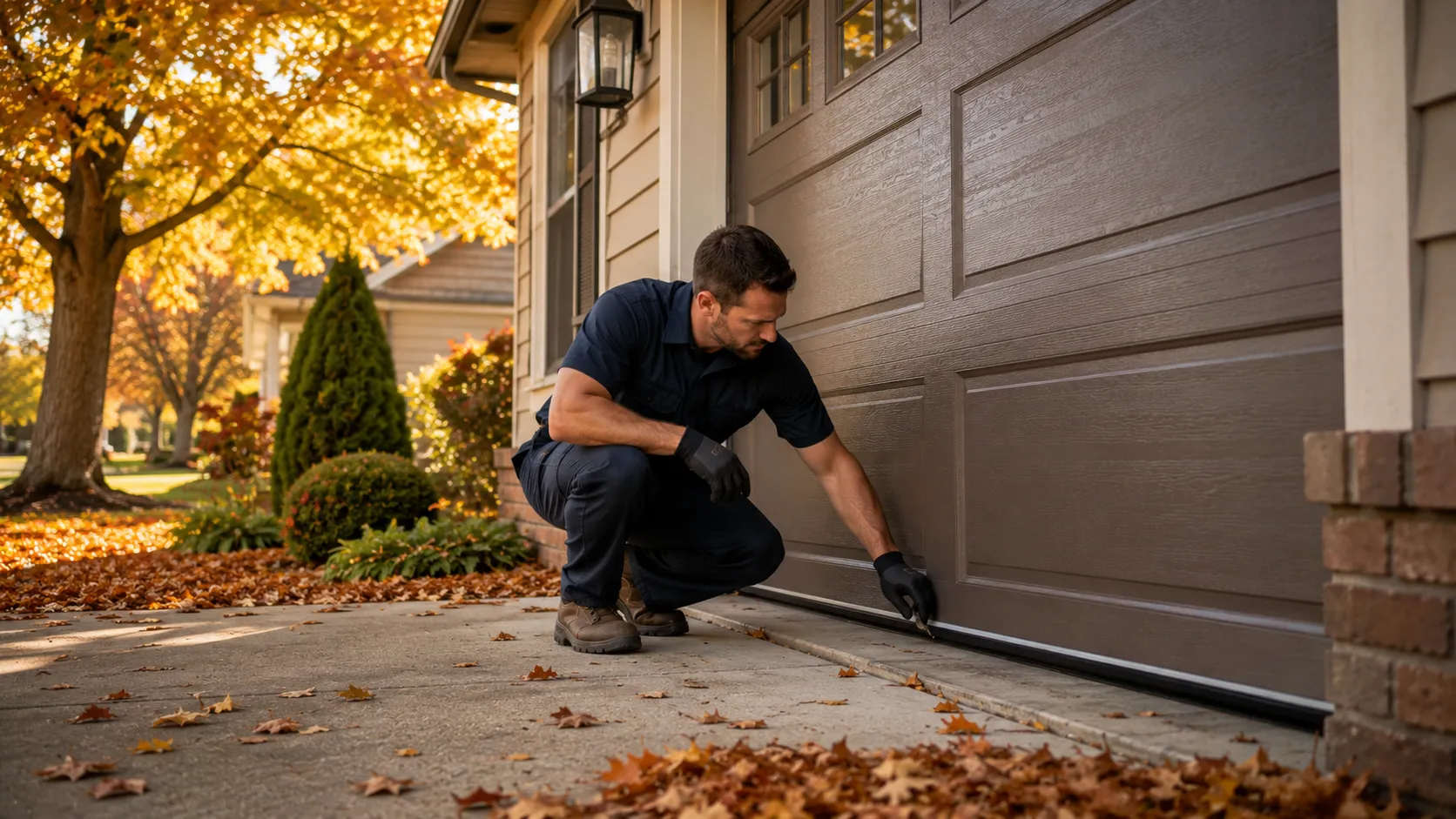
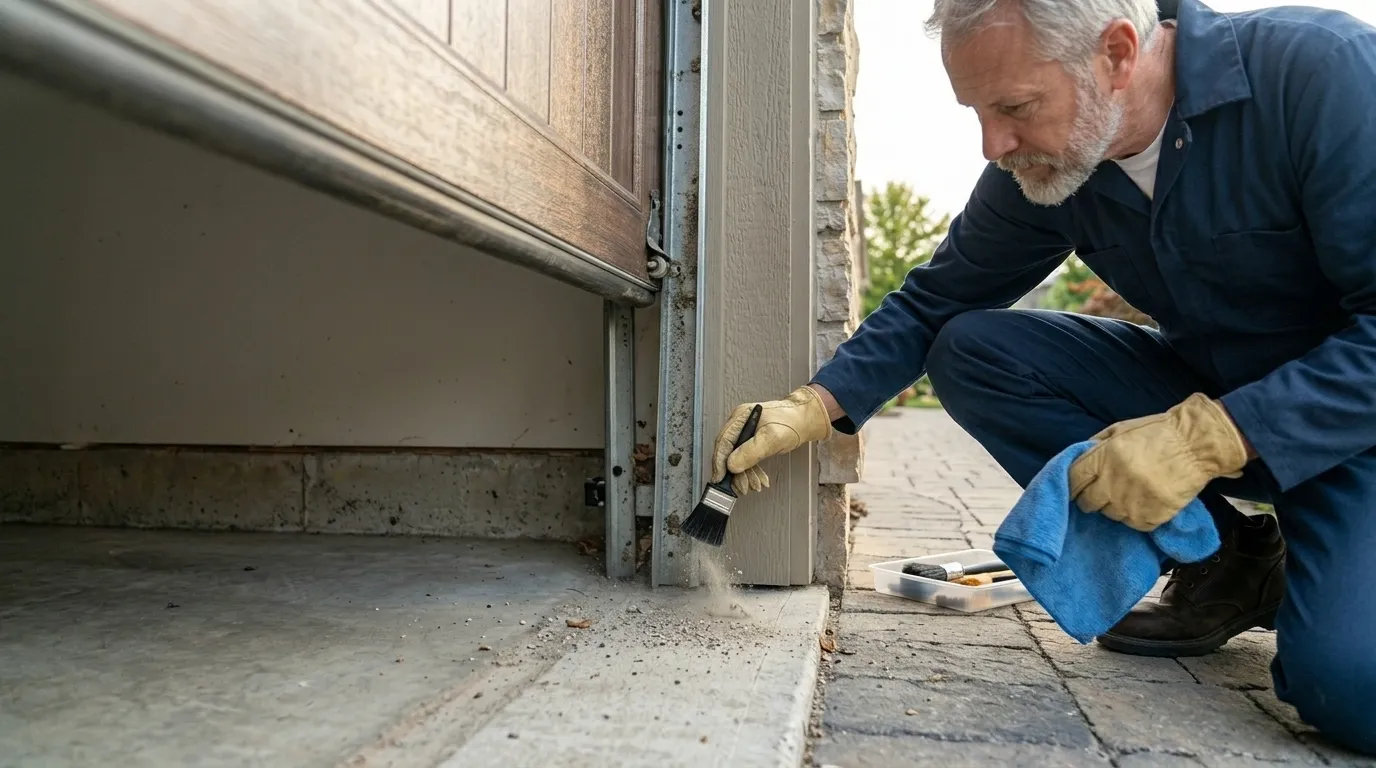
Look at the tracks for anything obviously in the way - a dropped tool, a chunk of ice built up from the cold-weather swings this area gets - and clear it before running the door again. What you should not do is touch the springs.
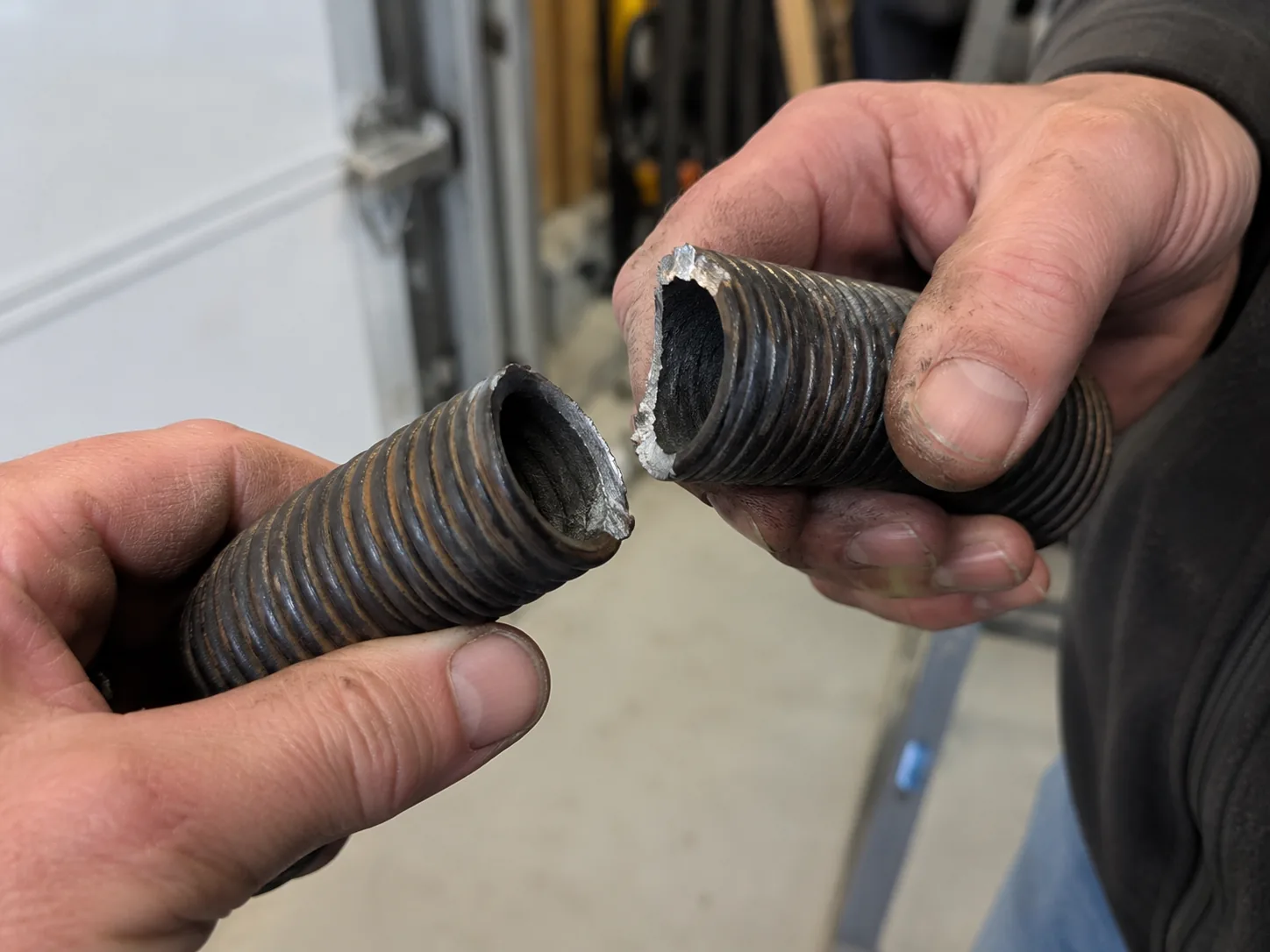
An extension spring under tension can take a finger off, and on a door from the 1970s era common in Cross Lanes, that spring has likely been fatiguing for years without warning - it doesn't look weak right before it lets go.
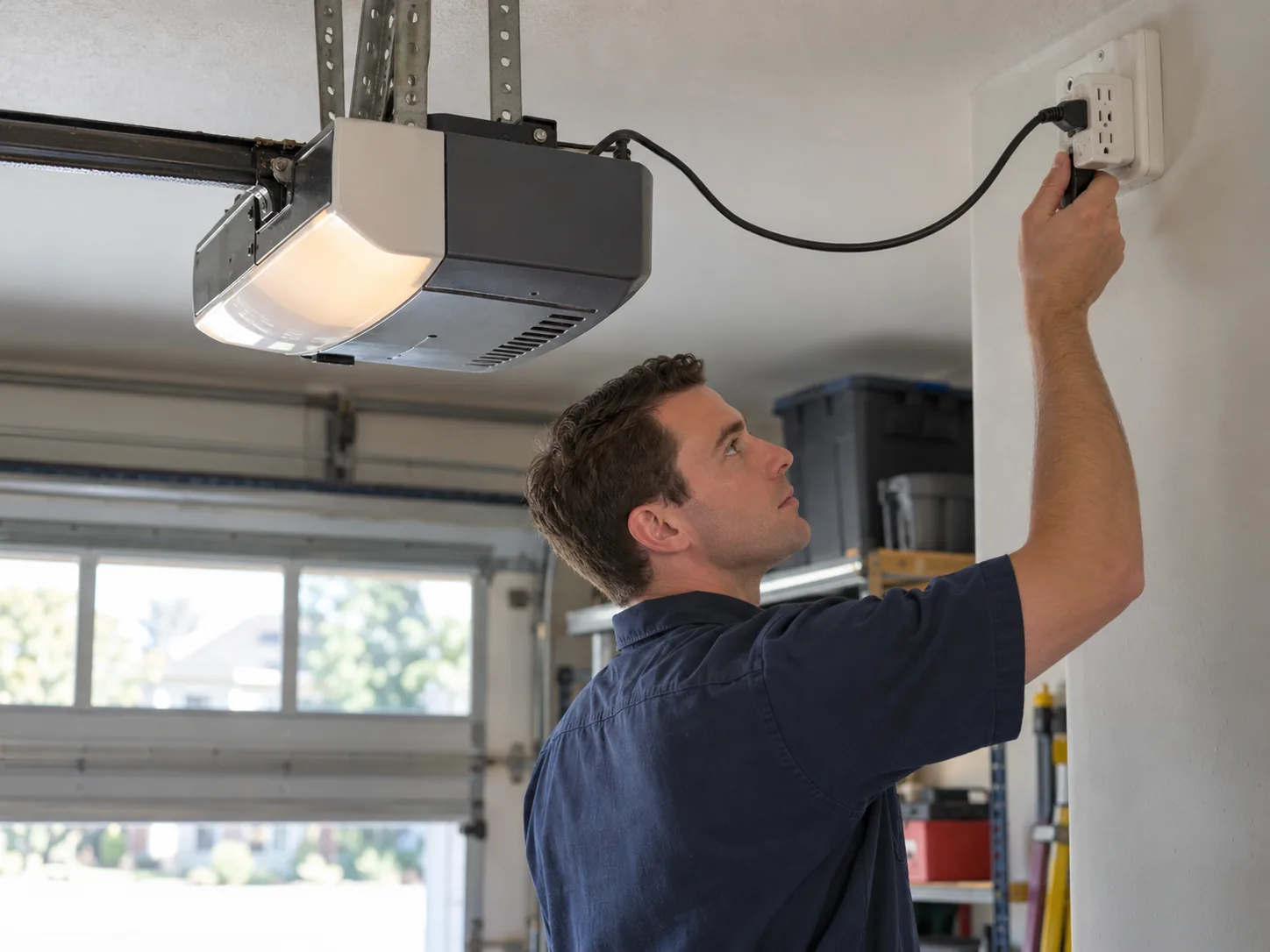
If the door is stuck, tilted, or came down hard, leave it down, unplug the opener, and call. That's not us being cautious for the sake of it; it's the one part of this job that actually hurts people.
Timing
We're not going to promise a response window for Cross Lanes - we run the truck out from Charleston, about ten miles, and how fast we get there depends on the route and what else is on the schedule that day, same as it would for any address that far out from the shop. Once the tech is on site, most spring and cable repairs on a standard residential door take an hour or two, start to finish, including balancing and a full-cycle test. Opener swaps run similar. What takes longer is parts - if your door uses a size or brand we don't carry on the truck, that's an extra day or two waiting on a supplier, and we'll tell you that up front rather than let you assume same-day. A full door replacement, if the springs and cables are the least of it, is a longer job and usually gets scheduled rather than handled as a same-visit emergency call.
Questions
Cross Lanes was mostly built later than a lot of the surrounding area - median build year here runs around 1975 versus 1967 across the wider service area. Later-built houses tend to have extension-spring setups and lighter steel sections rather than the heavier torsion hardware common on older stock, so a repair here often needs different parts than one in an older neighborhood nearby.
No. We run out of Charleston, about ten miles from Cross Lanes, and travel to you. There's no local depot here, so we don't quote a guaranteed response time for this address the way we might for something closer in.
It's not usually a sudden emergency, but don't ignore it. That's typically a spring losing tension gradually, common on the extension-spring setups found on houses from the 1970s building wave common in Cross Lanes. Left alone, it puts more strain on the opener motor and can end in a stuck door. Worth scheduling before it fails outright.
Depends on what's broken and how old the door is. If it's a spring or cable failure on an otherwise sound door, repair almost always makes sense. If you're looking at a bent track, damaged panels, and an aging opener all at once, the repair cost can approach half of what a new door runs, and at that point we'll tell you replacement is the better money.
Explore more
Ready when you are
Charleston Garage Door Pros repairs and installs garage doors, springs and openers in Charleston, WV and the surrounding area.