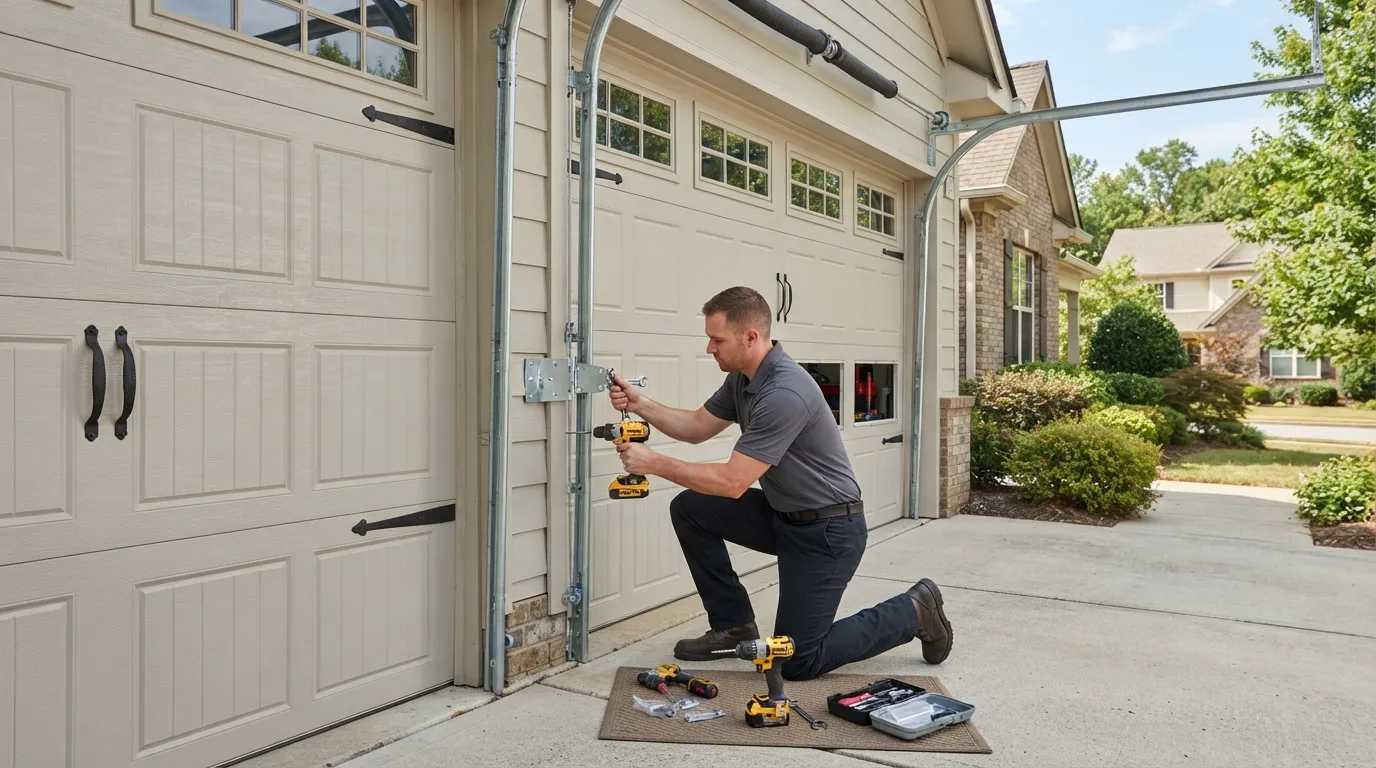
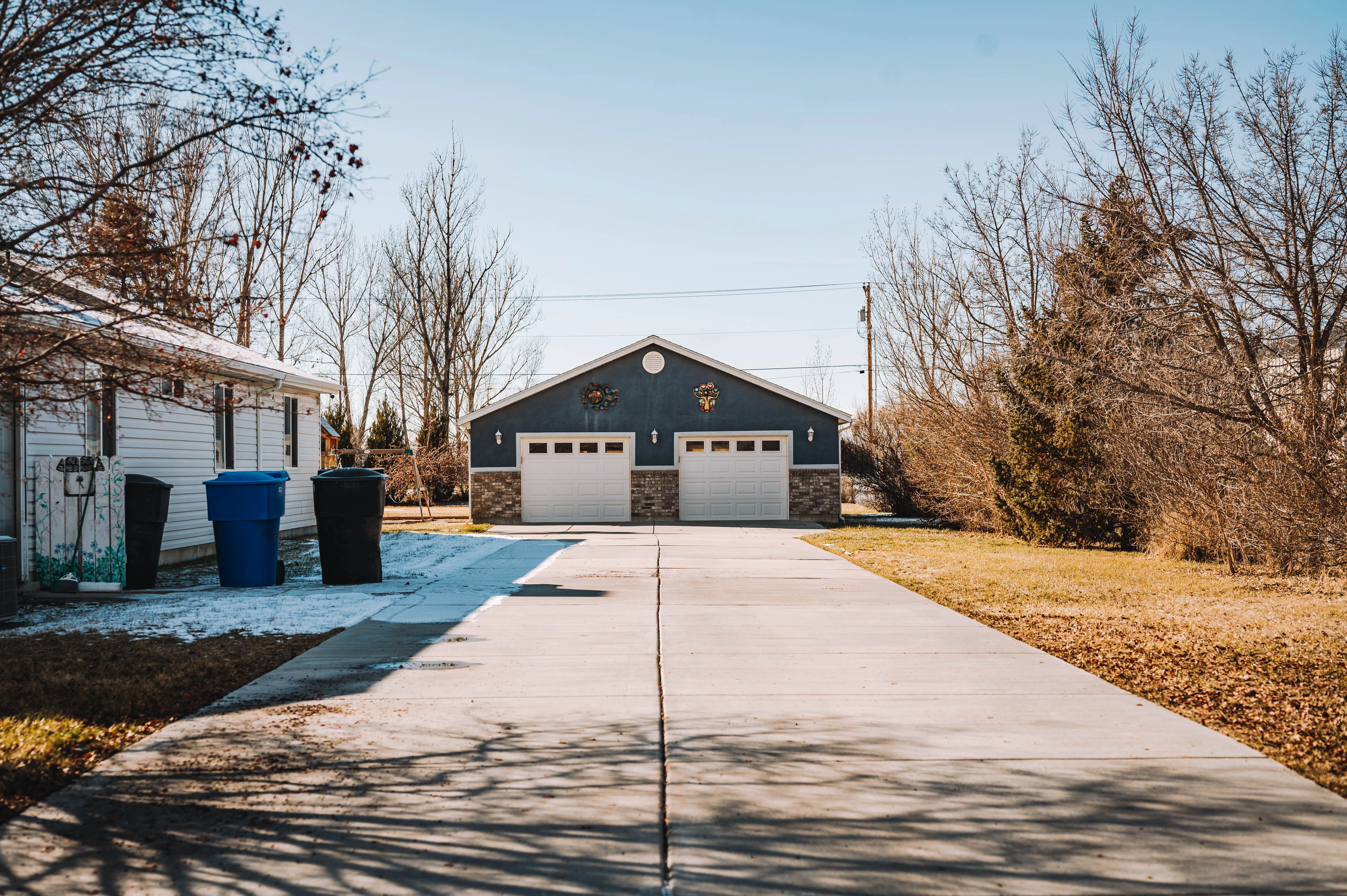
Cross Lanes, Charleston

Garage Door Repair for Cross Lanes, WV

Garage door repair for Cross Lanes, WV, ten miles from Charleston. Built mostly in the 1970s, this town's doors and hardware differ from the rest of the service area.

Garage Door Repair for Cross Lanes, WV in Charleston
Serving Charleston, WVBackground-checked techsHonest, upfront pricingFast local response

Pricing

What It Costs

We don't publish a flat price for a Cross Lanes call because the number depends on what's actually wrong and what part your door needs, and we're not going to guess at a figure just to fill space.

1975 income demographic pricing

What we can tell you is what drives the cost here specifically: Cross Lanes households carry a median income of $62,704, a bit above the $61,160 median across the wider Charleston Garage Door Pros service area, and that's reflected in the doors themselves - more insulated steel sectional doors, fewer of the bare single-layer panels you still find on older housing stock closer to Charleston.
Insulated door spring cost

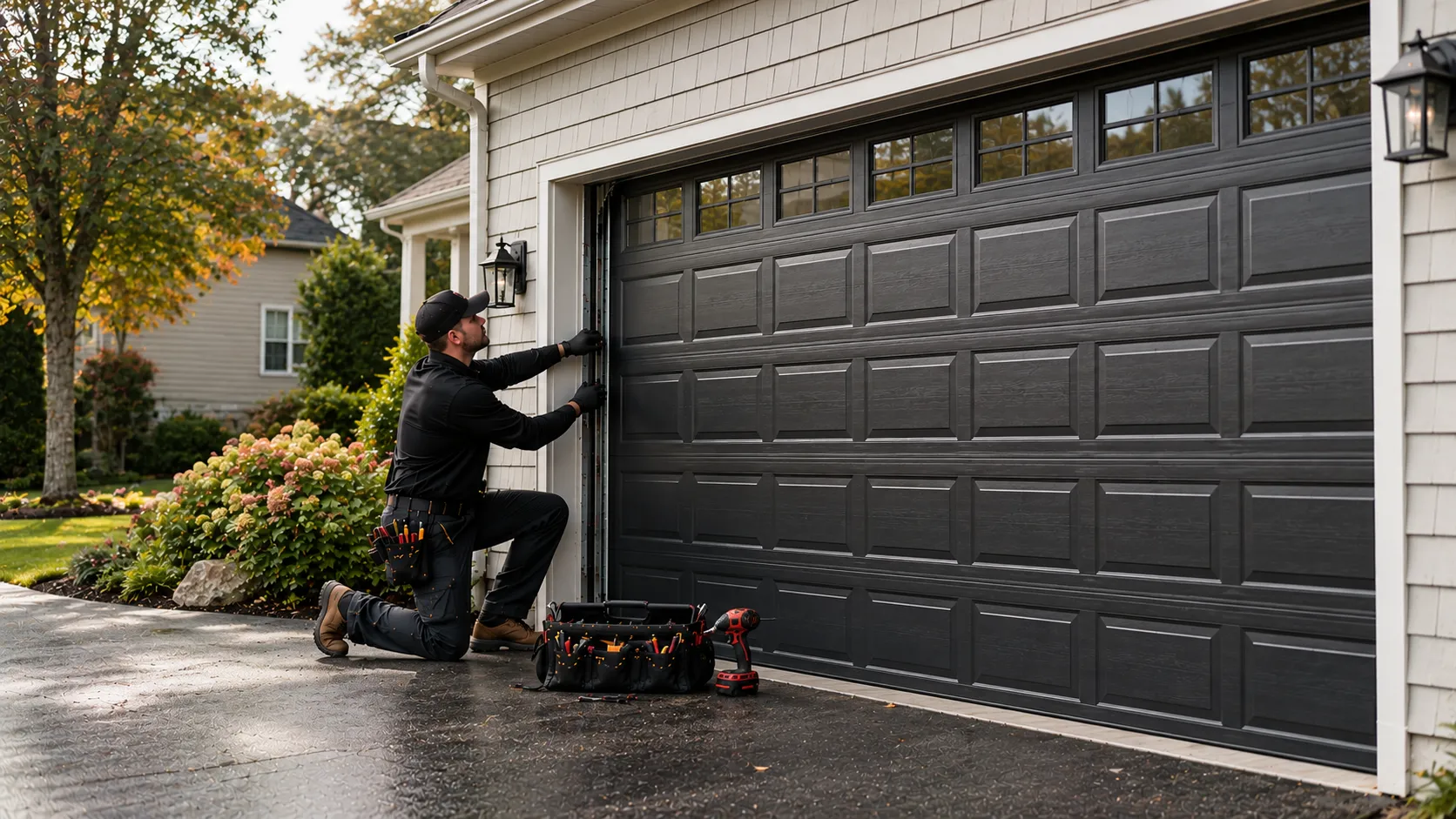
A spring job on a heavier insulated door costs more in parts than the same repair on a lightweight older door, simply because the springs have to lift more weight. Openers, cables, and rollers price out closer to standard regardless of the house.

In-person quote necessity

If you want a number, the honest answer is that someone has to look at the door first. We won't quote a repair over the phone without knowing the door's age and what's failed, and we'd rather say that plainly than throw out a range that turns out wrong once the truck is on site.

Our process

How We Fix It

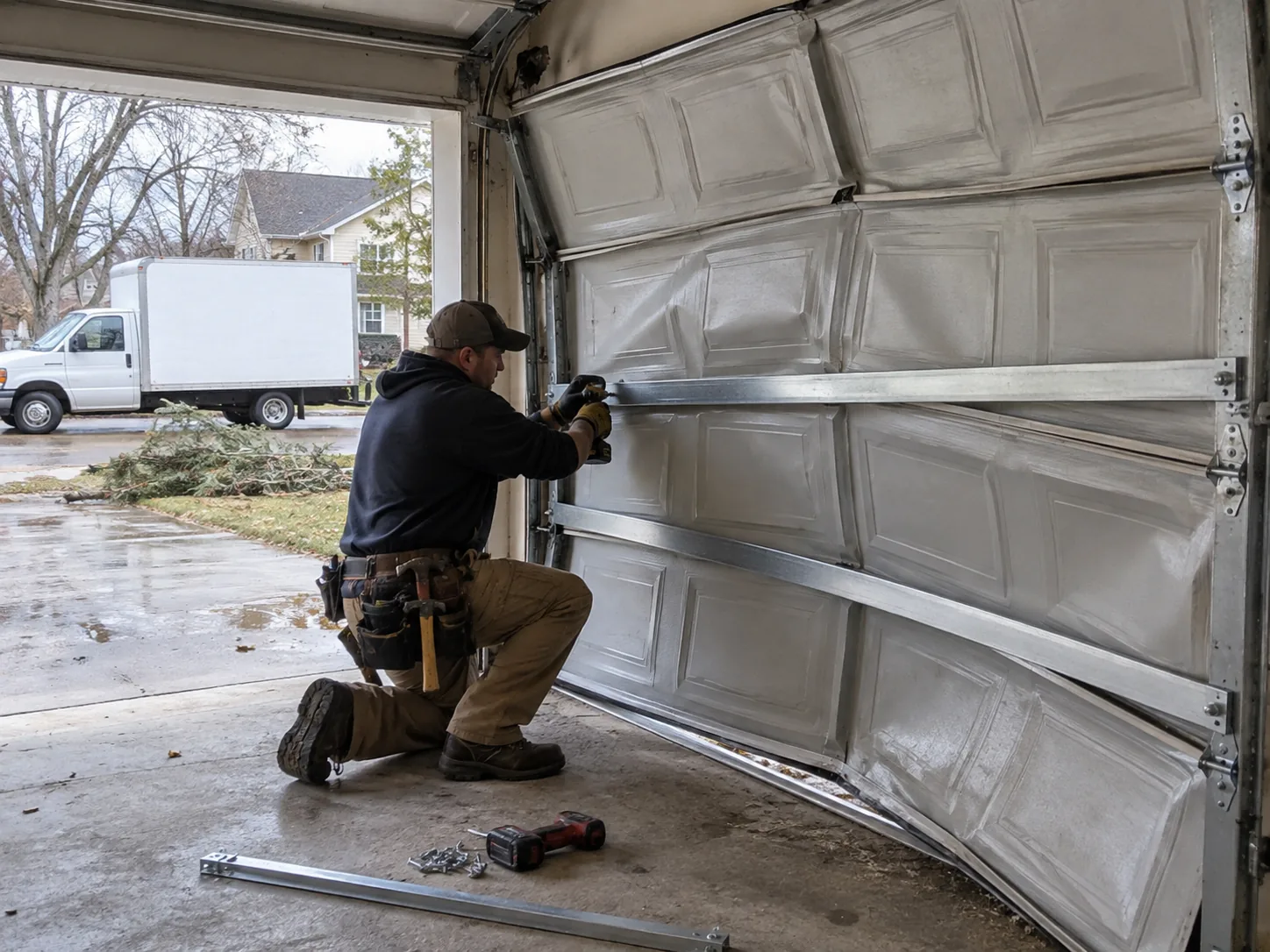
Once we're on site, the sequence is the same one we'd run anywhere: check the springs under tension first, since a broken or overwound torsion spring is what turns a working door into a dead one overnight, then check track alignment, roller condition, and cable wear before we ever touch the opener.

  1. 1975-era torsion standard hardware

    On a Cross Lanes door built around the mid-1970s, we're usually dealing with torsion spring systems rather than the older extension-spring setups you'd find on a house from the 1950s, and the hardware sizing on those doors is more standard - which is good news, because parts are easier to source than on the oldest stock in the service area.

  2. Selective worn-part replacement

    We replace what's broken, not what's merely worn, and we test the door under full open-close cycles before we call the job done, not just one pull. If the opener's logic board is dead rather than the motor, we say so instead of replacing the whole unit for no reason.

  3. Frame-bent patch futility

    That's the limitation worth naming up front: we don't replace a door when a repair will hold, and we don't repair one when the frame or track is bent enough that a patch job will fail again in a season.

Local causes

Why It Happens Here

The median house in Cross Lanes went up around 1975, which puts it noticeably newer than the 1967 median across the rest of the Charleston Garage Door Pros service area. That decade matters more than it sounds like it should. A door and opener installed in the mid-1970s used torsion hardware and early chain-drive openers, both of which have now run thirty-plus years past their expected service life even on a house that's been well kept. The failure pattern on these doors is consistent: the spring goes first, usually without warning, then the cables that were sized for that same spring start to fray a season or two later.

Cross Lanes also sits in the same cold moderate climate band as the rest of the region, which means the rubber weatherseal and the grease in older bearings both degrade on a set clock regardless of how well the door was built. Combine a decades-old torsion spring with a winter freeze-thaw cycle and you get the two failures we see most out this way: a spring that snaps on a cold morning, and a track that's pulled slightly out of alignment from ice buildup at the base.

Why It Happens Here

Warning signs

How It Shows Up

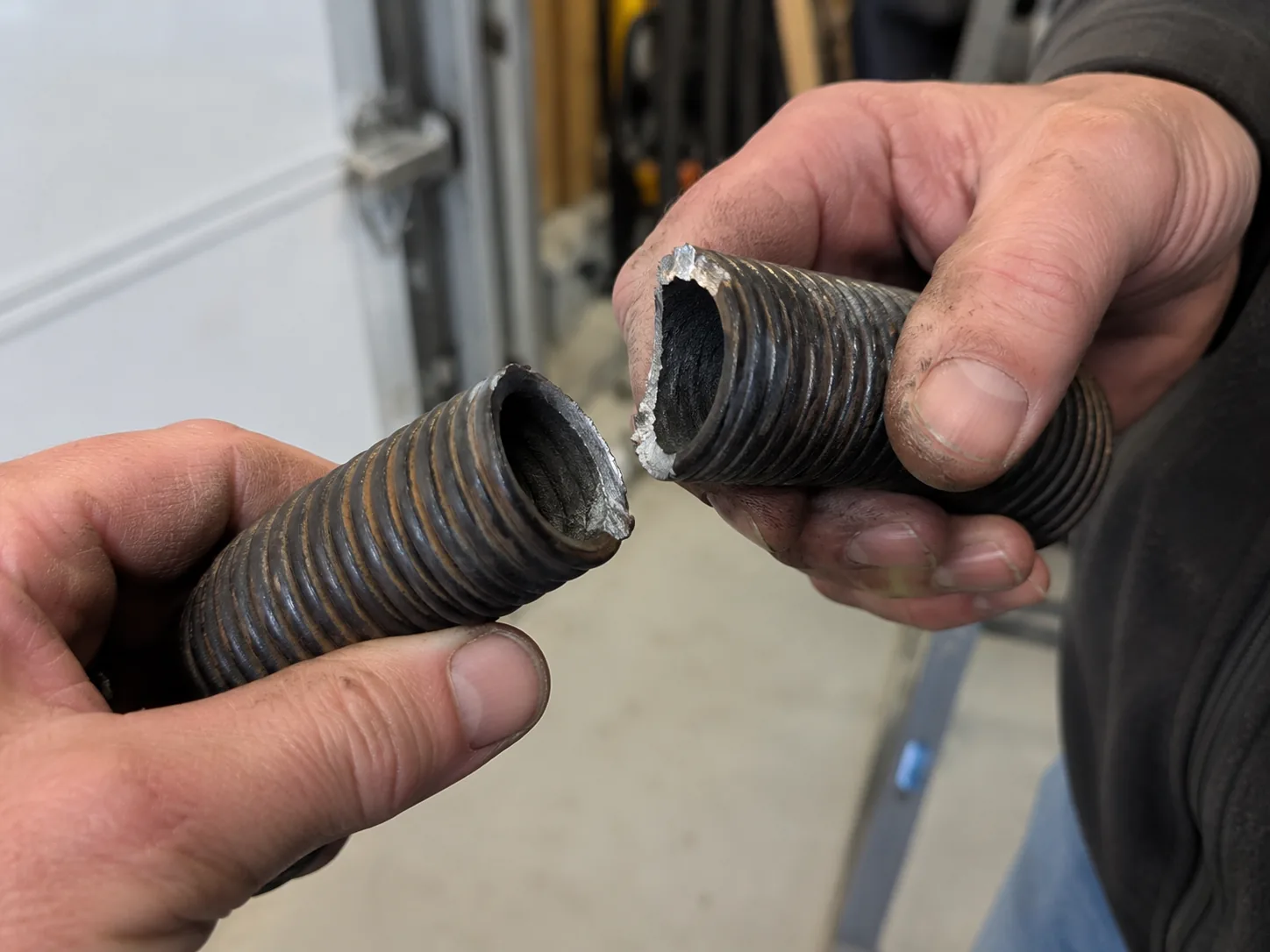
On a Cross Lanes call, the door usually doesn't fail quietly. A torsion spring letting go sounds like a gunshot from inside the garage, and afterward the door won't lift at all, or it lifts a few inches and stops as the opener strains against dead weight.

Spring silent bang sound occurrence

That's the most common call we get from this side of the service area, and it's the one where we ask you not to force the door - a spring under load can do real damage if it's handled wrong.

Grinding roller bracket wearing

The quieter version shows up first as a grinding or scraping sound as the door travels, which usually means a roller has worn through its bearing or the track has shifted slightly, both common on doors that have been running steadily since the 1970s without the track ever being re-shimmed.

Reversing sensor safety interaction

Some owners also notice the door reversing halfway up or down - that's often the opener's safety sensors catching a track that's no longer square, not the sensors themselves being faulty. Either symptom is worth a call before the door stops working entirely, since a misaligned track is cheaper to fix than the cable or panel damage it eventually causes.

DIY or pro

Doing It Yourself

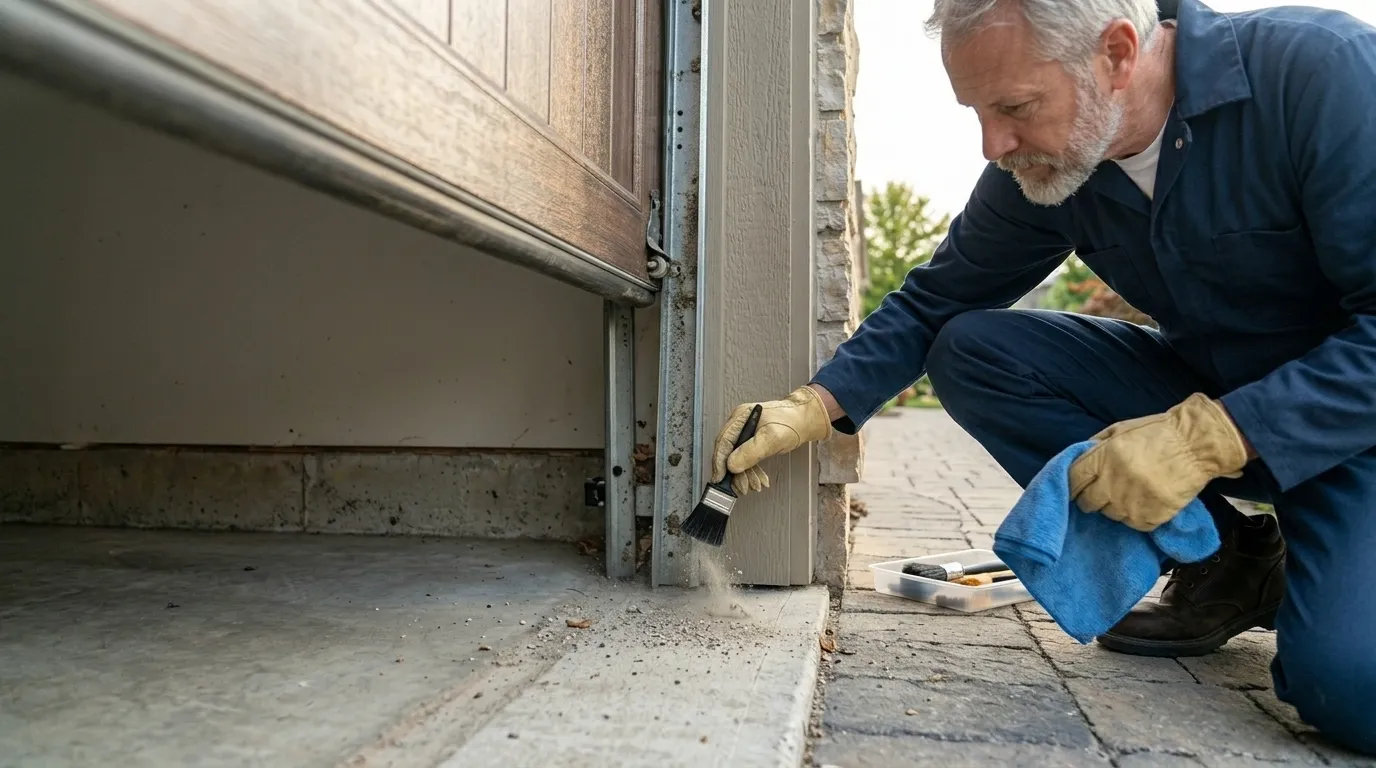
There's a short list of things worth doing yourself on a door this age: clean the tracks, tighten loose bolts on the hinges, and lubricate rollers and hinges with the right garage-door lubricant rather than household oil, which attracts grit and makes the grinding worse.

Weatherseal age cracking check

Checking the weatherseal along the bottom and sides for cracking is also fair game, especially given how many Cross Lanes doors are now pushing fifty years old on their original seal.

Torsion spring ER injury risk

What isn't worth doing yourself is anything involving the torsion spring or the cables under it. That spring holds enough stored tension to cause serious injury if it's unwound wrong, and it's the single most common cause of garage-related ER visits nationally for a reason.

DIY opener board hazard

We also don't recommend DIY opener logic board swaps on older chain-drive units, since the wiring on 1970s-era systems doesn't always match the labeling on a new board without some adaptation. If the door won't move and you can hear or see a coiled spring that's separated, that's a call, not a project.

How Long It Takes

Timing

How Long It Takes

Cross Lanes sits about ten miles from our Charleston base, further out than South Charleston or Dunbar, and that drive is built into how the day gets planned rather than something we treat as an afterthought. A tech routing to Cross Lanes is usually stacking that job against others in the same direction rather than making a single ten-mile round trip for one call, which is normal for how out-suburb service works and not a sign the job gets less attention.

Once on site, most spring replacements and track realignments run under two hours; opener repairs vary more depending on whether it's a sensor, a board, or the motor itself. What we won't do is promise a same-day slot regardless of when you call - that depends on the day's routing, and we'd rather tell you that honestly than commit to a window we can't hold from ten miles away.

Questions

Common questions

How far out is Cross Lanes from your Charleston location?

About ten miles. We don't keep a separate branch or crew stationed in Cross Lanes - every job here is routed from Charleston, which is normal for a suburb at this distance and just means scheduling accounts for the drive.

Are Cross Lanes garage doors different from ones closer to Charleston?

Often, yes. The median house here went up around 1975, about eight years newer than the service area's overall median of 1967, so more doors run on torsion spring hardware and early chain-drive openers rather than the older extension-spring setups common on the oldest housing stock.

Why did my spring break with no warning?

Torsion springs fail on a fatigue cycle, not gradually. A spring installed in the mid-1970s has usually gone through tens of thousands of open-close cycles by now, and the break itself happens all at once, often on a cold morning when the metal is least flexible.

Can I replace a torsion spring myself?

We don't recommend it. The spring holds enough tension under load to cause serious injury if it lets go while you're working on it. Track cleaning, hinge lubrication, and weatherseal checks are reasonable DIY tasks; the spring and the cables around it are not.

Ready when you are

Need a garage door sorted in Charleston?

Charleston Garage Door Pros repairs and installs garage doors, springs and openers in Charleston, WV and the surrounding area.

Call Now(304) 202-7503