Teays Valley, Charleston

Garage Door Maintenance for Teays Valley's Newer Housing Stock

Most Teays Valley homes date to the early '90s, not the 1960s stock common closer to Charleston. That gap changes what maintenance actually needs checking.

Garage Door Maintenance for Teays Valley's Newer Housing Stock in Charleston
Serving Charleston, WVBackground-checked techsHonest, upfront pricingFast local response

Watch-outs

The Complications

Teays Valley's median home was built around 1992, a couple decades newer than the 1960s-70s stock that dominates closer to Charleston. That gap matters more than it sounds.

1992 post-extension-spring standard

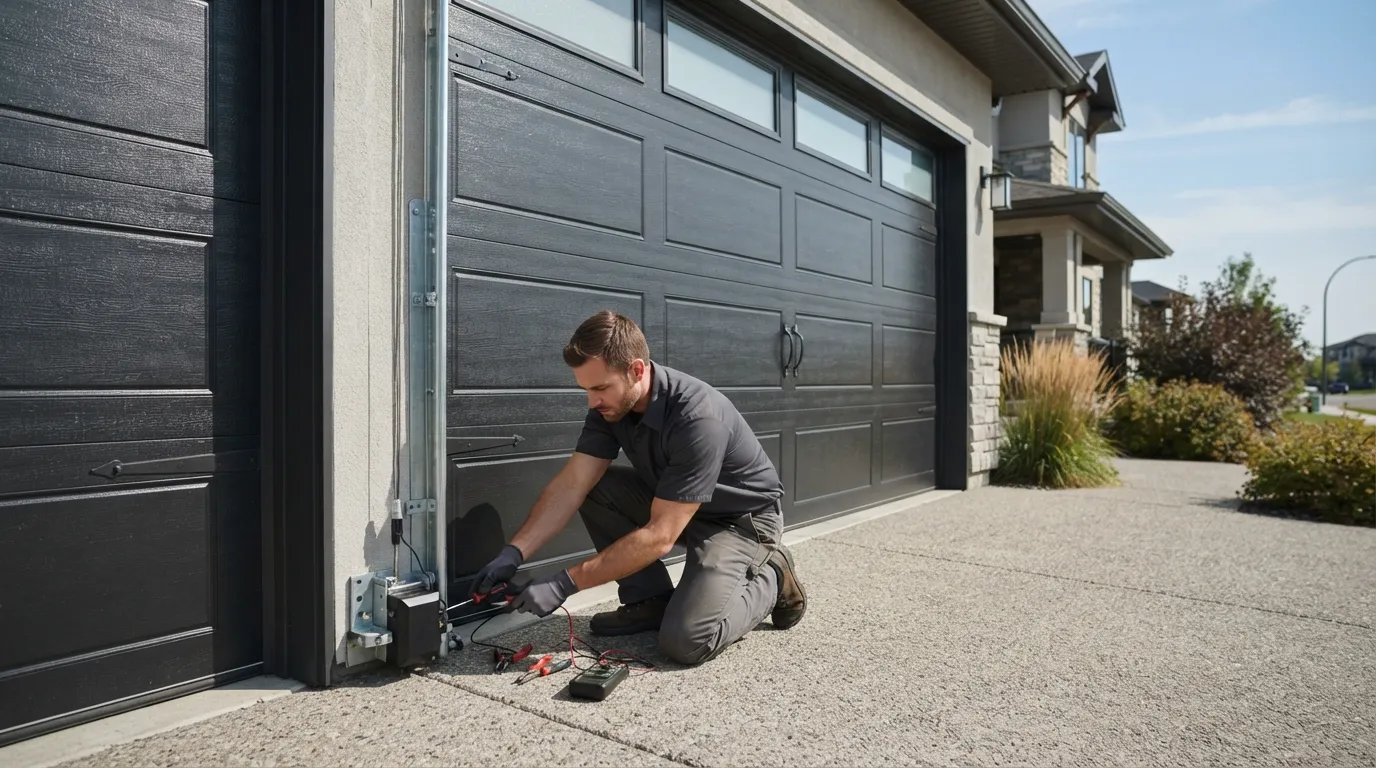
By the early '90s, builders had mostly moved off the old extension-spring, track-hardware setups and onto torsion springs mounted on a center shaft above the door, with steel doors replacing the wood ones common in the older stock.

Chain-belt-drive original-era equipment

The complications here aren't about original hardware wearing past its design life - they're about doors and openers that are 30-plus years old and were built to a mid-range spec that developers used across whole subdivisions at once. Rollers wear evenly across a neighborhood built in the same two or three years, which means when one nylon roller starts grinding, others nearby usually aren't far behind.

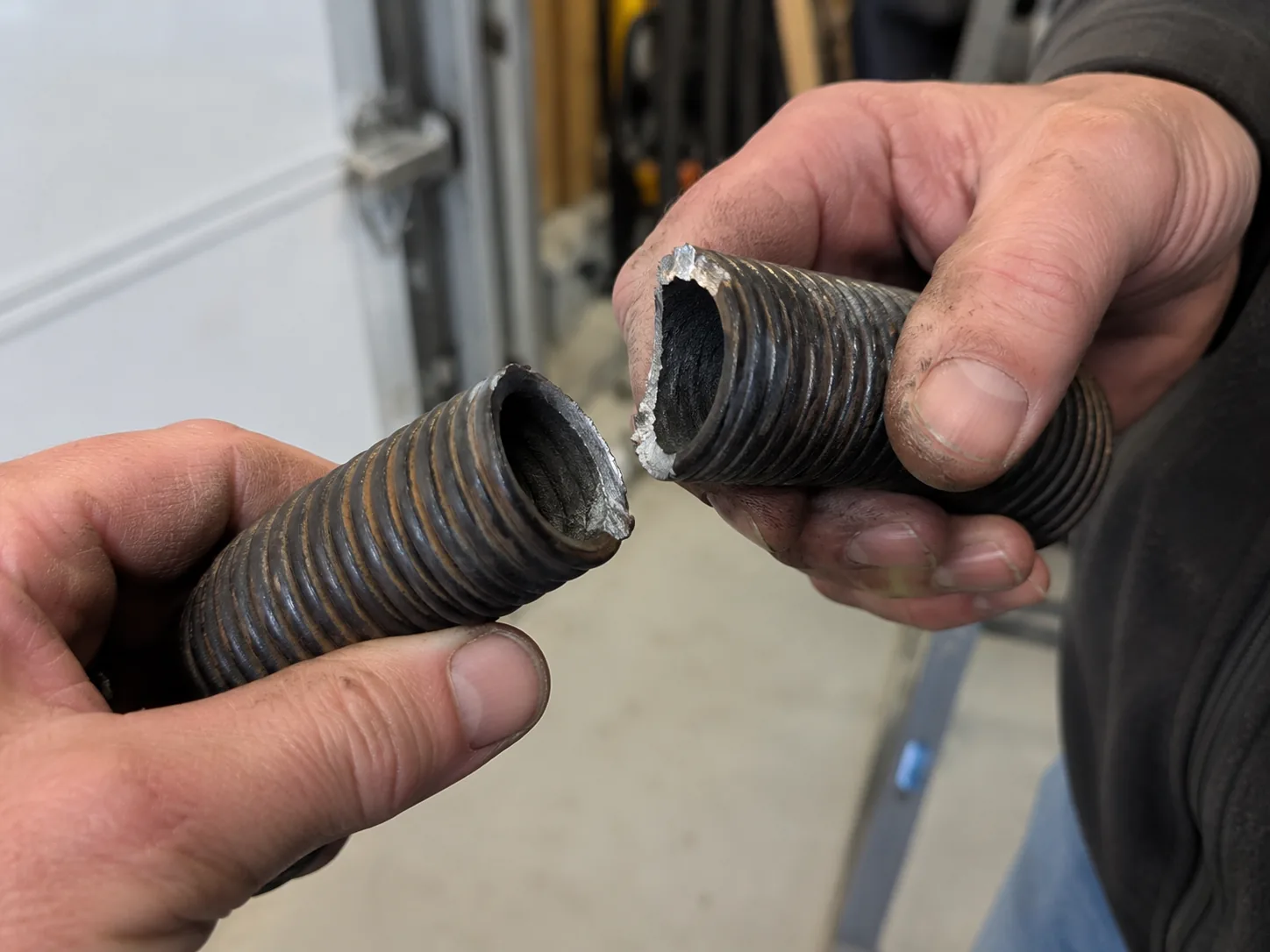
30-year torsion-spring fatigue pattern

Openers from that era are chain or belt drive with far less safety sensor sophistication than current models, and a lot of them are still running the original motor. The other thing worth naming: a torsion spring on a 1992 door is well past any reasonable service interval, whether or not it's shown a problem yet.

Booking

Getting It Booked In

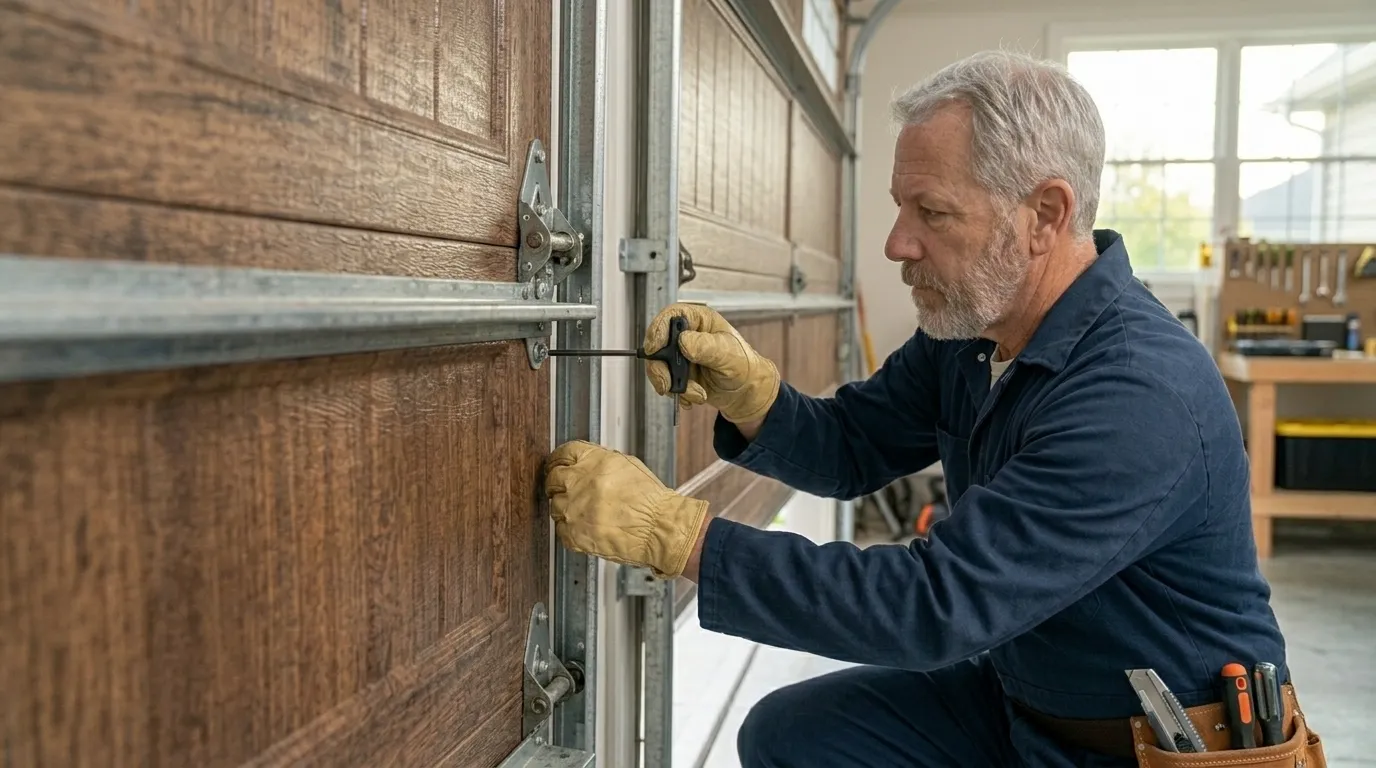
We come out from Charleston, about 17 miles east, so a maintenance visit here gets scheduled rather than dropped in on same-day. That's worth knowing up front - we don't keep a truck staged in Teays Valley, and we're not going to pretend otherwise. What we can do is bundle the visit efficiently: a full torsion spring check, roller and hinge inspection, track alignment, and opener safety-reverse test in one trip, which makes more sense for a door this age than waiting for a single part to fail and calling for an emergency repair instead.

Getting It Booked In
Why It Happens Here

Local causes

Why It Happens Here

Household income in Teays Valley runs well above the wider Charleston service area - over $106,000 versus roughly $61,000 across the region - and that shows up in what maintenance actually gets requested. Owners here are more likely to catch a noisy door before it becomes a broken spring, and more likely to have kept the original opener running past the point where a lot of households elsewhere would've already replaced it out of necessity. The failures we see are less about deferred maintenance and more about age catching up with hardware that was solid for its time but was never designed to run silent forever. Climate plays a role too - this area sits in the same cold-moderate band as the rest of the region, so winter stiffens torsion springs and slows opener response the same way it does everywhere else covered from Charleston, just on newer doors here than on the older stock closer in.

DIY or pro

Doing It Yourself

Homeowners with a 1990s-era torsion door can handle some of this themselves. Wipe down and lubricate rollers and hinges twice a year - a light lithium grease, not WD-40, which attracts grit.

Manual balance verification

Check that the door balances at waist height when disconnected from the opener; if it drifts up or down, the spring tension is off and that's not a DIY spring adjustment.

Auto-reverse functionality testing

Test the auto-reverse by laying a 2x4 flat under the door and closing it - it should reverse on contact. What you shouldn't touch: the torsion spring itself.

Spring work prohibition

On a door this size, a spring under tension that slips or breaks while you're working on it can put you in the hospital. That's the one line we draw firmly, and it's the same line on any door regardless of when it was built.

Stocked Parts

On the truck

Stocked Parts

Because so much of Teays Valley went up in a tight building window in the early '90s, the hardware across a lot of these doors is similar enough that we carry the common torsion springs, standard-size rollers, and cable sets for that era on the truck already. What we don't always have on hand is a specific opener circuit board or a discontinued panel style, since manufacturers changed those more often than they changed the basic spring and track hardware. If a part isn't on the truck, we'll tell you at the visit rather than guess, and order it rather than charge you for a return trip we didn't need.

Questions

Common questions

Is a 1990s garage door really due for spring service already?

Yes. Torsion springs are rated by cycle count, not calendar years, and a door opened twice a day for 30 years has put a lot of cycles on that spring regardless of how new the house looks. Age of the house doesn't protect the spring from wear.

Do you have a crew based in Teays Valley?

No. We run out of Charleston, about 17 miles away, and schedule Teays Valley maintenance visits rather than offering same-day drop-ins. It's an honest limitation, not a knock against the area.

Why does a newer house still need a full maintenance check?

Because 'newer' here still means early '90s. A door and opener installed in 1992 is over three decades old, and the hardware from that era wasn't built to run indefinitely without a look at rollers, cables, and spring tension.

Ready when you are

Need a garage door sorted in Charleston?

Charleston Garage Door Pros repairs and installs garage doors, springs and openers in Charleston, WV and the surrounding area.

Call Now(304) 202-7503