1958 original-hardware prevalence
What we can tell you is what drives the price: whether it's a spring, a cable, an opener board, or a bent track, and whether the parts on your door are the original 1958-era hardware or something replaced later.
South Charleston, Charleston
South Charleston homes date to about 1958 - a decade older than the area median. That means original hardware. We run the 4 miles from Charleston for broken springs, off-track doors, and dead openers.
Popular Services
Pricing
We don't quote a number here without seeing the door, and we're not going to invent one for South Charleston that isn't backed by a real job.
What we can tell you is what drives the price: whether it's a spring, a cable, an opener board, or a bent track, and whether the parts on your door are the original 1958-era hardware or something replaced later.
A lot of houses in South Charleston still have their original torsion setup, since the housing stock here runs older than the median across the wider service area - median build year 1958 versus 1967 for the region as a whole.
Original hardware from that era is heavier gauge and sized differently than what's sold today, which sometimes means a part has to be matched rather than grabbed off a shelf. That can change a repair from a same-visit fix to a return trip. We'll tell you which one it is before we start, not after.
Our process
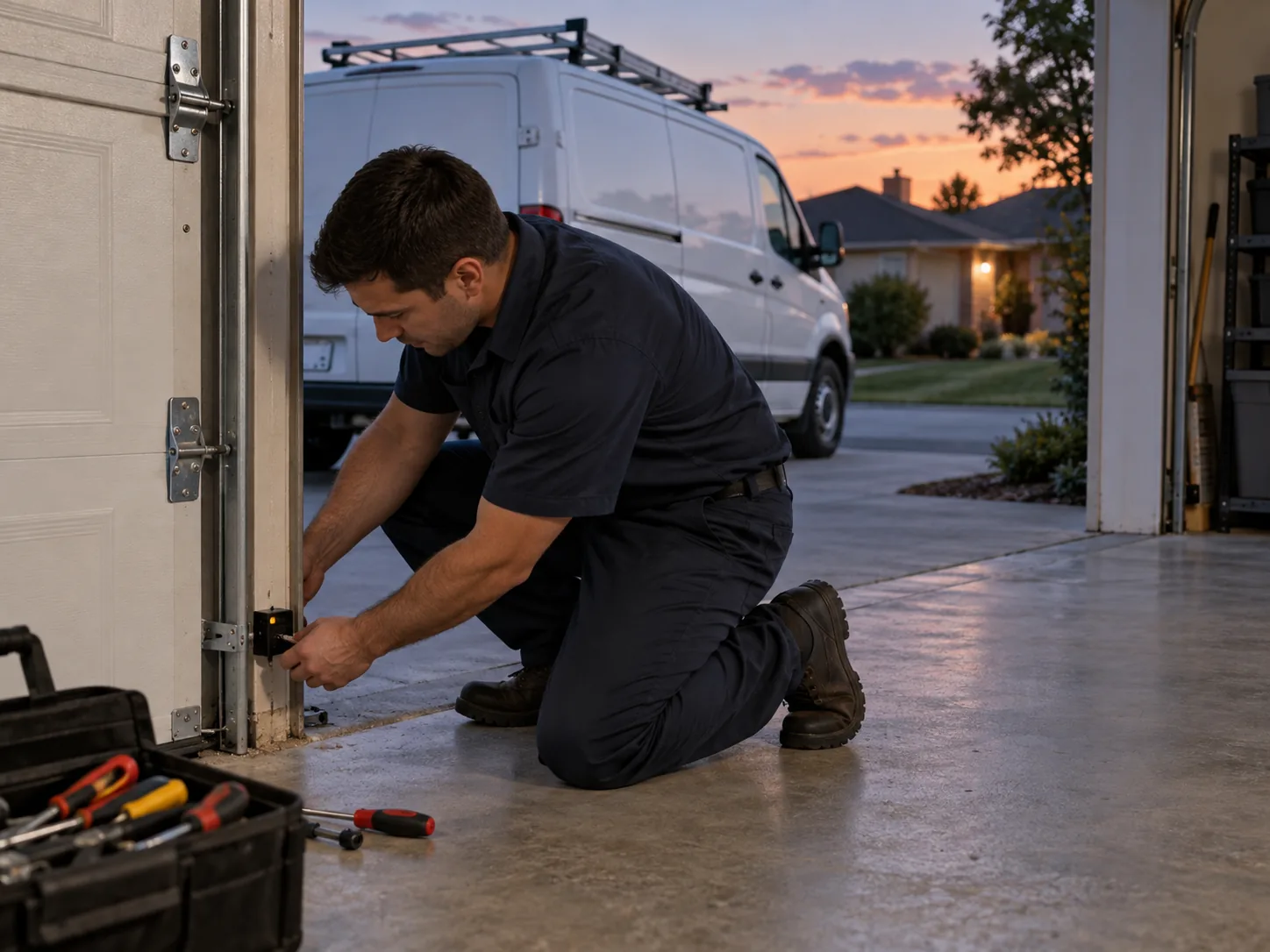
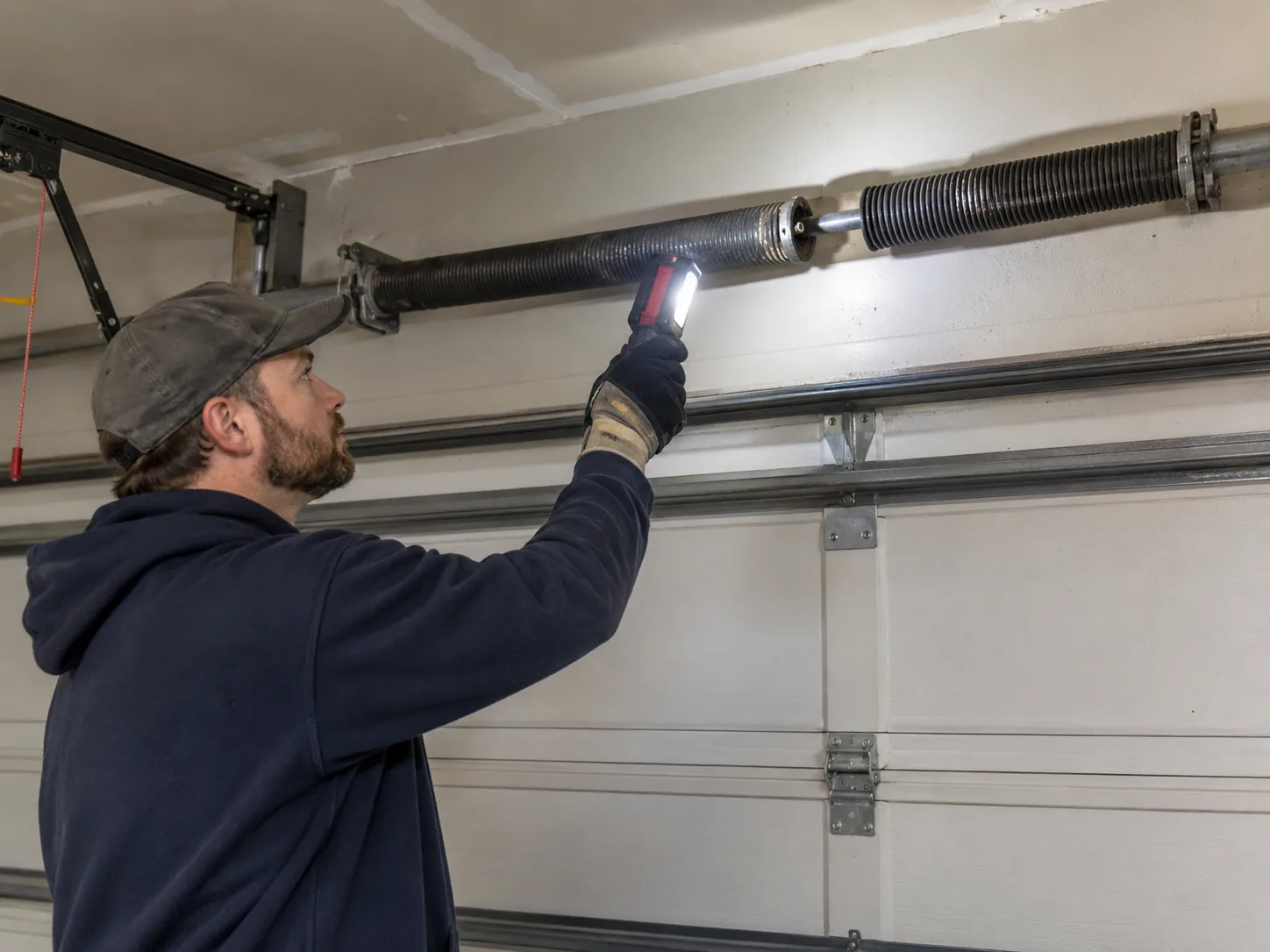
For a broken spring, we block the door, release the tension on the remaining side, and swap both springs as a pair, even if only one snapped, because the other is carrying the same age and the same fatigue.
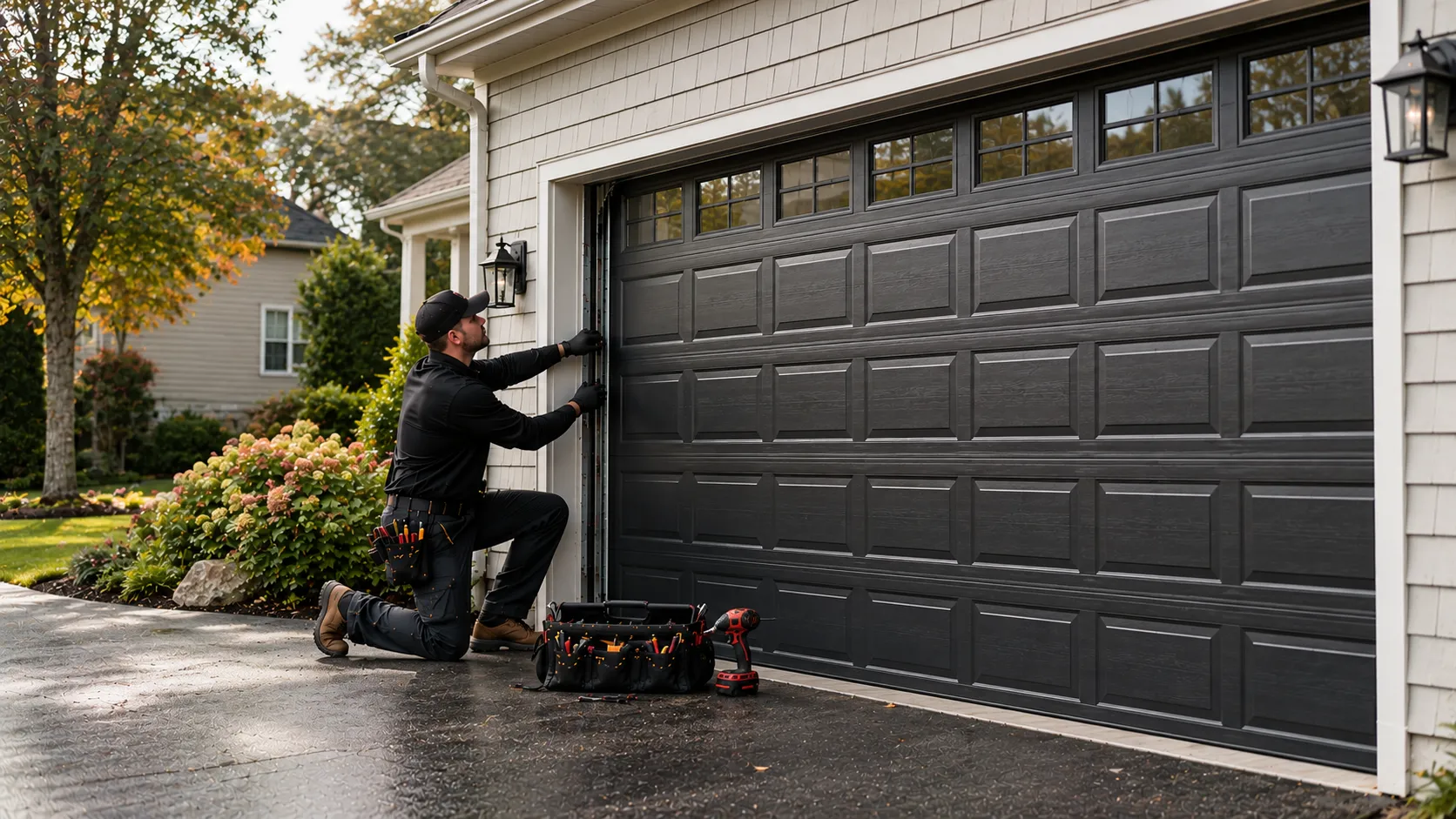
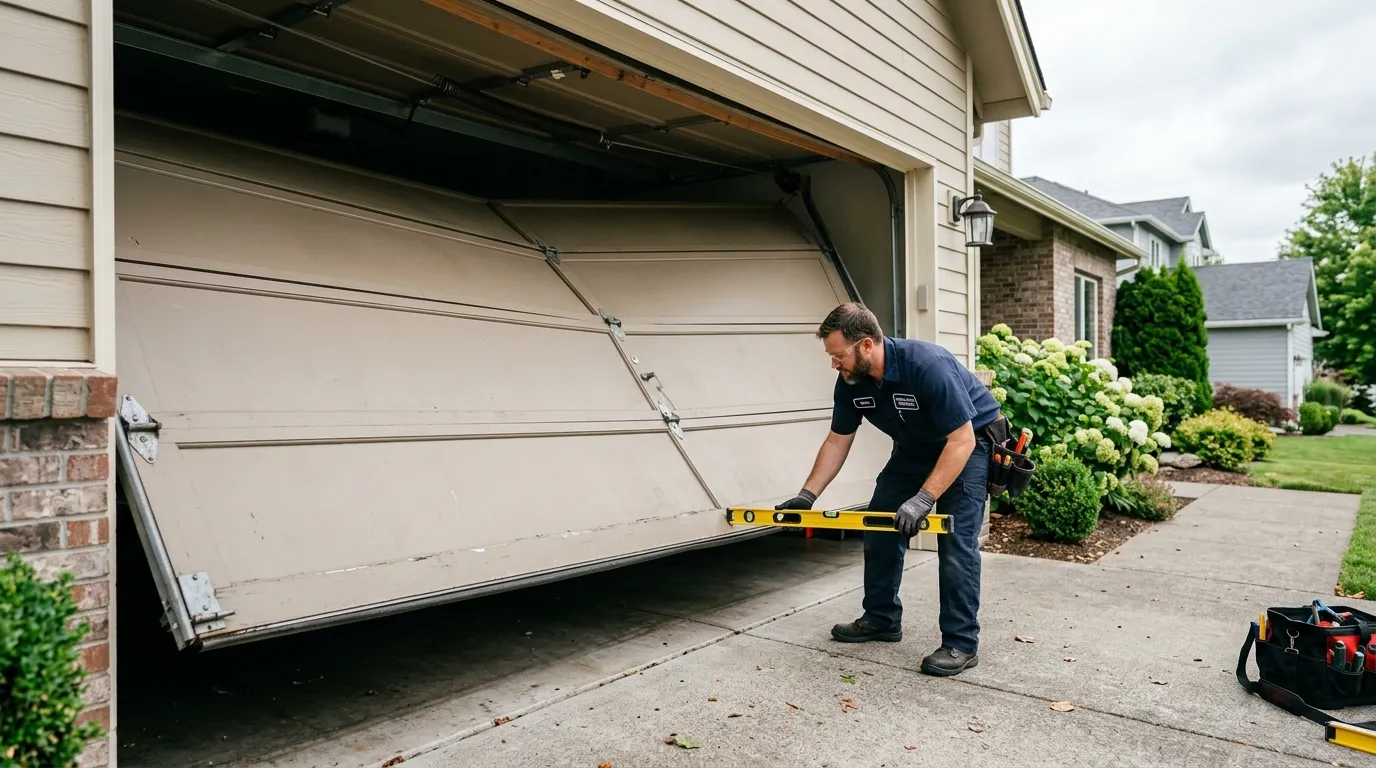
For an off-track door, we check the rollers and the track alignment before we touch the opener, since a bent track will keep throwing a door off no matter what the opener does.
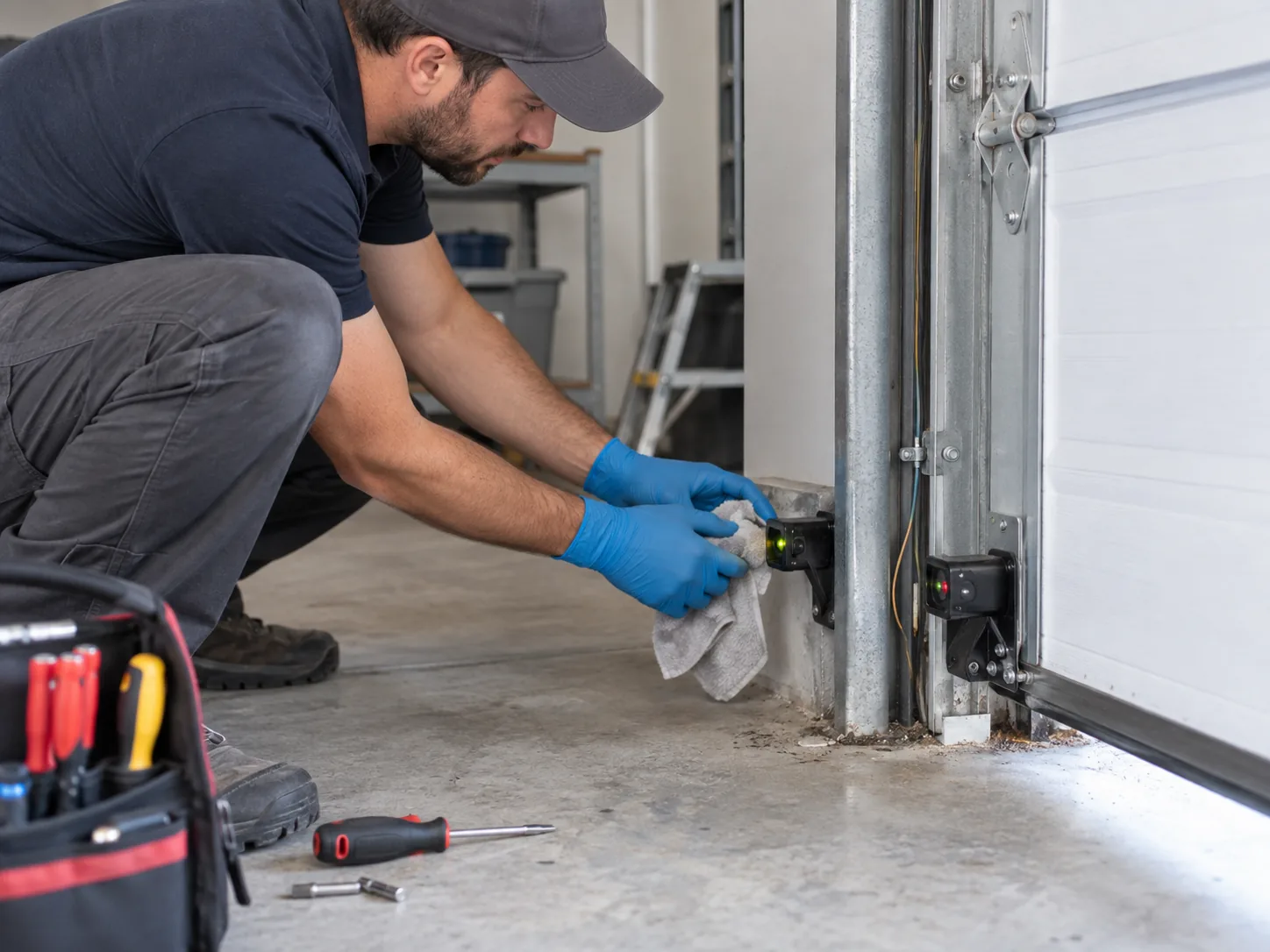
For a dead opener, we test the wall button, the sensors, and the logic board in that order, because most no-response calls turn out to be a sensor knocked out of alignment, not a failed motor.
On houses built around 1958, we also check whether the header and jamb have shifted with age, since a door that won't seal at the bottom sometimes isn't a door problem at all.
Local causes
South Charleston's housing stock centers on 1958, a decade ahead of the 1967 median across the rest of the coverage area, and that age shows up in the calls we get. Torsion springs rated for a specific door weight lose tension gradually over decades of cycling, and a spring installed when the house was built has had a long run by now. The area sits in a moderate-cold climate band, and steel hardware that flexes through a real winter and back again every year accumulates fatigue faster than mild-climate hardware does. Put an older average build year together with that seasonal swing and you get more broken springs and more cracked rollers per household than you'd see in a newer subdivision. It isn't bad luck. It's the math of age and cycles catching up with hardware nobody's replaced since it was installed.
Watch-outs
The complication we run into most in South Charleston is matching parts to original hardware. A door installed around 1958 may have track dimensions, spring sizes, or a drum configuration that isn't what current stock parts are built to, and if a previous repair swapped in a mismatched part somewhere along the way, we sometimes find two different eras of hardware fighting each other on the same door. Median household income here is $59,616, a bit below the $61,160 median across the full service area, which we mention only because it shapes a real decision: on an older door with mismatched or heavily worn parts, patching one more component can cost close to what a full hardware upgrade would, and we'd rather tell you that up front than sell you a repair that won't hold.
DIY or pro
Some things are fine to handle yourself: clearing the track of debris, tightening loose hinge bolts, lubricating rollers and hinges, and checking that the photo-eye sensors are aligned and clean.
What isn't fine is touching a torsion spring. A wound spring on a residential door holds enough stored force to break bones or worse, and on older 1958-era hardware, the winding cones and set screws are often more worn than they look, which makes an already dangerous job less predictable.
If your door won't budge, is off its track, or the spring has visibly separated, that's a call, not a project. We'd rather talk you out of a job than patch you up after one.
Timing
Most spring and cable jobs finish in one visit once we're at the house, since we carry standard spring sizes and openers on the truck. What can add time in South Charleston is a hardware mismatch - if your door's original 1958 track or drum doesn't take a standard modern part, we may need to source the right size before we can finish, which turns a same-day fix into a two-step job. We'll know which situation you're in within the first few minutes of looking at the door, and we'll tell you straight whether it's a quick fix or a return trip before any work starts.
Questions
If your South Charleston house was built around when most of the area's stock went up - median year 1958 - there's a real chance the springs, track, or drum are original. Original hardware runs heavier and sized differently than today's stock parts, which is the first thing we check before quoting a fix.
About 4 miles. We work South Charleston as part of the wider Charleston service area, traveling in for the call rather than running a branch location here.
The area sits in a moderate-cold climate band, and steel hardware that flexes through cold-to-warm swings every year fatigues faster than in milder climates. Combined with older average hardware age here, that adds up to more broken springs per household than a newer, milder-climate subdivision would see.
You can, but we don't recommend it. Both springs carry the same age and the same wear from being installed together, so if one snapped, the other is close behind. Replacing both at once costs a bit more up front and saves you a second call soon after.
Explore more
Ready when you are
Charleston Garage Door Pros repairs and installs garage doors, springs and openers in Charleston, WV and the surrounding area.