Door balance strain signs
That shows up as an opener straining on every cycle, or a door that won't stay open on its own once disconnected.
South Charleston, Charleston
Spring repair for South Charleston's 6,105 households, most built around 1958 - older torsion hardware that fails differently than newer suburbs 4 miles away in Charleston.
Popular Services
Pricing
We don't quote a spring job over the phone without knowing what's on the door, and in South Charleston that matters more than usual. A house built around 1958 - which is typical for this town, a good decade older than the median across our wider service area - usually still runs the original torsion shaft size, or a replacement done sometime in the last 30 years with parts that may not match what's sold today. Cost comes down to spring count (one door, one spring, or a pair on a wider door), shaft diameter, and whether the drum or bearing plate has to come off with it. We price the job at the house, after we've had the door open and turned the shaft by hand. What we won't do is sell you a universal spring off a shelf that's close enough - on older torsion setups, close enough is how a door comes down on somebody's hand. If the cable drums are pitted or the shaft is bent, that's a second line item, and we'll show you why before we charge for it.
Our process
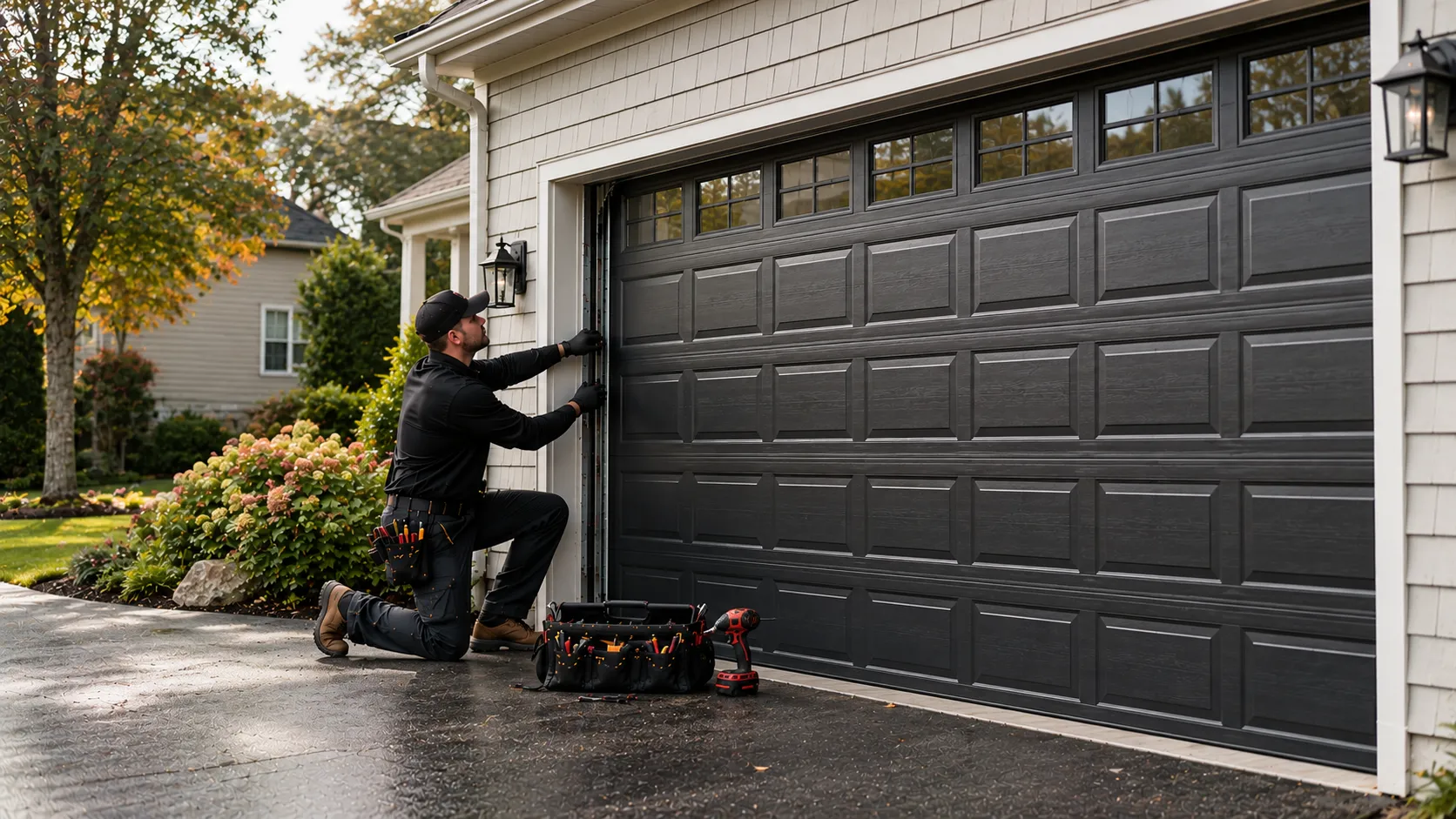
Torsion spring replacement is the same basic procedure whether the door is new or from the Eisenhower years: clamp the shaft, unwind the old spring under control, pull it, measure the replacement against the door's actual weight and travel, wind it to spec, and check balance by hand - the door should hold at waist height with the opener disconnected.
On the 1958-era stock common here, we spend more time on that last step, because decades of hardware swaps mean the spring on the door isn't always sized right for the door that's on it now.
We also check the stationary cone and center bearing while the shaft is exposed, since those wear out on the same clock as the spring and cost almost nothing extra to replace while we're already in there.
We don't touch the opener's force settings until the spring is doing its job again - adjusting force to compensate for a bad spring just hides the problem and wears out the opener faster.
Local causes
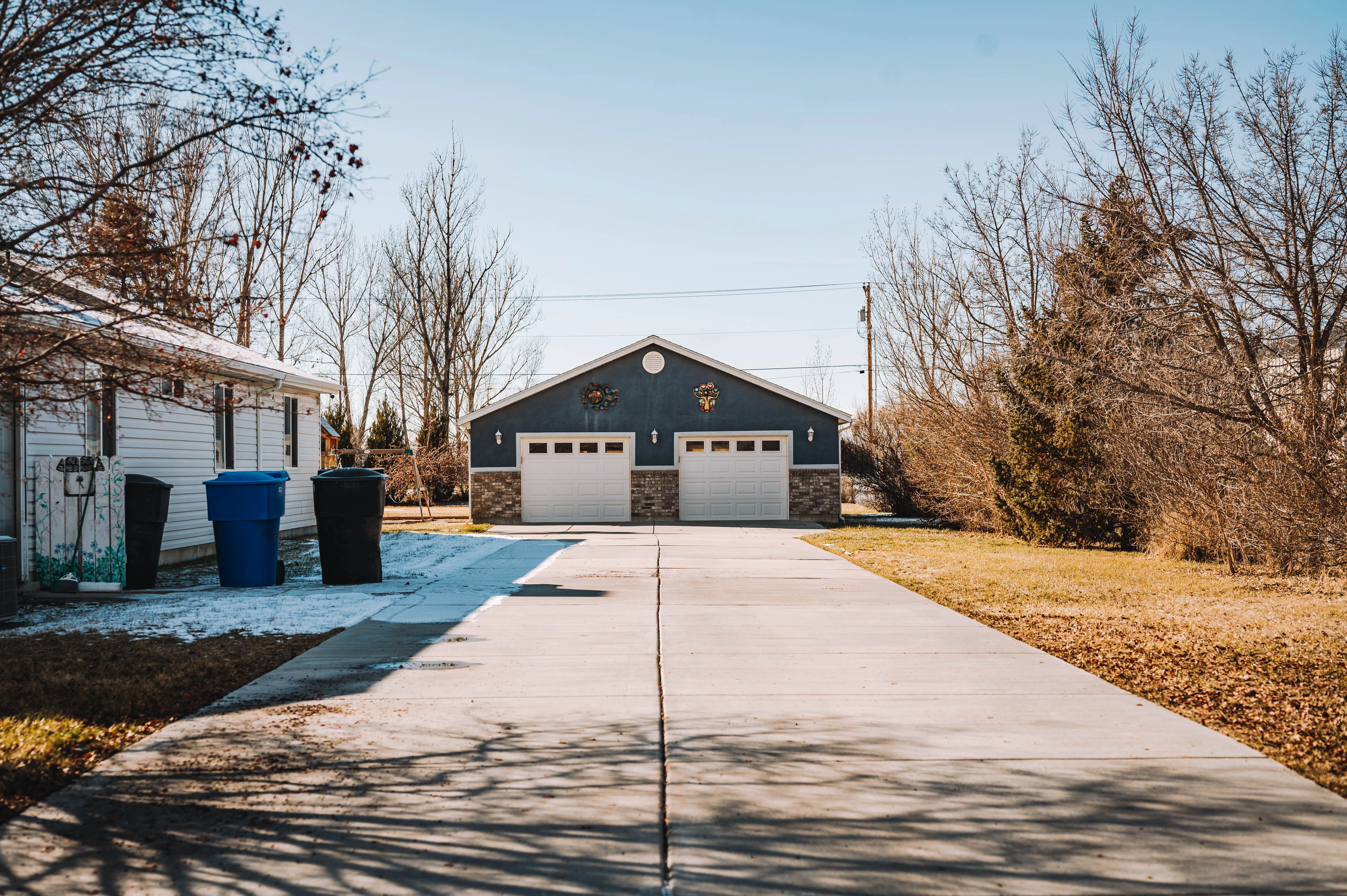
South Charleston's housing stock centers on 1958, which puts a lot of doors here a full ten years ahead of the 1967 median across the rest of the service area. Torsion springs are rated for a cycle count, not a calendar year, but older installs also mean more accumulated openings and more chances that a previous owner swapped the door, the opener, or both without matching the spring to the new setup. Add the region's cold-moderate climate - steel fatigues faster through repeated cold-to-warm swings than it does in a stable climate - and a 60-plus-year-old torsion system is doing more work than its neighbor's newer one. We see it most on doors that haven't had the spring touched since the house was built or last resold.
Watch-outs
The complication we run into most in South Charleston is mismatched hardware: a door or opener replaced at some point without anyone re-checking whether the spring on the shaft actually matches the new door's weight.
That shows up as an opener straining on every cycle, or a door that won't stay open on its own once disconnected.
The other complication is parts availability - some of the wind-and-drum combinations from 1950s-through-70s builds aren't stocked off-the-shelf anymore, and we may need to source a spring built to the older shaft diameter rather than swap the whole assembly to modern hardware, which is a bigger job and a bigger bill. We'll tell you which situation you're in before we start, not after.
DIY or pro
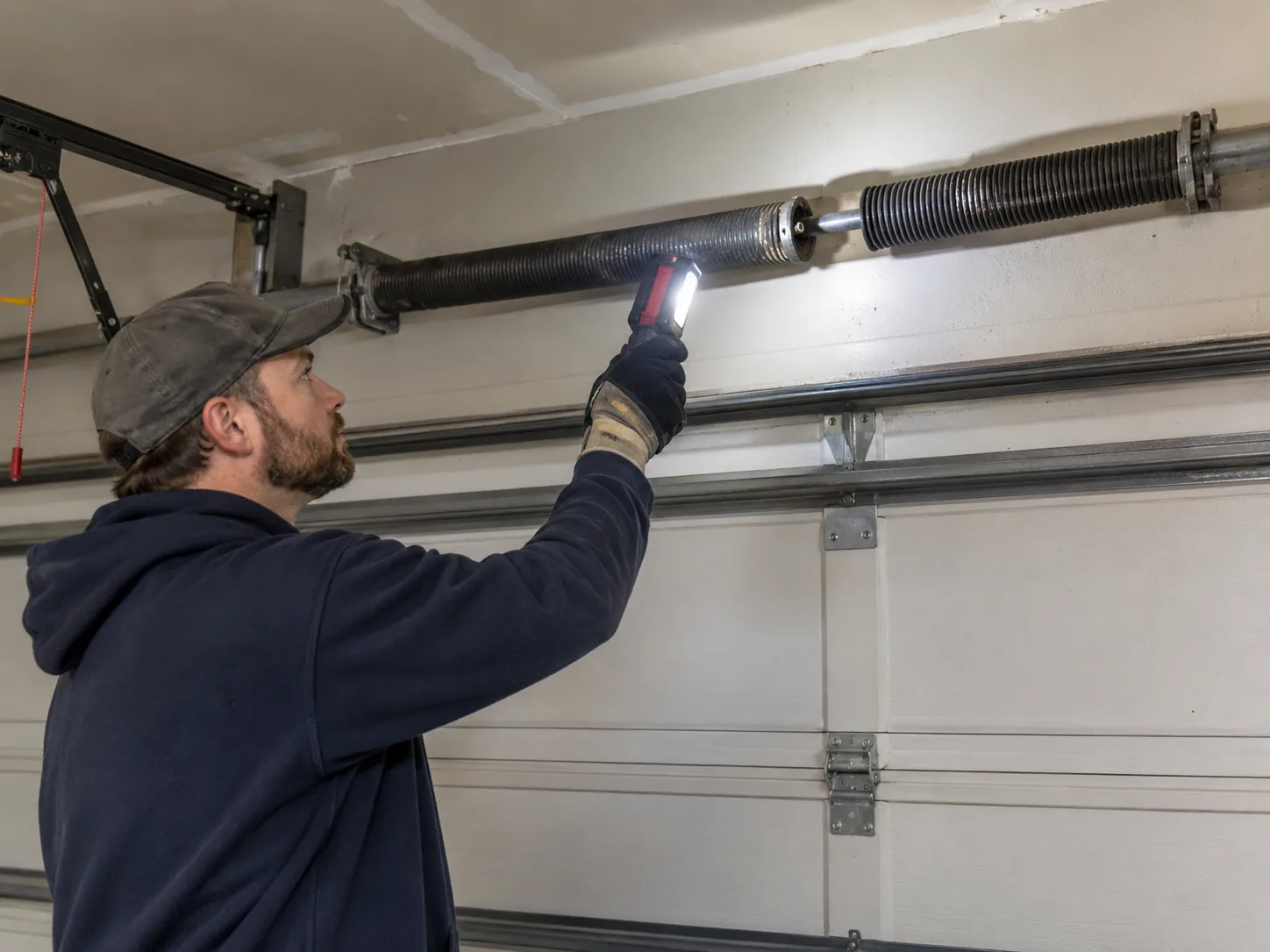
We'll say this plainly: don't do a torsion spring yourself. It's wound under enough tension to break bones or worse, and the tools to do it safely - winding bars, a properly clamped shaft, vise grips in the right spot - aren't optional extras. What you can safely check yourself is whether the spring is actually your problem: unplug the opener, lift the door by hand. If it's heavy, hard to lift past waist height, or slams down instead of holding, that's spring wear or a wrong-sized spring, and it's a call, not a DIY afternoon.
Timing
Most single-spring jobs on a standard door run under two hours once we're on site with the right part in hand. Double-spring doors, or ones where the drum, bearing, or cable also need replacing, run longer. The variable in South Charleston specifically is sourcing: if your door needs a spring sized for older shaft hardware rather than a current stock size, we may need to order it, which pushes the job to a second visit rather than a same-day fix. We'll know which situation applies once we've measured the shaft and looked at the drums.

Questions
A torsion spring loses tension gradually as steel fatigues through repeated winding and unwinding. On South Charleston's older housing stock, where a lot of doors and openers have been swapped over the decades without the spring being re-matched, this shows up as a door that feels heavier every year rather than failing suddenly.
Usually yes, once we measure the shaft diameter, spring length, and wire gauge. Some older torsion setups common in houses built around 1958 use sizes that aren't a current stock item, so we may need to order rather than pull one off the truck same-day.
If your door has two springs and one has broken, we'll generally recommend replacing both - they wear on the same clock, and a mismatched pair throws the door's balance off. We'll tell you the cost difference before you decide, not after.
Explore more
Ready when you are
Charleston Garage Door Pros repairs and installs garage doors, springs and openers in Charleston, WV and the surrounding area.