
Guide
Why a Door Goes Off Track in Charleston Homes
Charleston's 1960s-era garage doors and cold winters push tracks out of line. Here's what causes it and what to check before you call for a repair.
Local detail
What Local Conditions Do
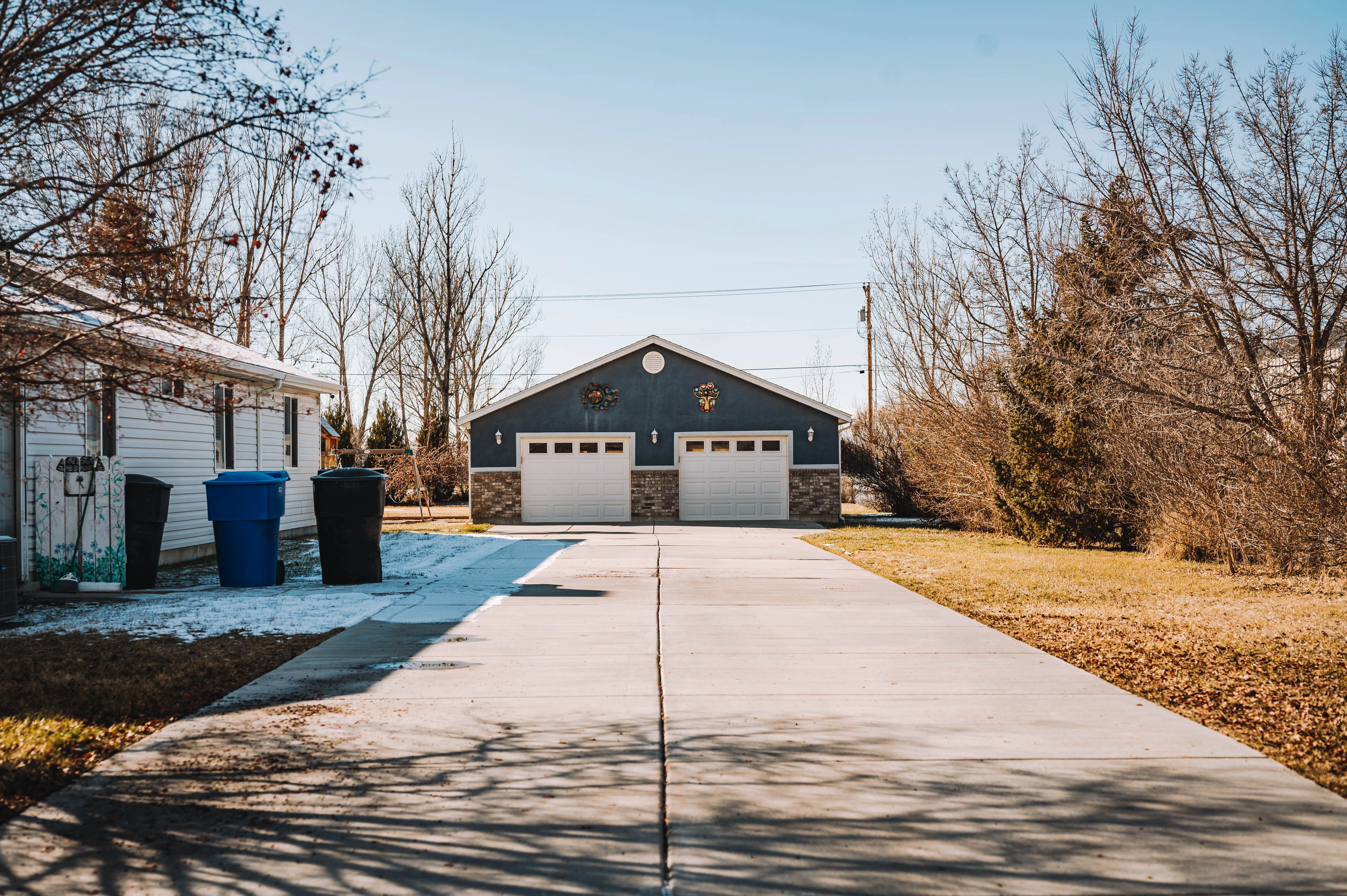
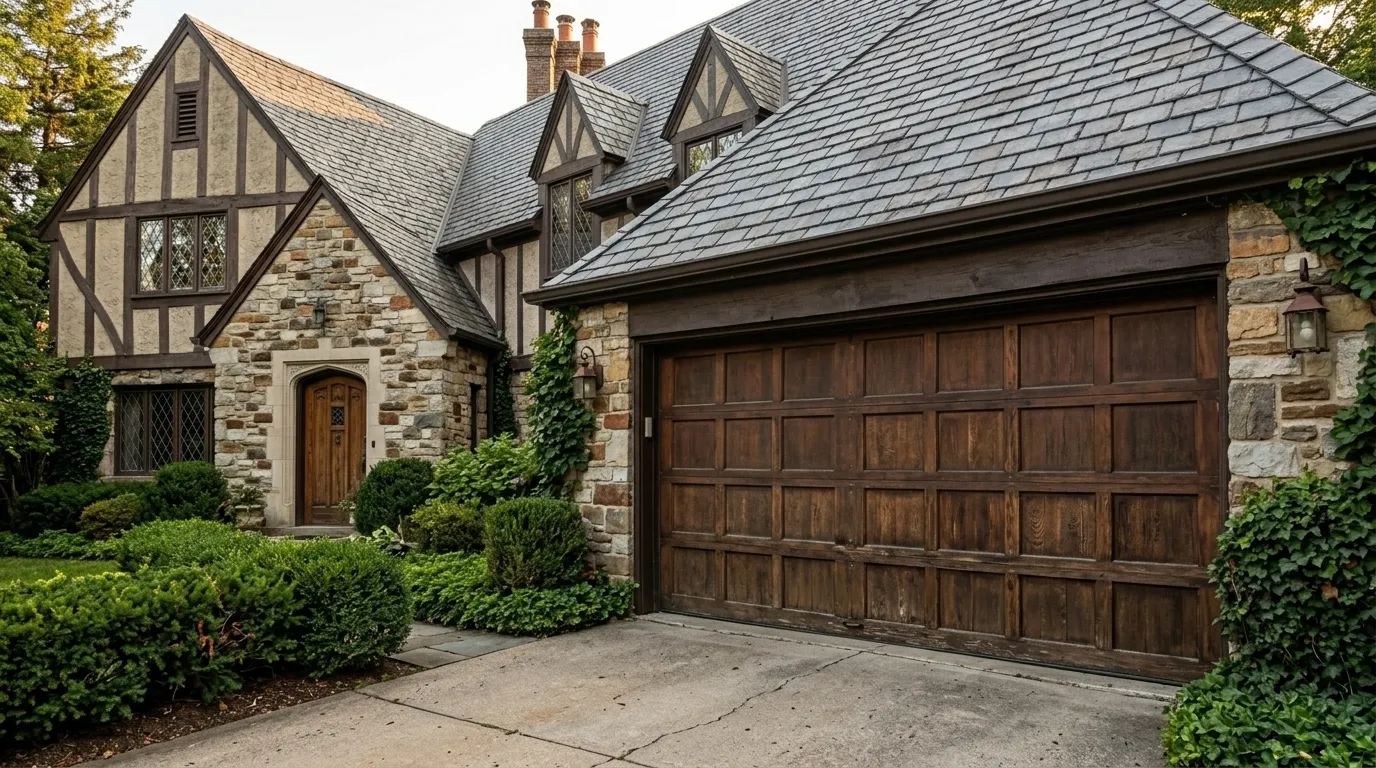
Most of the housing stock around Charleston went up between 1949 and 1993, with the median sitting around 1967. That means a lot of garages still running the original track brackets, or a first-generation replacement from decades back, bolted into framing that's had fifty-plus years to shift. Across the eighteen named areas we work in - South Charleston, Dunbar, St.
Albans, and the rest - that same 1960s-70s build era shows up again and again. Old track brackets were often lag-bolted straight into jamb wood that's since dried, shrunk, or split slightly at the fastener holes. Add a moderate cold climate where the slab and the wood framing expand and contract through freeze-thaw cycles every winter, and you get slow, cumulative movement at exactly the spots holding your vertical track plumb.
It's not one storm or one cold snap. It's fifty winters of small shifts on hardware that was never designed to be adjusted after the fact. On newer builds this matters less - there aren't many of those left in this stretch of the Kanawha Valley.
The area
Where People Go Wrong
The usual mistake is treating a door that's rubbing or binding on one side as a lubrication problem. On a house from the 1960s-70s stock common here, a squeaky roller is often the last symptom, not the first. The bracket holding that section of track has already loosened from the jamb, and the door is riding slightly out of plumb before it ever makes noise. People spray the track, the noise goes quiet for a week, and the actual separation keeps widening.
Another common error: assuming a door that came off track did so because of the opener. In homes with original or early-replacement hardware, the opener is rarely the cause - it's the track fasteners or the horizontal-to-vertical track angle that's failed first, and the opener just kept pulling on a door that could no longer travel straight. Don't wait for a full derailment to look at the brackets.
What we find
What to Check
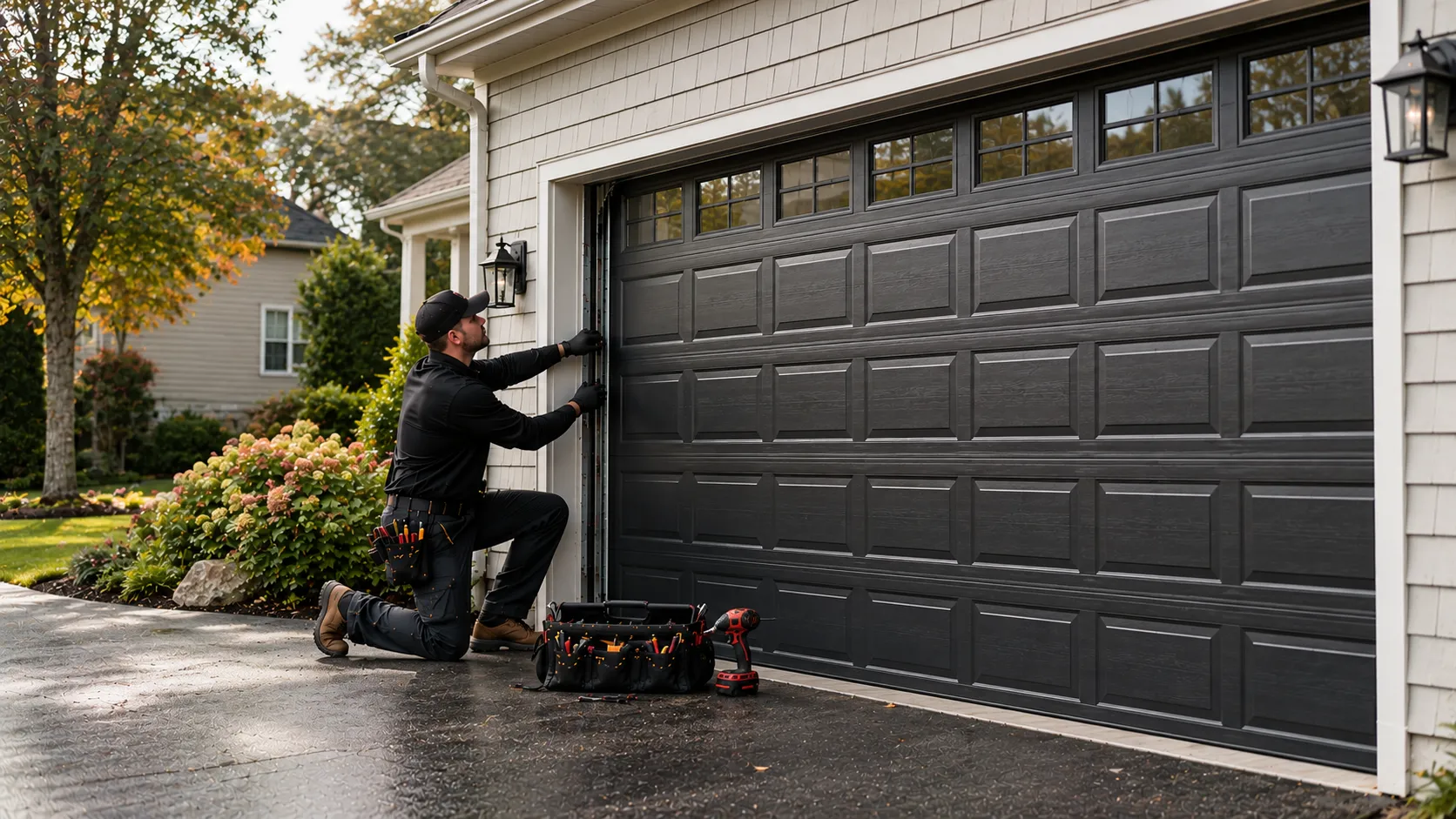
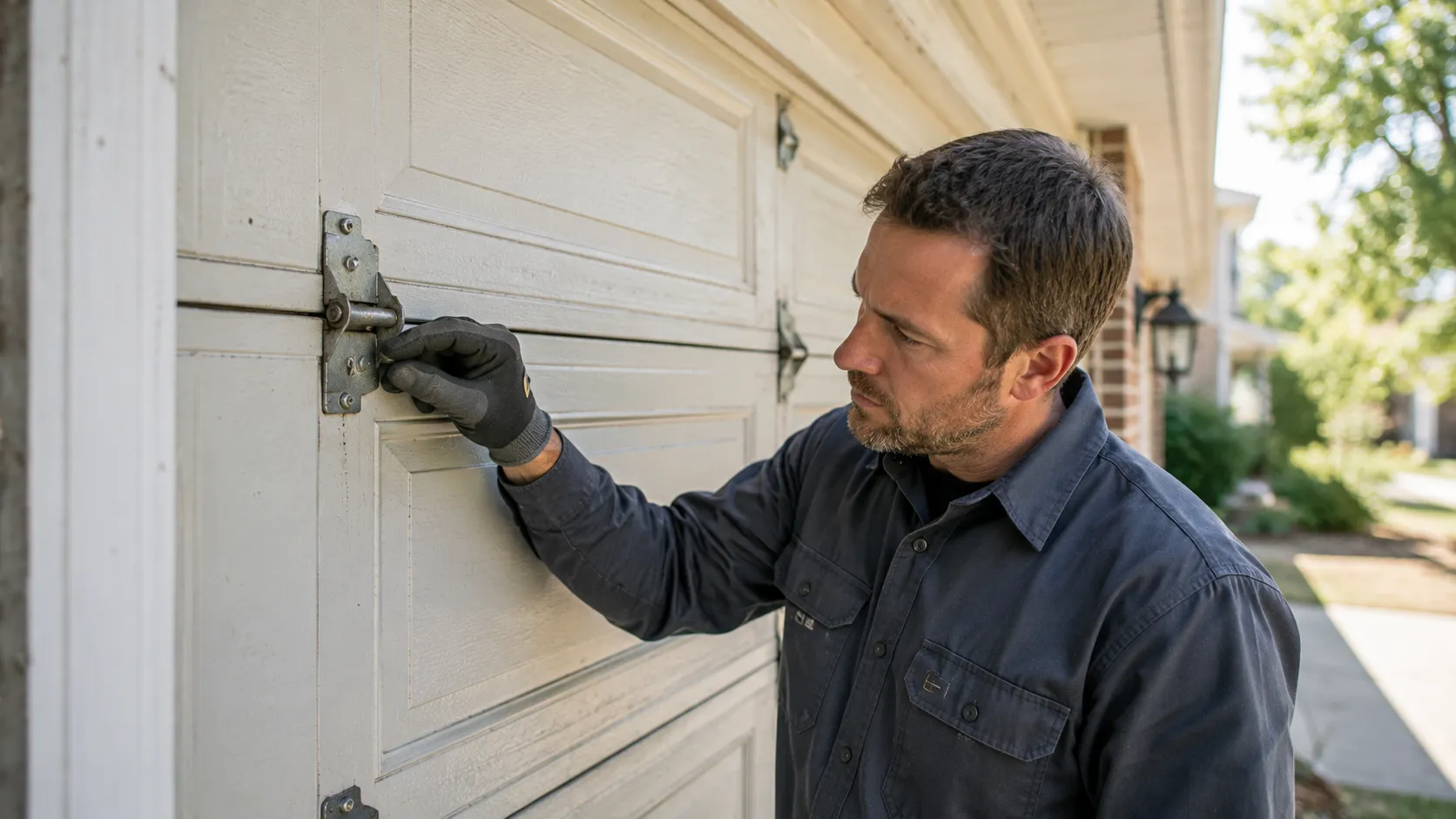
Start at the brackets, not the rollers. On older Charleston-area garages, check every lag bolt or carriage bolt holding the vertical track to the jamb - if any turn freely or the wood around them looks chewed out, that's your loose point, and it's a symptom of decades of minor movement rather than a single event. Next, sight down the vertical track on both sides; a track that's pulled even an eighth of an inch away from the wall at head height will bind rollers before it visibly bends.
Check the horizontal track's slope - it should angle up slightly toward the back wall, and on a 50-plus-year-old structure that slope can sag if the ceiling framing has settled. Finally, look at the floor track guide at the bottom section; grit and old grease buildup there can push a door sideways enough to walk it off the roller channel over a season of freeze-thaw cycling. If you find bent track rather than loose brackets, that's a heavier repair - straightening rarely holds, and section replacement is usually the honest call.
How we work
The Situation
With a median household income of $61,160 across the service area and roughly 21,303 owner-occupied houses out of 34,040 households, most of the calls we get are homeowners trying to decide whether a track problem is a $150 fix or the start of something bigger. Given the age of the housing stock here, both are common. A door that's off track because of one loose bracket is a straightforward adjustment.
A door that's off track because the track itself is bent, or because framing has shifted enough that the bracket holes won't hold a new fastener, is a different job - and no amount of realigning will fix framing movement. We don't try to force a bent track back into service; it comes off and gets replaced. That's the honest limitation: we'll tell you when adjustment won't hold and a new section is the only fix that lasts.
Questions
Common questions
Why did my garage door suddenly come off the track this winter?
In this climate band, freeze-thaw movement through the winter can loosen track brackets that were already worn from decades of use. On a house built in the common 1960s-70s era here, that slow loosening often reaches a tipping point during the coldest stretch, and the door finally slips off during a normal open or close.
Is a door off its track always an opener problem?
No. On older hardware common in this area, the opener is usually the last thing to fail, not the first. Loose track brackets or a bent track section are the more likely cause, especially in houses with original or early-replacement hardware from the 1949-1993 build range.
Can I just re-bend the track back into place myself?
You can try, but on hardware this old it rarely holds. Bent track has usually work-hardened at the bend point, and forcing it back invites a repeat failure, often worse. We generally recommend replacing the bent section rather than reshaping it.
How do I know if it's the bracket or the track itself?
Check the bolts first - if they're loose or the wood around them is worn, that's a bracket fix. If the track shows a visible kink or gap from the wall even with tight bolts, the track itself is bent and needs replacing, not adjusting.
Ready when you are
Need a garage door sorted in Charleston?
Charleston Garage Door Pros repairs and installs garage doors, springs and openers in Charleston, WV and the surrounding area.